
World
Veterans Challenge Trump’s Orders, Raise Legal and Ethical Concerns

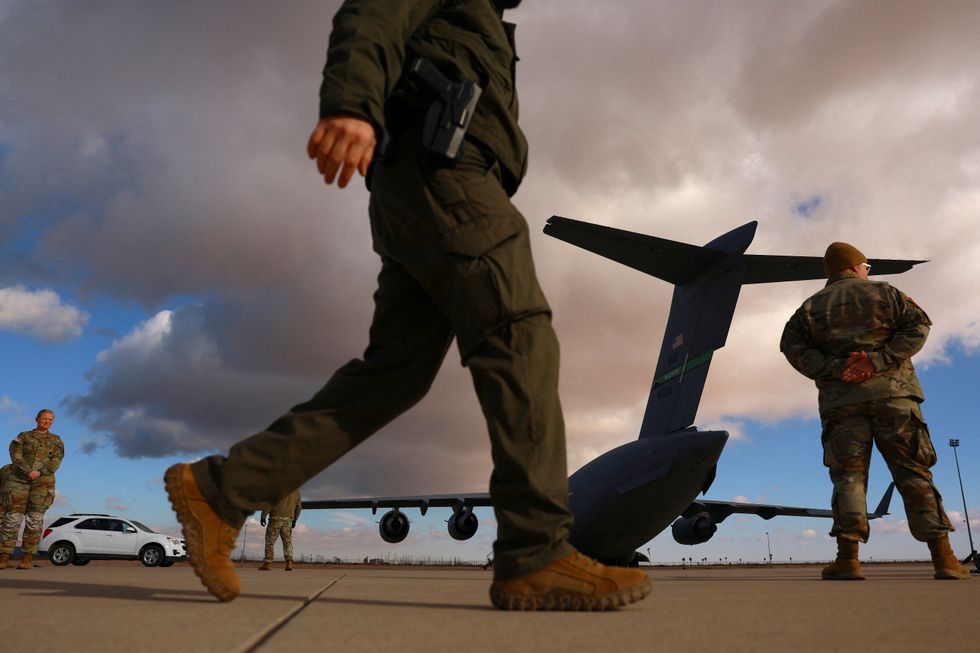
U.S. Representative Jason Crow, a decorated combat veteran, has publicly urged members of the military to refuse illegal orders. This declaration, made alongside five other military veterans in a video shared last week, has ignited significant controversy, particularly in light of remarks made by former President Donald Trump. Trump reacted vehemently, labeling the legislators as “traitors” and suggesting extreme consequences for their stance.
Crow’s assertion that “no one has to carry out orders that violate the law or our Constitution” raises profound legal and ethical questions about military conduct and obedience. The statement resonates with historical precedents, notably the Sand Creek Massacre, which serves as a stark reminder of the moral complexities faced by military leaders.
In response to the veterans’ statements, Trump took to social media, posting incendiary comments that included a call for severe repercussions. Although he later attempted to clarify his remarks, the initial outburst has prompted serious concerns over the implications for military personnel who might face conflicting orders.
Legal perspectives on this matter vary. Joseph Jordan, a former U.S. Army officer whose law firm specializes in defending service members, emphasized the provisions of the Uniform Code of Military Justice. He noted that while service members are required to obey orders, they must disobey those that are “patently illegal,” such as orders that direct them to commit crimes. The potential for court martial looms over any service member who refuses orders, leaving them in a precarious situation where the legality of commands hinges on military judges’ interpretations.
Legal expert David French, writing in the New York Times, highlighted the complexities surrounding military orders. He noted that while some actions, such as targeting a prisoner, are unequivocally illegal, other actions, like bombings based on suspicion rather than certainty, fall into a murkier legal territory. French pointed out that Trump’s directives regarding potential drug traffickers in the Caribbean place military leaders in a difficult position, complicating their moral and legal obligations.
The historical context provided by the Sand Creek Massacre is particularly poignant. On November 29, 1864, Captain Silas Soule and Lieutenant Joseph Cramer notably refused to allow their troops to participate in the massacre of around 200 Cheyenne and Arapahoe natives, predominantly women and children. This incident occurred in a period of increasing tension between indigenous groups and U.S. settlers, a tension exacerbated by the lack of meaningful dialogue between both parties.
Chivington’s actions during the Sand Creek incident, despite prior peace negotiations, demonstrate the dire consequences of military orders devoid of ethical consideration. Chivington, a Civil War hero, led an attack on a peaceful encampment, resulting in a brutal massacre. The aftermath saw Soule and Cramer writing fervent letters condemning the actions they witnessed, highlighting the moral imperative to resist unlawful orders.
Soule’s legacy is one of courage and conscience, contrasting sharply with the actions of political figures like John Evans, Colorado’s territorial governor at the time. Evans, while present during negotiations with Native American leaders, failed to advocate for their safety. A recent report from the University of Denver indicated that Evans bore significant responsibility for the conditions leading to the massacre.
In the years following the massacre, Soule’s bravery was tragically cut short when he was assassinated in April 1865, shortly after advocating for accountability. His grave, marked by a simple tombstone, stands in stark contrast to the imposing memorial for Evans, who remained silent when leadership was crucial.
On Memorial Day in 2023, visitors paid respects at Soule’s grave, leaving flowers and tokens of admiration. The lack of similar tributes at Evans’ grave underscores a collective memory that recognizes the importance of ethical leadership in the military and beyond.
As the discourse surrounding military orders and ethical responsibilities continues, the actions of Crow and his fellow veterans remind us of the enduring significance of moral courage in the face of authority. The challenge they present to current military practices reflects a broader dialogue about legality, ethics, and the responsibilities of those who serve. This ongoing conversation is crucial for maintaining the integrity of military service and upholding the principles enshrined in the Constitution.

Urgent Tax Savings Alert: Maximize Deductions Before April 15

Trump’s Administration Faces Uncertainty Over Government Shutdowns

Cosmic Defects: The Mystery of the Universe’s Missing Anomalies

Rapid City Parks Department Opens Registration for Bocce Leagues

Samsung Galaxy Watch 9 to Feature Larger 435mAh Battery Soon

Two Dead After Student Boats Capsize Off Okinawa Coast

Healthy Choice Wellness Reports Earnings with Mixed Results

Prince Harry Positions Himself as Royal Family’s Image Reviver

All Points North Lodge Achieves FSPHP-ETA Accreditation

Send Holiday Parcels for £1.99 with New Comparison Service

University of Hawaiʻi Leads $25M AI Project to Monitor Natural Disasters

Maui County Reopens Upgraded Lānaʻi Fifth Street Courts Today!

Daily Codeword Puzzle Launches on October 21, 2025

Congresswoman Under Fire for Misleading Epstein Donation Claims

Interstellar Object 3I/ATLAS Emits Unique Metal Alloy, Says Scientist

Trump Vows to Resolve Afghanistan-Pakistan Crisis “Very Quickly”

Charles Darwin’s Address Book Reveals Hidden Aspects of His Life

Rediscovering Chrysler: 5 Overlooked Models from the 1980s
-
 Lifestyle8 months ago
Send Holiday Parcels for £1.99 with New Comparison Service
-
Science9 months ago
University of Hawaiʻi Leads $25M AI Project to Monitor Natural Disasters
-
 Top Stories8 months ago
Maui County Reopens Upgraded Lānaʻi Fifth Street Courts Today!
-
 Entertainment10 months ago
Daily Codeword Puzzle Launches on October 21, 2025
-
 Lifestyle9 months ago
Congresswoman Under Fire for Misleading Epstein Donation Claims
-
 Science10 months ago
Interstellar Object 3I/ATLAS Emits Unique Metal Alloy, Says Scientist
-
 Top Stories9 months ago
Trump Vows to Resolve Afghanistan-Pakistan Crisis “Very Quickly”
-
 Science8 months ago
Charles Darwin’s Address Book Reveals Hidden Aspects of His Life
-
 Lifestyle8 months ago
Rediscovering Chrysler: 5 Overlooked Models from the 1980s
-

 Science7 months ago
Understanding Generation Z: Strategies for Engaging the Workforce
-

 Entertainment10 months ago
Kelly McCreary Discusses Future of Maggie and Winston in Grey’s Anatomy
-

 Top Stories8 months ago
aespa Faces Backlash Over G-Dragon Interaction at 2025 MAMAs