
World
Trump’s Drug Policy Faces Scrutiny Amid Pardon Controversies

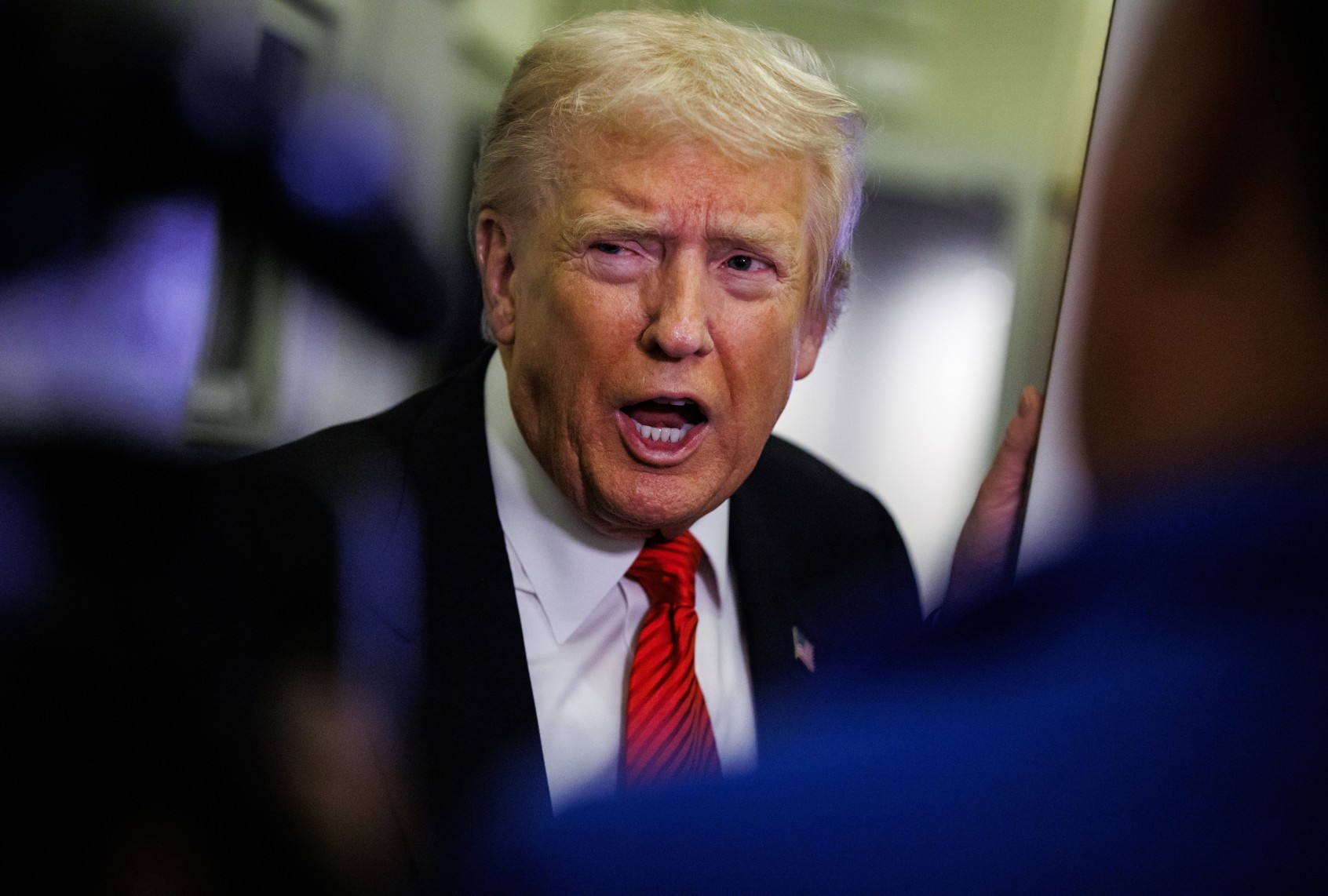
During the Thanksgiving weekend, former President Donald Trump issued a stark warning on social media, declaring the airspace above Venezuela closed to various groups, including airlines and drug dealers. This announcement led to widespread speculation about an impending military action against Venezuela, particularly in light of Trump’s ongoing campaign against what he describes as “narco-terrorists” operating under the leadership of Venezuelan President Nicolás Maduro.
On the following Sunday, Trump downplayed the implications of his warning, instructing the media not to “read anything into it.” The situation took a different turn on Monday when reports emerged that Trump had recently communicated with Maduro, allegedly informing him that he had one week to leave the country. Concurrently, the Trump administration has intensified its military efforts against drug trafficking in the Caribbean, with reports indicating that lethal attacks on suspected drug boats are ongoing.
The administration’s aggressive stance raises critical questions about the actions of Defense Secretary Pete Hegseth, who has come under scrutiny for potential war crimes related to orders allegedly given during an attack on September 2, 2023. While Hegseth denied giving such orders, Trump’s comments suggest that if evidence surfaces, Hegseth’s position could be jeopardized. This military focus is framed within the context of Trump’s assertion that Maduro’s regime represents a significant threat to the United States.
In 2020, the Justice Department indicted Maduro and 14 others on charges related to narco-terrorism and corruption. Although the indictment included strong language about the intention to flood the U.S. with cocaine, much of the related drug trade is reportedly directed towards Europe rather than the United States. Critics point out that while Trump emphasizes the fight against fentanyl, which predominantly enters the U.S. from Mexico, the administration’s military actions appear more symbolic than strategic.
Senator Dave McCormick recently likened the situation to the Vietnam War, highlighting that drug-related deaths in the United States reached approximately 100,000 last year, a figure he argues surpasses the casualties of the Vietnam conflict. Fellow Senator Markwayne Mullin echoed this sentiment, claiming Venezuela is responsible for numerous American deaths. Such statements reflect a broader narrative within certain political circles that elevates the urgency of the drug crisis.
In a surprising twist, Trump announced his intention to pardon Juan Orlando Hernández, the former president of Honduras, who is currently serving a 45-year sentence in the United States for trafficking over 500 tons of cocaine. This decision has raised eyebrows, particularly since Hernández was implicated in a scheme that included significant corruption and drug trafficking operations. Trump’s justification for the pardon centers on claims of Hernández being treated unfairly, suggesting political motivations behind the charges.
The case against Hernández included allegations that he accepted bribes from notorious drug lords and facilitated drug shipments through Honduras. Notably, Trump’s close associate, Emil Bove, was involved in prosecuting Hernández’s brother, further complicating the narrative surrounding this pardon.
Lobbyists advocating for Hernández’s pardon have gained traction in the Trump administration, with some connections to Silicon Valley ventures that have ties to cryptocurrency and investment projects in Honduras. This context adds another layer to the discussion, as it aligns with Trump’s broader political and financial interests.
Moreover, Trump’s past pardons of other drug traffickers, including Ross Ulbricht, the founder of the Silk Road online marketplace, illustrate a pattern of seemingly contradictory actions. While publicly advocating for strict penalties against drug dealers, Trump has also extended clemency to individuals he perceives as victims of a “deep state” conspiracy.
Trump’s remarks regarding the Hernández case reveal a consistent theme in his approach to international politics: prioritizing personal and political alliances over established legal protocols. As he stated, “They gave him 45 years because he was the President of the Country — you could do this to any President.” This perspective reflects his broader strategy of aligning with right-wing leaders globally, often leveraging U.S. support for political favors.
As the situation develops, it remains to be seen how Trump’s war on drugs will evolve, particularly in light of these pardons and the ongoing military actions in the Caribbean. The implications of these decisions for both domestic and foreign policy could be significant, especially as the administration navigates the complex landscape of drug trafficking and international relations.

Urgent Tax Savings Alert: Maximize Deductions Before April 15

Trump’s Administration Faces Uncertainty Over Government Shutdowns

Cosmic Defects: The Mystery of the Universe’s Missing Anomalies

Rapid City Parks Department Opens Registration for Bocce Leagues

Samsung Galaxy Watch 9 to Feature Larger 435mAh Battery Soon

Two Dead After Student Boats Capsize Off Okinawa Coast

Healthy Choice Wellness Reports Earnings with Mixed Results

Prince Harry Positions Himself as Royal Family’s Image Reviver

All Points North Lodge Achieves FSPHP-ETA Accreditation

Send Holiday Parcels for £1.99 with New Comparison Service

University of Hawaiʻi Leads $25M AI Project to Monitor Natural Disasters

Maui County Reopens Upgraded Lānaʻi Fifth Street Courts Today!

Daily Codeword Puzzle Launches on October 21, 2025

Congresswoman Under Fire for Misleading Epstein Donation Claims

Interstellar Object 3I/ATLAS Emits Unique Metal Alloy, Says Scientist

Trump Vows to Resolve Afghanistan-Pakistan Crisis “Very Quickly”

Charles Darwin’s Address Book Reveals Hidden Aspects of His Life

Rediscovering Chrysler: 5 Overlooked Models from the 1980s
-
 Lifestyle8 months ago
Send Holiday Parcels for £1.99 with New Comparison Service
-
Science9 months ago
University of Hawaiʻi Leads $25M AI Project to Monitor Natural Disasters
-
 Top Stories8 months ago
Maui County Reopens Upgraded Lānaʻi Fifth Street Courts Today!
-
 Entertainment10 months ago
Daily Codeword Puzzle Launches on October 21, 2025
-
 Lifestyle9 months ago
Congresswoman Under Fire for Misleading Epstein Donation Claims
-
 Science10 months ago
Interstellar Object 3I/ATLAS Emits Unique Metal Alloy, Says Scientist
-
 Top Stories9 months ago
Trump Vows to Resolve Afghanistan-Pakistan Crisis “Very Quickly”
-
 Science8 months ago
Charles Darwin’s Address Book Reveals Hidden Aspects of His Life
-
 Lifestyle8 months ago
Rediscovering Chrysler: 5 Overlooked Models from the 1980s
-
 Science7 months ago
Understanding Generation Z: Strategies for Engaging the Workforce
-

 Entertainment10 months ago
Kelly McCreary Discusses Future of Maggie and Winston in Grey’s Anatomy
-

 Top Stories8 months ago
aespa Faces Backlash Over G-Dragon Interaction at 2025 MAMAs