
World
US Military Presence in Syria Requires Broader Strategy Against ISIS

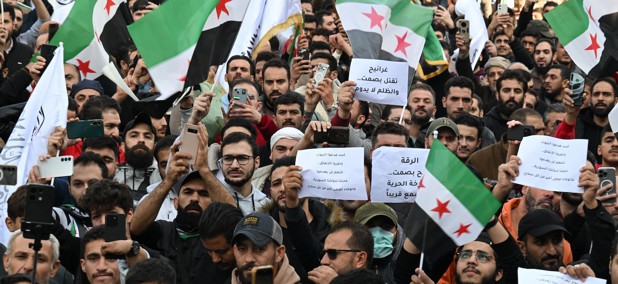
The United States is planning to establish a military presence at an airbase near Damascus, aiming to enhance cooperation with Syria’s new government. While this initiative signals a potential shift in U.S.-Syria relations, experts caution that it may not be sufficient to secure long-term U.S. interests in the region. A robust strategy is necessary to prevent the resurgence of the Islamic State (ISIS) and to contain Iranian influence.
The primary challenge posed by ISIS remains concentrated in northeastern Syria, where approximately 9,000 ISIS fighters and their family members are detained. Around 85 percent of these individuals are held in two facilities located near Hasakah and Shaddadi. These detention centers have proven vulnerable, as evidenced by the 2022 Hasakah prison break that took two weeks to contain despite U.S. air and intelligence support. The Syrian Democratic Forces (SDF), supported by U.S. funding and training, have been instrumental in maintaining security at these sites for over a decade.
The threat from ISIS extends beyond these detention centers. In March, an ISIS suicide bomber attacked a church in Damascus, resulting in 25 fatalities and 63 injuries. Additionally, Syrian authorities recently disrupted two ISIS plots targeting President Bashar al-Assad and arrested more than 70 ISIS suspects in nationwide raids. An ISIS-inspired attack in New Orleans in January further illustrates the group’s ability to radicalize individuals far from its operational base.
To effectively combat ISIS, the United States must strengthen its support for the SDF, which has emerged as the most effective local counter-ISIS force. This partnership should be sustained through training, intelligence sharing, and support for detention operations. Such an approach not only counters ISIS but also reassures regional partners of U.S. commitment to a stable transition in Syria.
International collaboration is also crucial in managing the issue of detained ISIS fighters. Only 36 countries have repatriated nationals from northeastern Syria, while 21 countries have yet to take any action. Prolonged detention raises the risk of radicalization and poses long-term humanitarian and security challenges. Iraq’s repatriation of roughly 25,000 citizens, about 80 percent of its nationals detained in Syria, exemplifies the positive impact of committed action.
The United States should apply diplomatic pressure akin to that used in negotiating criminal deportation agreements to encourage international partners to accelerate repatriation efforts. This would alleviate the burden on the SDF and reduce the long-term threat posed by these populations.
Broader counterterrorism objectives also hinge on preventing Iranian rearmament of Hezbollah, which could destabilize the region. Israeli intelligence reports indicate that Hezbollah has begun re-establishing supply lines through Syrian territory. Despite setbacks for Iran and Hezbollah, Tehran continues to seek avenues to rebuild its networks in Syria.
It is essential for the United States to maintain its partnership with the SDF, which currently controls most Iraqi-border crossings in eastern Syria. This strategic positioning makes the SDF a crucial front line in preventing the flow of Iranian weapons into Lebanon. In addition to supporting the SDF, Washington should engage with the Syrian government and Israel to disrupt these supply routes. Intelligence sharing, deconfliction, and diplomatic coordination with both parties can complicate Iranian efforts.
Syria’s recent shift toward greater cooperation with Western partners presents a strategic opportunity. The government has a vested interest in limiting extremist groups and restoring security. Its decision to join the Global Coalition to Defeat ISIS underscores a willingness to collaborate with international partners, and the Interior Ministry has already conducted joint counter-ISIS missions with U.S. troops.
While the alignment of interests between the United States and Syria is still developing, it offers a significant opportunity to advance counterterrorism goals and enhance regional stability. Preventing future ISIS prison breaks and countering Iranian arms flows requires a sustained partnership with the SDF, international burden sharing, and proactive measures against Iranian influence.
Leaving Syria before the country can maintain its own security will not conclude U.S. involvement; rather, it will set the stage for a more costly re-engagement in the future. As noted by Thomas Bergeson, a retired U.S. Air Force lieutenant general, and Jonah Brody, a policy analyst at the Jewish Institute for National Security of America, the need for a comprehensive strategy is clear.

Urgent Tax Savings Alert: Maximize Deductions Before April 15

Trump’s Administration Faces Uncertainty Over Government Shutdowns

Cosmic Defects: The Mystery of the Universe’s Missing Anomalies

Rapid City Parks Department Opens Registration for Bocce Leagues

Samsung Galaxy Watch 9 to Feature Larger 435mAh Battery Soon

Two Dead After Student Boats Capsize Off Okinawa Coast

Healthy Choice Wellness Reports Earnings with Mixed Results

Prince Harry Positions Himself as Royal Family’s Image Reviver

All Points North Lodge Achieves FSPHP-ETA Accreditation

Send Holiday Parcels for £1.99 with New Comparison Service

University of Hawaiʻi Leads $25M AI Project to Monitor Natural Disasters

Maui County Reopens Upgraded Lānaʻi Fifth Street Courts Today!

Daily Codeword Puzzle Launches on October 21, 2025

Congresswoman Under Fire for Misleading Epstein Donation Claims

Interstellar Object 3I/ATLAS Emits Unique Metal Alloy, Says Scientist

Trump Vows to Resolve Afghanistan-Pakistan Crisis “Very Quickly”

Charles Darwin’s Address Book Reveals Hidden Aspects of His Life

Rediscovering Chrysler: 5 Overlooked Models from the 1980s
-
 Lifestyle8 months ago
Send Holiday Parcels for £1.99 with New Comparison Service
-
Science9 months ago
University of Hawaiʻi Leads $25M AI Project to Monitor Natural Disasters
-
 Top Stories8 months ago
Maui County Reopens Upgraded Lānaʻi Fifth Street Courts Today!
-
 Entertainment10 months ago
Daily Codeword Puzzle Launches on October 21, 2025
-
 Lifestyle9 months ago
Congresswoman Under Fire for Misleading Epstein Donation Claims
-
 Science10 months ago
Interstellar Object 3I/ATLAS Emits Unique Metal Alloy, Says Scientist
-
 Top Stories9 months ago
Trump Vows to Resolve Afghanistan-Pakistan Crisis “Very Quickly”
-
 Science8 months ago
Charles Darwin’s Address Book Reveals Hidden Aspects of His Life
-
 Lifestyle8 months ago
Rediscovering Chrysler: 5 Overlooked Models from the 1980s
-

 Science7 months ago
Understanding Generation Z: Strategies for Engaging the Workforce
-

 Entertainment10 months ago
Kelly McCreary Discusses Future of Maggie and Winston in Grey’s Anatomy
-

 Top Stories8 months ago
aespa Faces Backlash Over G-Dragon Interaction at 2025 MAMAs