
World
Electric Vehicle Range Claims Fall Short in Australia’s Tests

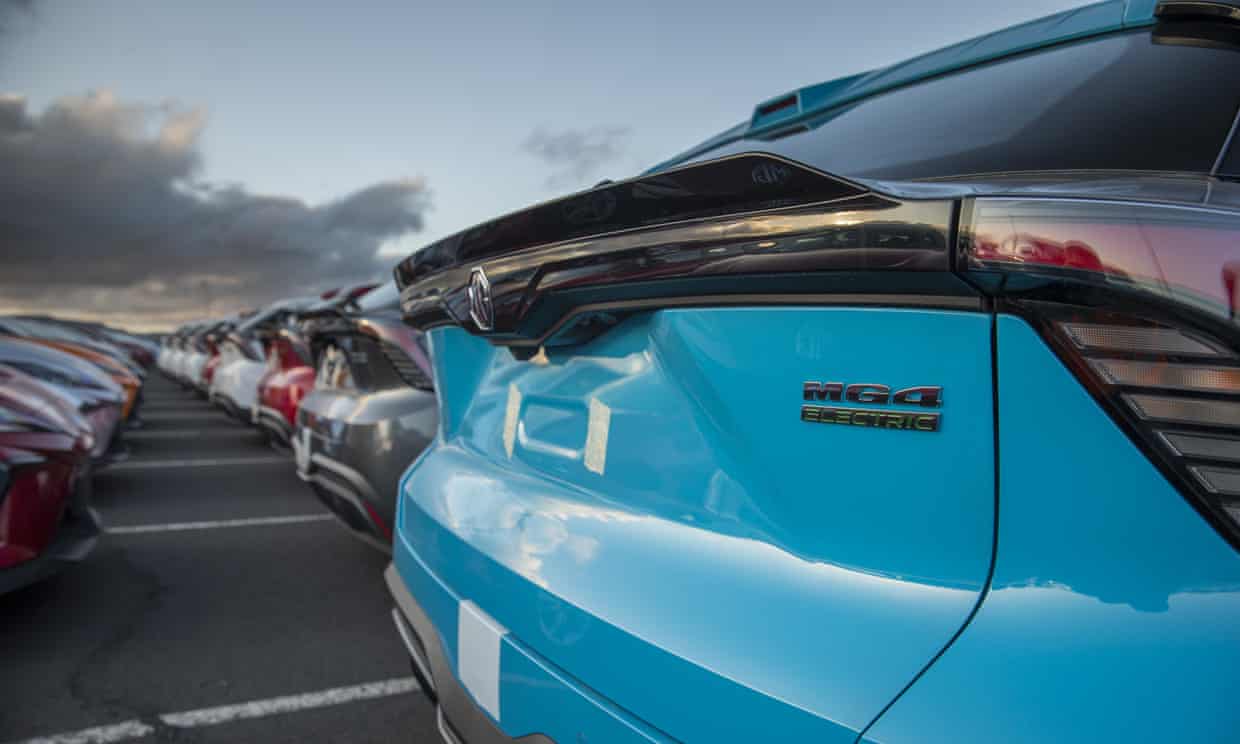
Electric vehicles (EVs) in Australia are not delivering on the range promised by their manufacturers, according to independent road tests. The findings, released by the Australian Automobile Association (AAA) on October 5, 2023, reveal that all tested models failed to meet their advertised distance on a single charge. Among the vehicles analyzed, one small car recorded a remarkable shortfall of over 120 km from its claimed range, while Tesla’s latest Model Y came closest to its promise, falling only a few kilometers short.
Test Results Highlight Discrepancies
The AAA’s results stem from its $14 million Real-World Testing Program, which has conducted four additional electric vehicle trials. These tests evaluate vehicles on a 93 km track in and around Geelong, Victoria, encompassing urban, rural, and motorway conditions. The previous round of examinations found that all five electric models failed to meet their claimed ranges. This follows a broader analysis of 131 internal combustion and hybrid vehicles, where 76% consumed more fuel than advertised.
The standout performer from the recent tests was the Tesla Model Y, which missed its claimed range of 466 km by just 16 km. In contrast, the MG4 electric hatchback reported the largest discrepancy, falling short by 124 km, which is a 31% shortfall from its advertised 405 km range. The Kia EV3 and Smart #1 also underperformed, missing their claimed ranges by 67 km (11%) and 53 km (13%), respectively.
Implications for Consumers
According to Michael Bradley, managing director of the AAA, understanding the real-world range of electric vehicles is crucial for consumers. He stated, “These results give consumers an independent indication of real-world battery range, which means they now know which cars perform as advertised and which do not.” This information aims to alleviate concerns about running out of charge, encouraging more buyers to transition to electric vehicles confidently.
The AAA’s vehicle-testing program, initiated in 2023 and funded by the federal government, aims to assess a total of 200 vehicles. So far, it has tested 140 vehicles, finding that most consume more energy or fuel than promised. The initiative was launched in response to the 2015 Volkswagen scandal, where the automaker was found to have manipulated emissions data during laboratory testing.
As the electric vehicle market continues to grow, accurate representations of vehicle capabilities will be essential for informed consumer choices. The AAA’s efforts to provide transparent and independent testing could play a significant role in shaping the future of EV adoption in Australia and beyond.

Urgent Tax Savings Alert: Maximize Deductions Before April 15

Trump’s Administration Faces Uncertainty Over Government Shutdowns

Cosmic Defects: The Mystery of the Universe’s Missing Anomalies

Rapid City Parks Department Opens Registration for Bocce Leagues

Samsung Galaxy Watch 9 to Feature Larger 435mAh Battery Soon

Two Dead After Student Boats Capsize Off Okinawa Coast

Healthy Choice Wellness Reports Earnings with Mixed Results

Prince Harry Positions Himself as Royal Family’s Image Reviver

All Points North Lodge Achieves FSPHP-ETA Accreditation

Send Holiday Parcels for £1.99 with New Comparison Service

University of Hawaiʻi Leads $25M AI Project to Monitor Natural Disasters

Maui County Reopens Upgraded Lānaʻi Fifth Street Courts Today!

Daily Codeword Puzzle Launches on October 21, 2025

Congresswoman Under Fire for Misleading Epstein Donation Claims

Interstellar Object 3I/ATLAS Emits Unique Metal Alloy, Says Scientist

Trump Vows to Resolve Afghanistan-Pakistan Crisis “Very Quickly”

Charles Darwin’s Address Book Reveals Hidden Aspects of His Life

Rediscovering Chrysler: 5 Overlooked Models from the 1980s
-
 Lifestyle8 months ago
Send Holiday Parcels for £1.99 with New Comparison Service
-
Science9 months ago
University of Hawaiʻi Leads $25M AI Project to Monitor Natural Disasters
-
 Top Stories8 months ago
Maui County Reopens Upgraded Lānaʻi Fifth Street Courts Today!
-
 Entertainment10 months ago
Daily Codeword Puzzle Launches on October 21, 2025
-
 Lifestyle9 months ago
Congresswoman Under Fire for Misleading Epstein Donation Claims
-
 Science10 months ago
Interstellar Object 3I/ATLAS Emits Unique Metal Alloy, Says Scientist
-
 Top Stories9 months ago
Trump Vows to Resolve Afghanistan-Pakistan Crisis “Very Quickly”
-
 Science8 months ago
Charles Darwin’s Address Book Reveals Hidden Aspects of His Life
-
 Lifestyle8 months ago
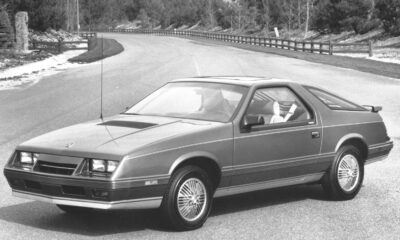
Rediscovering Chrysler: 5 Overlooked Models from the 1980s
-
 Science7 months ago
Understanding Generation Z: Strategies for Engaging the Workforce
-

 Entertainment10 months ago
Kelly McCreary Discusses Future of Maggie and Winston in Grey’s Anatomy
-

 Top Stories8 months ago
aespa Faces Backlash Over G-Dragon Interaction at 2025 MAMAs