
Politics
Idaho Town Hall Discusses New $5,000 Tax Credit for Education

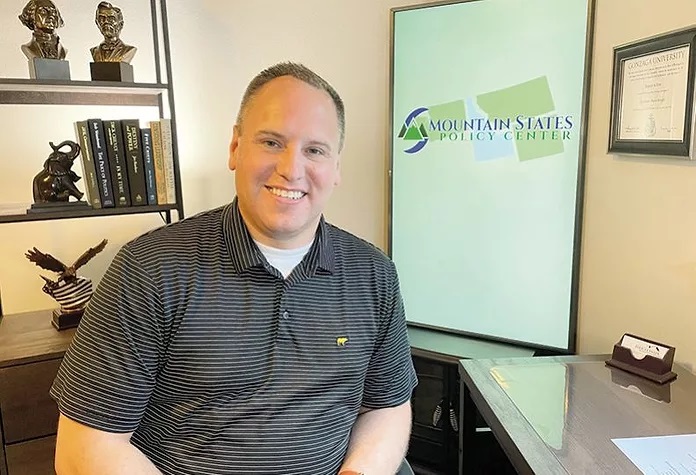
Concerns about accountability and educational standards were at the forefront during a town hall meeting in Moscow, Idaho, on Wednesday, where the focus was on the state’s new tax credit for private education. The event, hosted by the Mountain States Policy Center (MSPC), aimed to inform residents about the implications of House Bill 93, which introduces a $5,000 tax credit for families to help cover expenses associated with nonpublic schooling, including homeschooling.
Passed earlier this year, HB 93 allocates $50 million in state funds for this initiative. As the tax credit becomes available for applications starting January 15, 2024, MSPC President Chris Cargill outlined the program’s rules and deadlines, addressing questions about the accountability measures in place.
Program Accountability and Requirements
Cargill noted that the tax credit is directed to families rather than schools, raising questions about the standards that educational institutions must meet. He explained that while there are no performance requirements set forth in HB 93 for the schools, families utilizing the tax credit must maintain a “portfolio of evidence” to document their child’s educational growth. This portfolio should demonstrate progress in core subjects such as science, math, social studies, and English language arts, particularly for homeschooled children.
Families can include transcripts from private schools in their portfolios, though guidelines on measuring educational growth for homeschoolers remain vague. To assess the effectiveness of the program, the state’s Legislative Services Office will distribute surveys to families participating in the tax credit program.
Cargill emphasized the importance of using the tax credit appropriately, stating that families must retain receipts to validate their expenditures. Misuse of the funds could lead to audits and potential tax fraud charges. He remarked, “You cannot just take this money and go on a trip to Hawaii with it.” Approximately 8,000 students are expected to benefit from this initiative, provided they are not enrolled in public schools.
Controversy Surrounding HB 93
The introduction of HB 93 has generated significant debate, particularly among advocates for public education who express concern that the program could divert taxpayer dollars from public schools. Attendees at the town hall voiced similar worries, highlighting the potential impact on public education funding.
The Moscow School District is one of nine petitioners involved in a lawsuit challenging HB 93. The lawsuit argues that the tax credit program violates the Idaho Constitution, which mandates that the legislature must “establish and maintain a general, uniform and thorough system of public, free common schools.”
In response to concerns about the financial viability of the program, Cargill pointed out that the funding for the tax credit represents a relatively small portion of the overall budget for public K-12 education. He noted that the tax credit and public education funds are allocated as separate line items. Addressing questions about Idaho’s ability to fund this initiative amid a projected $58 million budget deficit, Cargill mentioned that while tax revenues are increasing, federal funding has been decreasing.
The tax credit program will operate on a first-come, first-served basis, prioritizing families with a modified adjusted gross income not exceeding 300% of the federal poverty level. The meeting concluded with a call for ongoing dialogue regarding the implications of HB 93 for Idaho’s educational landscape.

Urgent Tax Savings Alert: Maximize Deductions Before April 15

Trump’s Administration Faces Uncertainty Over Government Shutdowns

Cosmic Defects: The Mystery of the Universe’s Missing Anomalies

Rapid City Parks Department Opens Registration for Bocce Leagues

Samsung Galaxy Watch 9 to Feature Larger 435mAh Battery Soon

Two Dead After Student Boats Capsize Off Okinawa Coast

Healthy Choice Wellness Reports Earnings with Mixed Results

Prince Harry Positions Himself as Royal Family’s Image Reviver

All Points North Lodge Achieves FSPHP-ETA Accreditation

Send Holiday Parcels for £1.99 with New Comparison Service

University of Hawaiʻi Leads $25M AI Project to Monitor Natural Disasters

Maui County Reopens Upgraded Lānaʻi Fifth Street Courts Today!

Daily Codeword Puzzle Launches on October 21, 2025

Congresswoman Under Fire for Misleading Epstein Donation Claims

Interstellar Object 3I/ATLAS Emits Unique Metal Alloy, Says Scientist

Trump Vows to Resolve Afghanistan-Pakistan Crisis “Very Quickly”

Charles Darwin’s Address Book Reveals Hidden Aspects of His Life

Rediscovering Chrysler: 5 Overlooked Models from the 1980s
-
 Lifestyle8 months ago
Send Holiday Parcels for £1.99 with New Comparison Service
-
Science9 months ago
University of Hawaiʻi Leads $25M AI Project to Monitor Natural Disasters
-
 Top Stories8 months ago
Maui County Reopens Upgraded Lānaʻi Fifth Street Courts Today!
-
 Entertainment10 months ago
Daily Codeword Puzzle Launches on October 21, 2025
-
 Lifestyle9 months ago
Congresswoman Under Fire for Misleading Epstein Donation Claims
-
 Science10 months ago
Interstellar Object 3I/ATLAS Emits Unique Metal Alloy, Says Scientist
-
 Top Stories9 months ago
Trump Vows to Resolve Afghanistan-Pakistan Crisis “Very Quickly”
-
 Science8 months ago
Charles Darwin’s Address Book Reveals Hidden Aspects of His Life
-
 Lifestyle8 months ago
Rediscovering Chrysler: 5 Overlooked Models from the 1980s
-

 Science7 months ago
Understanding Generation Z: Strategies for Engaging the Workforce
-

 Entertainment10 months ago
Kelly McCreary Discusses Future of Maggie and Winston in Grey’s Anatomy
-

 Top Stories8 months ago
aespa Faces Backlash Over G-Dragon Interaction at 2025 MAMAs