
World
MP Demands Nationwide Ban on Toxic Biobeads After Beach Spill

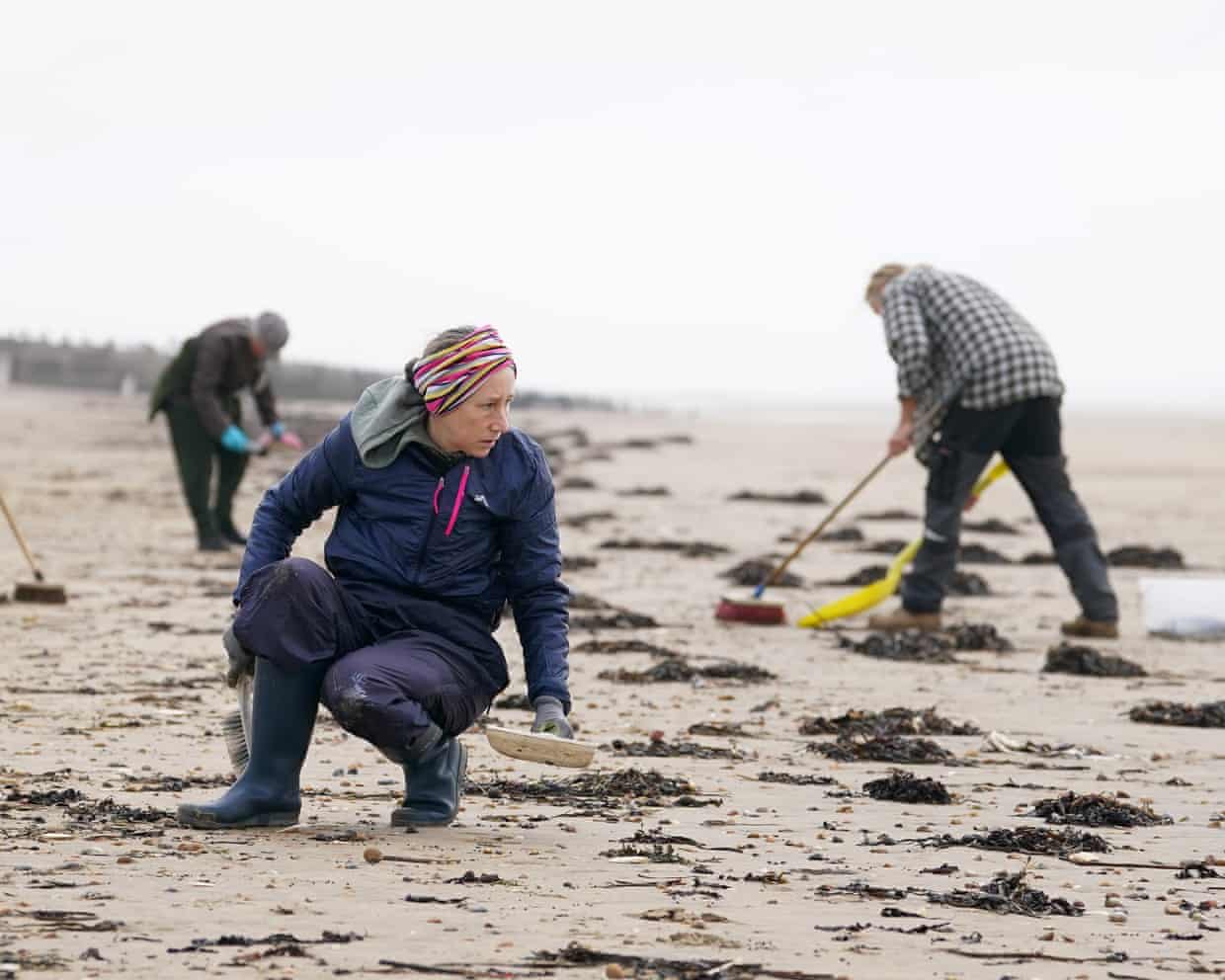
A significant environmental crisis unfolded last month at Camber Sands beach in East Sussex, where hundreds of millions of toxic plastic beads, known as biobeads, washed ashore after a catastrophic spill from a Southern Water sewage treatment facility. The incident has prompted local Labour MP Helena Dollimore to call for a nationwide ban on the use of these harmful materials in sewage treatment processes.
The biobeads, which are employed in some wastewater treatment plants to help purify water, pose a serious threat to wildlife and the environment. Kings’ College London conducted tests revealing that the beads contain heavy metals such as lead and arsenic, raising alarms among conservationists and local residents. The spill has not only marred the aesthetics of the beach but has also led to distress among the local community and environmental advocates.
Calls for Change and Accountability
Dollimore, representing Hastings and Rye, is launching a campaign alongside the Wildlife Trusts to eliminate the use of biobeads entirely. She expressed her shock at discovering the extent of their usage following the recent spill. “A month ago I wasn’t aware that these plastic beads were used in local wastewater plants until 320 million washed up on our beaches and nature reserve, causing an environmental catastrophe,” she stated. Dollimore emphasized the need for modern alternatives, asserting, “The use of beads is an outdated technology and better modern methods exist. So why are water companies still using them in coastal plants – the very place they could do most damage? We’re calling for them to bin the beads.”
There is currently no comprehensive record maintained by the government or regulatory bodies detailing how many treatment facilities utilize biobeads or the condition of the containers that hold them. Research conducted by the Guardian indicates that at least 15 treatment works in the south and south-west of England employ these beads, primarily in facilities built in the 1990s and early 2000s.
Environmental Risks and Wildlife Impact
Biobeads are known to release polycyclic aromatic hydrocarbons, which have been linked to cancer, and may also contain other toxins such as lead, antimony, and bromine. The beads are particularly dangerous as they can attract marine life due to their resemblance to food, leading to ingestion and potential poisoning. The local Wildlife Trust is actively working to manage the consequences of the spill, focusing on the removal of biobeads embedded in sensitive habitats like salt marshes and shingle.
Conservationists have raised concerns about the impact of these beads on local bird populations, particularly in the Rye Harbour nature reserve, which is critical for various migratory bird species. Henri Brocklebank, director of conservation at the Sussex Wildlife Trust, highlighted the risks birds face when ingesting biobeads, noting that their size closely resembles that of natural food items. “The impact of bioplastics accumulating in the digestive systems is well documented,” he stated, adding that the long-term effects of contaminants released in birds’ digestive systems remain largely unknown.
The Wildlife Trust is planning to conduct autopsies on dead birds found in the area to ascertain whether the beads contributed to their deaths. Brocklebank emphasized the urgency of removing these harmful materials from the environment, warning that future generations may still encounter them if their use is not halted.
The situation has drawn the attention of regulatory authorities, with Emma Hardy, the water minister, reaching out to water companies to investigate the extent of biobead usage. Meanwhile, the Environment Agency continues to look into the incident involving Southern Water. In response to the spill, Southern Water has issued an apology and stated it is unable to comment on third-party testing of the beads.
As the campaign for a ban on biobeads gains momentum, the environmental community remains hopeful for swift action that will prevent future incidents and protect vulnerable ecosystems in the region. With alternative technologies available, stakeholders are pressing for a transition to safer wastewater treatment methods that do not pose a threat to wildlife and natural habitats.

Urgent Tax Savings Alert: Maximize Deductions Before April 15

Trump’s Administration Faces Uncertainty Over Government Shutdowns

Cosmic Defects: The Mystery of the Universe’s Missing Anomalies

Rapid City Parks Department Opens Registration for Bocce Leagues

Samsung Galaxy Watch 9 to Feature Larger 435mAh Battery Soon

Two Dead After Student Boats Capsize Off Okinawa Coast

Healthy Choice Wellness Reports Earnings with Mixed Results

Prince Harry Positions Himself as Royal Family’s Image Reviver

All Points North Lodge Achieves FSPHP-ETA Accreditation

Send Holiday Parcels for £1.99 with New Comparison Service

University of Hawaiʻi Leads $25M AI Project to Monitor Natural Disasters

Maui County Reopens Upgraded Lānaʻi Fifth Street Courts Today!

Daily Codeword Puzzle Launches on October 21, 2025

Congresswoman Under Fire for Misleading Epstein Donation Claims

Interstellar Object 3I/ATLAS Emits Unique Metal Alloy, Says Scientist

Trump Vows to Resolve Afghanistan-Pakistan Crisis “Very Quickly”

Charles Darwin’s Address Book Reveals Hidden Aspects of His Life

Rediscovering Chrysler: 5 Overlooked Models from the 1980s
-
 Lifestyle8 months ago
Send Holiday Parcels for £1.99 with New Comparison Service
-
Science9 months ago
University of Hawaiʻi Leads $25M AI Project to Monitor Natural Disasters
-
 Top Stories8 months ago
Maui County Reopens Upgraded Lānaʻi Fifth Street Courts Today!
-
 Entertainment10 months ago
Daily Codeword Puzzle Launches on October 21, 2025
-
 Lifestyle9 months ago
Congresswoman Under Fire for Misleading Epstein Donation Claims
-
 Science10 months ago
Interstellar Object 3I/ATLAS Emits Unique Metal Alloy, Says Scientist
-
 Top Stories9 months ago
Trump Vows to Resolve Afghanistan-Pakistan Crisis “Very Quickly”
-
 Science8 months ago
Charles Darwin’s Address Book Reveals Hidden Aspects of His Life
-
 Lifestyle8 months ago
Rediscovering Chrysler: 5 Overlooked Models from the 1980s
-

 Science7 months ago
Understanding Generation Z: Strategies for Engaging the Workforce
-

 Entertainment10 months ago
Kelly McCreary Discusses Future of Maggie and Winston in Grey’s Anatomy
-

 Top Stories8 months ago
aespa Faces Backlash Over G-Dragon Interaction at 2025 MAMAs