
World
Libya’s Youth Movement Offers U.S. a Strategic Opportunity

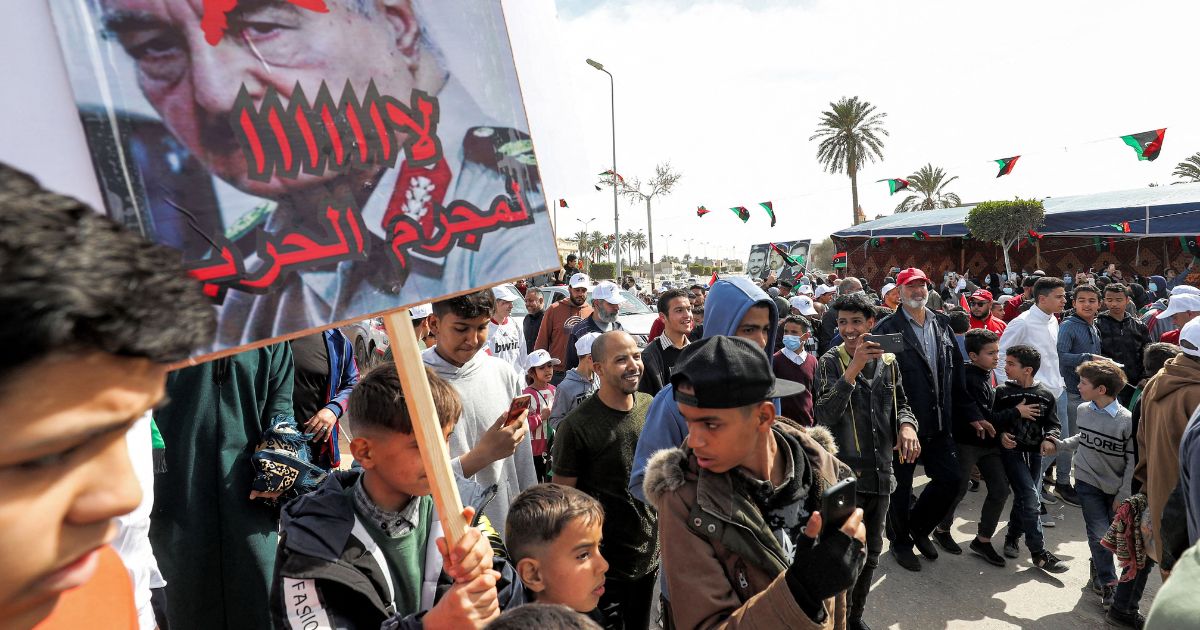
Libya is experiencing a pivotal moment as a rising youth movement seeks to reshape the nation’s political landscape. This shift comes at a time when the United States is reassessing its position in the region, particularly in light of China’s increasing influence in Libya. Beijing’s strategic investments highlight the country’s significance as a hub for energy and resources, prompting U.S. policymakers to reconsider their approach.
China’s Strategic Expansion in Libya
In recent years, Washington has largely overlooked Libya, viewing it as a chaotic environment too complex to navigate. While the U.S. turned its attention elsewhere, China moved decisively into the vacuum, recognizing Libya as a crucial strategic point in North Africa. The country is not only rich in energy resources but also holds the potential to reshape geopolitical dynamics across Africa and the Middle East.
Since 2022, China has initiated an ambitious expansion plan in Libya, which includes a $50 billion development project in Tobruk, alongside a $10 billion refinery and a $20 billion high-speed rail line connecting to Egypt. These initiatives are believed to have military and intelligence implications, providing China with a corridor that links Europe, Africa, and the Middle East.
Historically, Libya has been a key player in U.S. foreign policy. During the Cold War, it was considered a cornerstone of American strategy, with significant investments from U.S. firms like Occidental Petroleum. However, following the overthrow of the monarchy by Muammar Gaddafi, Libya became synonymous with instability, leading to a decline in American engagement in the region.
A New Political Landscape Driven by Youth
Amidst this backdrop of foreign competition, a remarkable political development is unfolding within Libya. Nearly 60 percent of the population is comprised of youth, and they are mobilizing to demand a return to the 1951 Independence Constitution and a restored constitutional monarchy under Crown Prince Mohammed El Senussi. This movement represents a grassroots effort to establish a political framework that historically provided stability in a nation marked by tribal divisions.
Activists argue that the constitution has never been legally annulled and remains the last valid national framework for governance. This emerging movement stems from an 18-month dialogue led by Crown Prince El Senussi, which has engaged Libyans from various regions, including discussions held in cities across Europe. Today, these conversations have spilled into the streets and conference halls in major Libyan cities such as Tripoli, Benghazi, and Misrata.
The unification of women, youth, tribal communities, and civil society in political activism is a significant shift, marking a rare moment of collective action not seen in decades. For the United States, the implications of this movement are profound. Libya’s vast mineral reserves could reduce reliance on China, and its role as an energy hub has the potential to stabilize global energy markets while alleviating inflationary pressures.
Furthermore, Libya’s strategic position along key Mediterranean maritime routes allows the U.S. to bolster its influence on NATO’s southern flank and regain access to billions in frozen assets that could fund national recovery efforts.
Despite the potential benefits, the U.S. has faced challenges in re-engaging with Libya, particularly due to the 15 years of disengagement that allowed China to assert its dominance. Voices like Ambassador Tom J. Barrack emphasize the effectiveness of benevolent monarchies in providing stability, a notion that aligns with the current political climate and President Trump’s evolving strategy in the region.
Additionally, Libya’s involvement in the ongoing civil war in Sudan plays a critical role in the broader geopolitical landscape. Smuggled gold flowing through Libya enriches rivals, particularly Russia, complicating U.S. interests. Stabilizing Libya could disrupt this illicit trade, thereby weakening Moscow’s financial footing and countering its influence in the region.
The youth-led movement presents a unique opportunity for the U.S. to engage with Libya on a new foundation—one that rejects foreign dominance and seeks to restore a historical partnership. Failing to recognize and support this moment could result in a forfeiture of strategic advantages across the Mediterranean and into the Sahel, regions critical for U.S. interests.
In conclusion, Libya represents not just a regional concern but a strategic pivot point for U.S. policy. A stable Libya could enhance America’s global posture, curb China’s influence in rare earths, diminish Russia’s leverage in OPEC+, and obstruct China’s Belt and Road Initiative. The lessons learned from Libya could also be applied to other challenging contexts, including Iran and Venezuela, enabling the U.S. to counter both China and Russia effectively.
As Washington grapples with its next steps, it is imperative to recognize that Libya is not merely a distraction. It holds the potential to restore American power across the Mediterranean, Africa, and the global energy market. The question remains whether the U.S. will seize this moment or allow Beijing to dictate Libya’s future.

Urgent Tax Savings Alert: Maximize Deductions Before April 15

Trump’s Administration Faces Uncertainty Over Government Shutdowns

Cosmic Defects: The Mystery of the Universe’s Missing Anomalies

Rapid City Parks Department Opens Registration for Bocce Leagues

Samsung Galaxy Watch 9 to Feature Larger 435mAh Battery Soon

Two Dead After Student Boats Capsize Off Okinawa Coast

Healthy Choice Wellness Reports Earnings with Mixed Results

Prince Harry Positions Himself as Royal Family’s Image Reviver

All Points North Lodge Achieves FSPHP-ETA Accreditation

Send Holiday Parcels for £1.99 with New Comparison Service

University of Hawaiʻi Leads $25M AI Project to Monitor Natural Disasters

Maui County Reopens Upgraded Lānaʻi Fifth Street Courts Today!

Daily Codeword Puzzle Launches on October 21, 2025

Congresswoman Under Fire for Misleading Epstein Donation Claims

Interstellar Object 3I/ATLAS Emits Unique Metal Alloy, Says Scientist

Trump Vows to Resolve Afghanistan-Pakistan Crisis “Very Quickly”

Charles Darwin’s Address Book Reveals Hidden Aspects of His Life

Rediscovering Chrysler: 5 Overlooked Models from the 1980s
-
 Lifestyle8 months ago
Send Holiday Parcels for £1.99 with New Comparison Service
-
Science9 months ago
University of Hawaiʻi Leads $25M AI Project to Monitor Natural Disasters
-
 Top Stories8 months ago
Maui County Reopens Upgraded Lānaʻi Fifth Street Courts Today!
-
 Entertainment10 months ago
Daily Codeword Puzzle Launches on October 21, 2025
-
 Lifestyle9 months ago
Congresswoman Under Fire for Misleading Epstein Donation Claims
-
 Science10 months ago
Interstellar Object 3I/ATLAS Emits Unique Metal Alloy, Says Scientist
-
 Top Stories9 months ago
Trump Vows to Resolve Afghanistan-Pakistan Crisis “Very Quickly”
-
 Science8 months ago
Charles Darwin’s Address Book Reveals Hidden Aspects of His Life
-
 Lifestyle8 months ago
Rediscovering Chrysler: 5 Overlooked Models from the 1980s
-

 Science7 months ago
Understanding Generation Z: Strategies for Engaging the Workforce
-

 Entertainment10 months ago
Kelly McCreary Discusses Future of Maggie and Winston in Grey’s Anatomy
-

 Top Stories8 months ago
aespa Faces Backlash Over G-Dragon Interaction at 2025 MAMAs