
Health
Experts Warn Flu Season May Intensify Due to New Strain

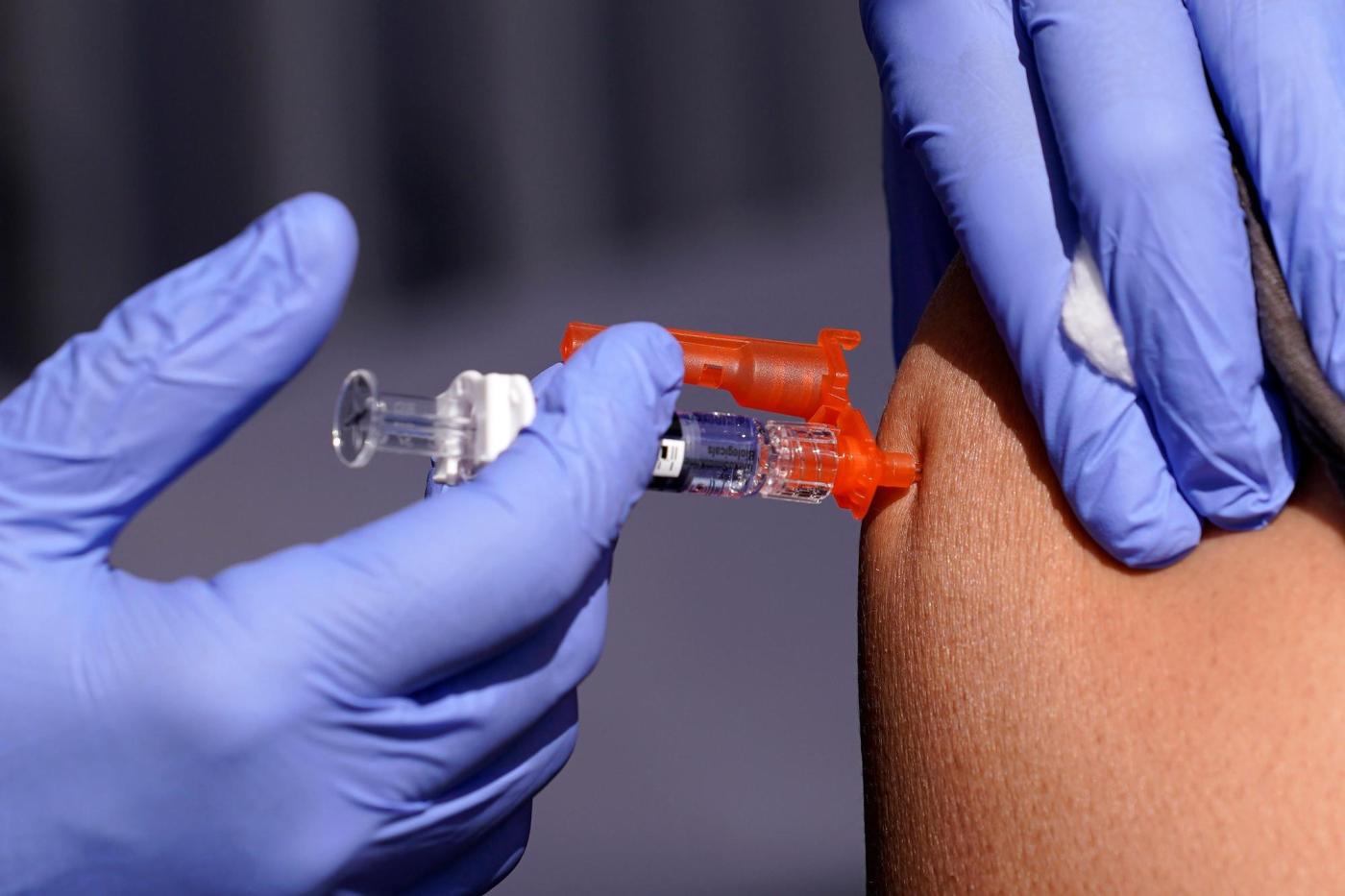
Medical experts are predicting a significant escalation in flu activity in the coming weeks, driven by a new strain known as subclade K. While this flu season has started relatively mild, the emergence of this strain, which arose after vaccine production, poses a heightened risk for illness. The current flu vaccine remains the best defense against infection, despite its limitations against this new variant.
Data from the United Kingdom reveals that hospitalizations due to the flu are currently at their highest for this time of year, according to the U.K. National Health Service. Lisa Sollot, the respiratory disease program coordinator for the Virginia Department of Health, noted that subclade K first appeared in Australia towards the end of its flu season and has since been detected in Japan and the United States.
Recent statistics indicate that the vaccine is approximately 32-39% effective in preventing flu infection overall, but it shows improved effectiveness of 72-75% in children, as reported by the University of Virginia. Frederick G. Hayden, a professor at the university and a member of its Division of Infectious Diseases and International Health, co-authored an article in the Journal of the American Medical Association discussing these findings. He highlighted that subclade K is a subtype of the strain responsible for last season’s severe flu, which was marked by a tragic increase in pediatric deaths. Consequently, this season is expected to be similarly severe.
According to a report released on December 11, 2023, by the Centers for Disease Control and Prevention (CDC), the 2024-25 influenza season, primarily driven by influenza A H1N1 and H3N2 viruses, has already resulted in high severity across all age groups, with particularly alarming pediatric mortality rates. “Unfortunately, we are seeing the circulation of a new variant of the H3N2 virus for which our vaccines may be somewhat less effective,” Hayden stated in a release from the university. He emphasized that although the vaccines might not be perfectly effective, they significantly reduce the risk of severe illness and limit the spread of the virus.
Sollot further explained that historically, high-severity flu seasons do not occur in consecutive years. “Low vaccination rates combined with subclade K’s emergence may potentially lead to a severe season,” she cautioned, although she acknowledged the uncertainty of its severity.
Currently, vaccination rates in Virginia are concerningly low, with only about 28% of residents across all age groups vaccinated. The figures are even lower for children aged 5-17, where the rate stands at 20.6%. In contrast, individuals aged 50 and older have a vaccination rate of 39.8%. CDC data from the previous flu season revealed that about 90% of children who died from the flu were unvaccinated, with half of those children lacking any underlying health conditions.
“Those are really shocking statistics for the season,” Sollot said. She urges everyone to get vaccinated, maintain proper hygiene, and stay home when feeling unwell. The CDC recommends flu vaccination for everyone aged six months and older, with only rare exceptions.
With the flu season expected to intensify, public health officials are emphasizing the importance of vaccination and preventive measures to mitigate the impact of this potentially severe outbreak.

Urgent Tax Savings Alert: Maximize Deductions Before April 15

Trump’s Administration Faces Uncertainty Over Government Shutdowns

Cosmic Defects: The Mystery of the Universe’s Missing Anomalies

Rapid City Parks Department Opens Registration for Bocce Leagues

Samsung Galaxy Watch 9 to Feature Larger 435mAh Battery Soon

Two Dead After Student Boats Capsize Off Okinawa Coast

Healthy Choice Wellness Reports Earnings with Mixed Results

Prince Harry Positions Himself as Royal Family’s Image Reviver

All Points North Lodge Achieves FSPHP-ETA Accreditation

Send Holiday Parcels for £1.99 with New Comparison Service

University of Hawaiʻi Leads $25M AI Project to Monitor Natural Disasters

Maui County Reopens Upgraded Lānaʻi Fifth Street Courts Today!

Daily Codeword Puzzle Launches on October 21, 2025

Congresswoman Under Fire for Misleading Epstein Donation Claims

Interstellar Object 3I/ATLAS Emits Unique Metal Alloy, Says Scientist

Trump Vows to Resolve Afghanistan-Pakistan Crisis “Very Quickly”

Charles Darwin’s Address Book Reveals Hidden Aspects of His Life

Rediscovering Chrysler: 5 Overlooked Models from the 1980s
-
 Lifestyle8 months ago
Send Holiday Parcels for £1.99 with New Comparison Service
-
Science9 months ago
University of Hawaiʻi Leads $25M AI Project to Monitor Natural Disasters
-
 Top Stories8 months ago
Maui County Reopens Upgraded Lānaʻi Fifth Street Courts Today!
-
 Entertainment10 months ago
Daily Codeword Puzzle Launches on October 21, 2025
-
 Lifestyle9 months ago
Congresswoman Under Fire for Misleading Epstein Donation Claims
-
 Science10 months ago
Interstellar Object 3I/ATLAS Emits Unique Metal Alloy, Says Scientist
-
 Top Stories9 months ago
Trump Vows to Resolve Afghanistan-Pakistan Crisis “Very Quickly”
-
 Science9 months ago
Charles Darwin’s Address Book Reveals Hidden Aspects of His Life
-
 Lifestyle8 months ago
Rediscovering Chrysler: 5 Overlooked Models from the 1980s
-

 Science7 months ago
Understanding Generation Z: Strategies for Engaging the Workforce
-

 Entertainment10 months ago
Kelly McCreary Discusses Future of Maggie and Winston in Grey’s Anatomy
-

 Top Stories8 months ago
aespa Faces Backlash Over G-Dragon Interaction at 2025 MAMAs