
Science
Inge Lehmann’s Groundbreaking Discovery of Earth’s Inner Core

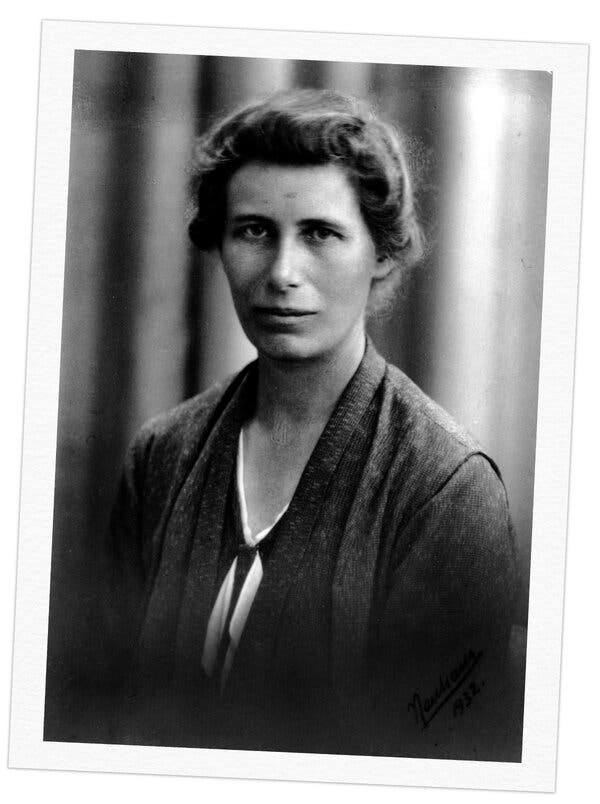
Inge Lehmann, a pioneering Danish seismologist, fundamentally changed our understanding of the Earth’s structure in September 1936 with her groundbreaking research published in a French scientific journal. Her article, intriguingly titled “P’,” introduced a revolutionary theory that the Earth possesses a deep inner core composed of a dense material, contradicting the prevailing belief that the planet’s interior was entirely molten and liquid.
Lehmann’s work was remarkable, especially considering the landscape of seismology during the 1930s, which was predominantly male and often overlooked women in scientific fields. Her dedication to her career led her to forgo marriage and largely work in isolation in Copenhagen, a decision that did not hinder her ambition or contributions to science.
Unveiling the Inner Core
The turning point for Lehmann came while analyzing seismic readings from a significant earthquake that occurred in New Zealand in 1929. As she meticulously examined the data, she observed unusual patterns in the seismic waves produced by the quake. There are primarily two types of seismic waves: primary waves, or P waves, which are the fastest and can travel through solids, liquids, and gases; and secondary waves, or S waves, which can only move through solids.
Lehmann’s insights revealed that the behavior of these waves indicated the presence of a solid inner core, which was a significant departure from the long-held notion that the Earth’s interior was entirely liquid. Her innovative calculations, detailed tables, and intricate hand-drawn graphs filled nearly 30 pages, showcasing her thorough approach and commitment to her research.
The implications of Lehmann’s discovery were profound, as they not only advanced the field of seismology but also laid the groundwork for future geological studies. Her findings challenged existing theories and prompted further investigation into the Earth’s internal structure, ultimately leading to a better understanding of geological processes.
A Lasting Legacy
Despite the impact of her work, Lehmann’s contributions went largely unrecognized for many years. As part of the “Overlooked” series of obituaries by The Times, her story serves as a reminder of the many remarkable individuals whose achievements have been eclipsed by time and circumstance.
Inge Lehmann passed away on April 21, 1993, at the age of 104, yet her legacy endures through the advancements in geophysics and our current understanding of the planet’s inner workings. Her determination and groundbreaking research continue to inspire scientists worldwide, underscoring the importance of diversity in scientific fields and the need to recognize the contributions of all individuals, regardless of gender.
Lehmann’s work not only reshaped the scientific narrative of her time but also highlighted the essential role of perseverance and innovation in the pursuit of knowledge.

No. 1 Landstown Edges No. 8 Nansemond River in Thriller

Urgent Search for Missing 24-Year-Old Sydney Marquez in Houston

Draymond Green Ejected After Quick Techs Against Suns

Packers QB Jordan Love Exits After Head Hit; Concussion Evaluated

First Wheelchair User in Space Captures Global Attention Today

ABC7 Chicago Launches ‘Chicago Proud’ Series Showcasing Local Heroes

Duke vs. Texas Tech: No. 3 Blue Devils Clash at MSG NOW

Oscar Smith’s Johnson Named Offensive Player of the Year

Discover the Top 10 K-Romances of 2025 That Captivated Audiences

Send Holiday Parcels for £1.99 with New Comparison Service

University of Hawaiʻi Leads $25M AI Project to Monitor Natural Disasters

Interstellar Object 3I/ATLAS Emits Unique Metal Alloy, Says Scientist

Researchers Achieve Fastest Genome Sequencing in Under Four Hours

Iconic Sand Dollar Social Club Listed for $3 Million in Folly Beach

Afghan Refugee Detained by ICE After Asylum Hearing in New York

McEwen Inc. Secures Tartan Lake Gold Mine Through Acquisition

Peptilogics Secures $78 Million to Combat Prosthetic Joint Infections

Jump for Good: San Clemente Pier Fundraiser Allows Legal Leaps
-
 Lifestyle2 weeks ago
Send Holiday Parcels for £1.99 with New Comparison Service
-
Science2 months ago
University of Hawaiʻi Leads $25M AI Project to Monitor Natural Disasters
-
 Science2 months ago
Interstellar Object 3I/ATLAS Emits Unique Metal Alloy, Says Scientist
-
 Science2 months ago
Researchers Achieve Fastest Genome Sequencing in Under Four Hours
-
 Business2 months ago
Iconic Sand Dollar Social Club Listed for $3 Million in Folly Beach
-
 Politics2 months ago
Afghan Refugee Detained by ICE After Asylum Hearing in New York
-
 Business2 months ago
McEwen Inc. Secures Tartan Lake Gold Mine Through Acquisition
-
 Health2 months ago
Peptilogics Secures $78 Million to Combat Prosthetic Joint Infections
-
 Lifestyle2 months ago
Jump for Good: San Clemente Pier Fundraiser Allows Legal Leaps
-
 Science2 months ago
Mars Observed: Detailed Imaging Reveals Dust Avalanche Dynamics
-

 Health2 months ago
Researcher Uncovers Zika Virus Pathway to Placenta Using Nanotubes
-

 Entertainment2 months ago
Jennifer Lopez Addresses A-Rod Split in Candid Interview