
Politics
Republicans Clash Over Affordable Care Act Funding Revival

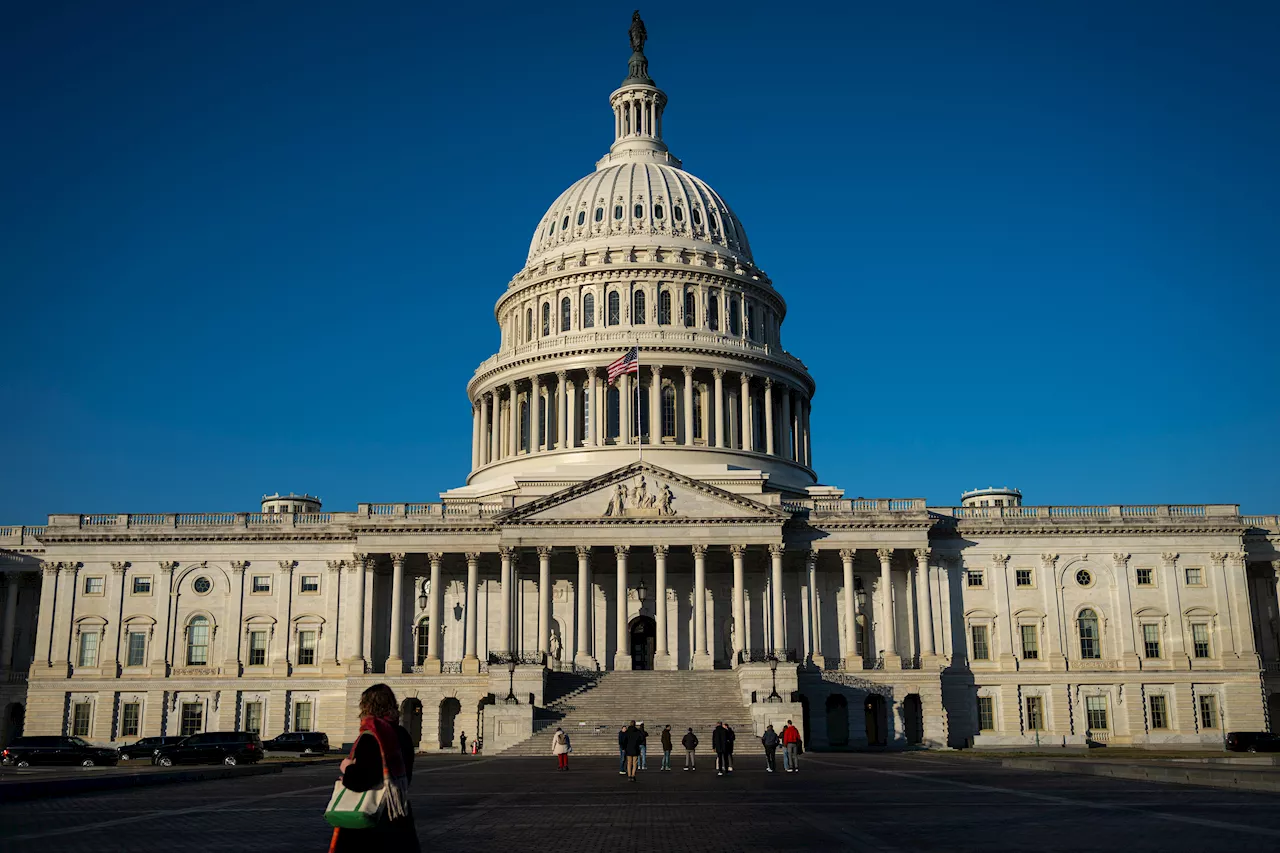
A bipartisan group in the U.S. House of Representatives has initiated a push to revive funding for the Affordable Care Act (ACA), but significant resistance from Republican leaders is likely to lead to a political confrontation. Four Republican representatives joined forces with Democrats to force a vote on extending ACA funds, scheduled for the week of January 5, 2026. Meanwhile, Senate Republicans have indicated that the proposed bill will likely not gain traction in their chamber.
House Speaker Mike Johnson (R-La.) and Senate Majority Leader John Thune (R-S.D.) have expressed their opposition to reviving these funds, asserting that they should expire as originally intended. However, some lawmakers from both parties believe there may still be an opportunity to reach a compromise. If the revival fails, Democrats are prepared to use the issue as a rallying point in the upcoming midterm elections.
Representative Pat Ryan (D-N.Y.), who represents a competitive district, criticized his Republican counterparts, stating, “They are absolutely screwing over millions of people, including my constituents.” Ryan’s comments reflect the growing frustration among lawmakers regarding the potential impact of funding expiration on their constituents.
The initiative gained momentum when four Republicans—Brian Fitzpatrick, Rob Bresnahan, and Ryan Mackenzie, all from Pennsylvania, along with Mike Lawler from New York—collaborated with 214 Democratic colleagues to initiate a “discharge petition.” This strategy bypasses leadership opposition to bring the ACA funding bill to a vote. Lawler expressed optimism about the bill’s chances, stating, “If the bill comes to the floor, it’ll give the Senate the ability to come back with a bipartisan compromise.”
Despite these efforts, many Republican senators have voiced skepticism about the bill’s viability. Senator Thom Tillis (R-N.C.), who once supported extending ACA funding, remarked that “there’s no way it’s going to sail through.” The last significant effort to extend ACA funds failed last week in a vote of 51-48, where four Republicans sided with Democrats, falling short of the 60 votes needed to overcome a filibuster.
Senator Susan Collins (R-Maine) has long been a proponent of bipartisan healthcare solutions. However, she has withheld support for the House bill, advocating instead for a two-year extension coupled with reforms such as income caps. Collins articulated the need for a comprehensive approach, saying, “What we’re trying to do is to put together a bipartisan bill that would have reforms plus a two-year extension.”
The Senate landscape appears equally divided, with some Republicans, including Lisa Murkowski (R-Alaska), acknowledging the potential for the House bill to serve as a foundation for negotiations. Murkowski stated, “It’s too late to avoid the shock factor, but it’s not too late to do something about it.”
Senator Jim Justice (R-W.Va.) also expressed concern about the repercussions of allowing ACA funds to expire without a replacement plan. He proposed a gradual reduction of funding, suggesting, “We’ve got to give people an exit ramp.” This reflects a broader concern among some Republicans about the financial impact on their constituents if funding ceases abruptly.
Discussions around a potential bipartisan deal are hampered by disagreements over “Hyde” language, which restricts federal funding for abortions. Senator Mike Rounds (R-S.D.) noted the challenges posed by these disputes but remained hopeful that a compromise could be reached.
Senate Minority Leader Chuck Schumer (D-N.Y.) warned that time is running out, indicating that higher premiums expected after January 1 will complicate efforts to address funding issues. Meanwhile, Democrats have signaled a shift in strategy, opting not to link ACA funding to the upcoming government funding deadline, a tactic that previously led to political backlash.
Amid these political maneuvers, Senator Josh Hawley (R-Mo.) called for Republicans to prioritize the needs of their constituents over historical grievances with the ACA. He emphasized the public’s desire for actionable solutions to rising healthcare costs, saying, “People want us to do something to help them with the costs.”
As the debate on ACA funding unfolds, the political ramifications are likely to resonate through the midterm elections, potentially influencing voter sentiment in pivotal districts across the country. The outcome of this legislative battle could have far-reaching implications for healthcare access and affordability in the United States.

Urgent Update: High School Sports Scores and Matchups for Dec. 20

No. 1 Landstown Edges No. 8 Nansemond River in Thriller

Urgent Search for Missing 24-Year-Old Sydney Marquez in Houston

Draymond Green Ejected After Quick Techs Against Suns

Packers QB Jordan Love Exits After Head Hit; Concussion Evaluated

First Wheelchair User in Space Captures Global Attention Today

ABC7 Chicago Launches ‘Chicago Proud’ Series Showcasing Local Heroes

Duke vs. Texas Tech: No. 3 Blue Devils Clash at MSG NOW

Oscar Smith’s Johnson Named Offensive Player of the Year

Send Holiday Parcels for £1.99 with New Comparison Service

University of Hawaiʻi Leads $25M AI Project to Monitor Natural Disasters

Interstellar Object 3I/ATLAS Emits Unique Metal Alloy, Says Scientist

Researchers Achieve Fastest Genome Sequencing in Under Four Hours

Iconic Sand Dollar Social Club Listed for $3 Million in Folly Beach

Afghan Refugee Detained by ICE After Asylum Hearing in New York

McEwen Inc. Secures Tartan Lake Gold Mine Through Acquisition

Peptilogics Secures $78 Million to Combat Prosthetic Joint Infections

Jump for Good: San Clemente Pier Fundraiser Allows Legal Leaps
-
 Lifestyle2 weeks ago
Send Holiday Parcels for £1.99 with New Comparison Service
-
Science2 months ago
University of Hawaiʻi Leads $25M AI Project to Monitor Natural Disasters
-
 Science2 months ago
Interstellar Object 3I/ATLAS Emits Unique Metal Alloy, Says Scientist
-
 Science2 months ago
Researchers Achieve Fastest Genome Sequencing in Under Four Hours
-
 Business2 months ago
Iconic Sand Dollar Social Club Listed for $3 Million in Folly Beach
-
 Politics2 months ago
Afghan Refugee Detained by ICE After Asylum Hearing in New York
-
 Business2 months ago
McEwen Inc. Secures Tartan Lake Gold Mine Through Acquisition
-
 Health2 months ago
Peptilogics Secures $78 Million to Combat Prosthetic Joint Infections
-
 Lifestyle2 months ago
Jump for Good: San Clemente Pier Fundraiser Allows Legal Leaps
-

 Science2 months ago
Mars Observed: Detailed Imaging Reveals Dust Avalanche Dynamics
-

 Health2 months ago
Researcher Uncovers Zika Virus Pathway to Placenta Using Nanotubes
-

 Entertainment2 months ago
Jennifer Lopez Addresses A-Rod Split in Candid Interview