
World
Boeing 757: The Evolution of Winglets and Fuel Efficiency

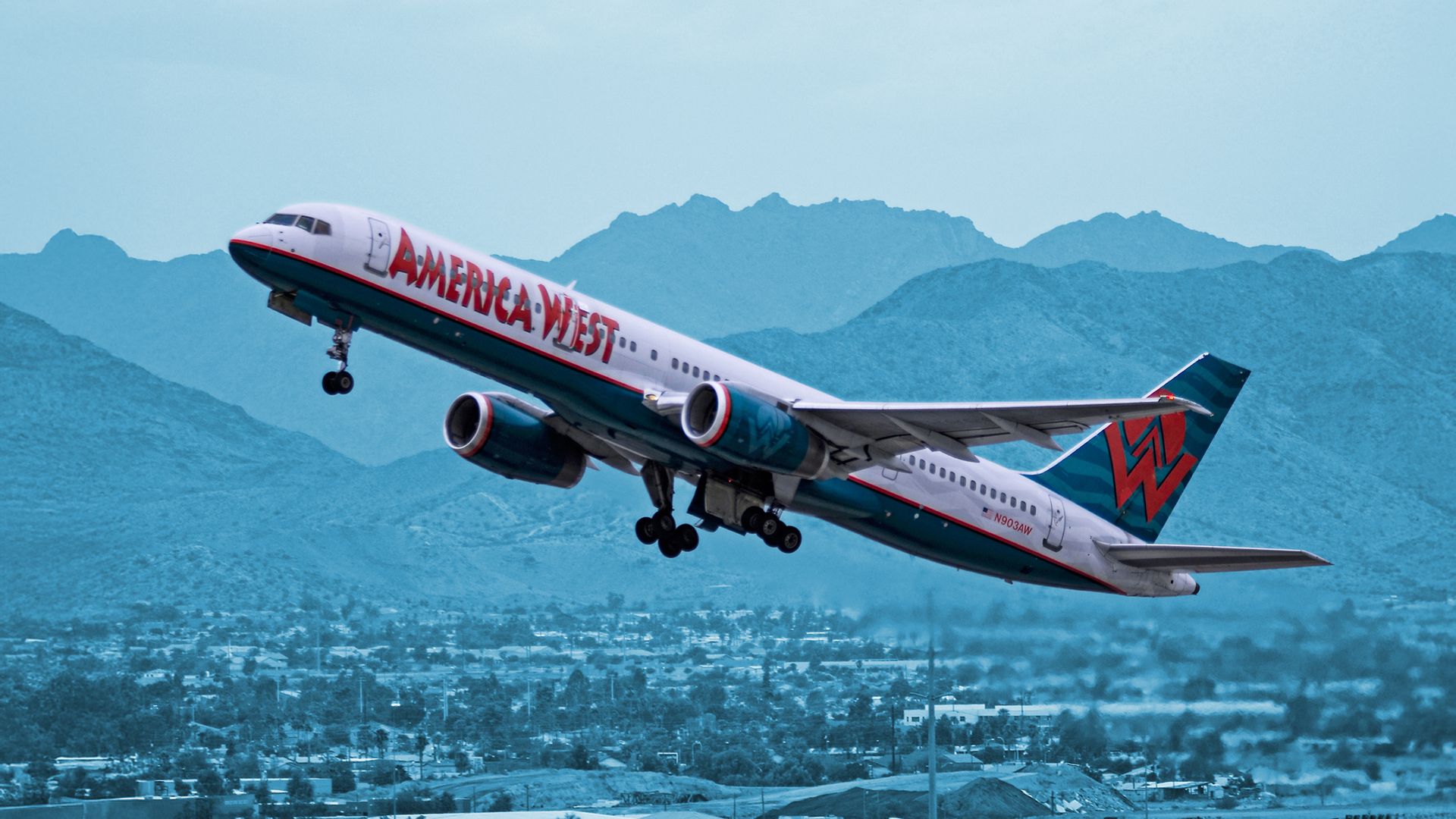
The Boeing 757 has undergone significant changes since its introduction in the early 1980s, particularly concerning aerodynamic efficiency. While most modern narrowbody jets are equipped with upward-pointing winglets that enhance fuel efficiency, the 757 initially lacked these features. The question arises: why didn’t Boeing incorporate blended winglets from the start?
The 757’s Design Era and Initial Performance
The key reason for the absence of blended winglets in the original Boeing 757 design is rooted in timing. When the aircraft was developed in the late 1970s, advanced winglet technology was not yet available for large commercial jets. The first flight of the 757 took place in February 1982, with commercial service commencing in 1983. At that time, most research on wingtip devices focused on angular “canted” winglets, which were later used on models like the Boeing 747-400.
Boeing’s engineers aimed to quickly deliver a successor to the 727. They avoided untested technologies that would have increased costs and added complexity. Blended winglets, characterized by their smooth, curved designs, were not practical upgrades during the 757’s initial production phase. Regulatory approval for blended winglets on the Boeing 757-200 was only granted in the mid-2000s, long after Boeing had ceased production of the aircraft in 2004.
At the time of its design, fuel prices were low, and the efficiency gains from early winglet designs did not justify the additional weight and certification costs. The 757 was engineered as a “hot and high” specialist with a strong thrust-to-weight ratio, allowing it to operate effectively in challenging environments, such as high-altitude airports in Denver and Mexico City.
Fuel Efficiency Without Winglets
Despite lacking winglets, the 757 was an advanced aircraft for its time, featuring a supercritical wing design that optimized airflow and reduced drag. This design enhanced fuel efficiency and provided a comfortable flight experience for passengers. The original 757-200 could fly approximately 3,715 nautical miles (6,880 kilometers) with a typical passenger load, sufficient for transcontinental and many transatlantic routes. The addition of blended winglets later increased the range to around 3,915 nautical miles (7,250 kilometers), but this change was not revolutionary.
The performance of the 757 came with trade-offs. Incorporating winglets during the 1980s would have necessitated reinforcement of the wing structure to handle extra forces, increasing the aircraft’s weight and complexity. Given its intended routes focused on medium- and long-haul flights, the additional weight would have negated many potential fuel savings. Boeing’s commitment to an efficient wing design made the inclusion of winglets economically unviable at that time.
The Shift in Economic Landscape
As the aviation landscape evolved, airlines began retrofitting their 757s with blended winglets in the mid-2000s. The motivation for this shift was largely economic, spurred by rising fuel prices from 2004 to 2008. A modest improvement in fuel efficiency became increasingly valuable. Aviation Partners Boeing touted a fuel savings of approximately 5%, which was crucial for airlines facing higher operational costs.
The retrofit program initiated in 2005 revitalized the 757’s appeal. The addition of eight-foot-tall blended winglets expanded the aircraft’s operational range, allowing airlines to explore new routes. For instance, United Airlines and Continental Airlines (now part of United) utilized winglet-equipped 757-200s to connect Newark with smaller European cities like Lisbon and Porto, where demand did not justify larger aircraft.
Challenges with Split Scimitar Winglets
A common inquiry among aviation enthusiasts concerns the absence of the more advanced “Split Scimitar” winglets on the 757, which are seen on newer models like the Boeing 737 MAX. One primary reason is ground clearance. The 757’s design does not provide sufficient height for the full split-scimitar winglet to safely clear ground equipment and service vehicles. Additionally, the structural modifications required to accommodate such winglets would have incurred high costs, further diminishing their viability for older aircraft.
Instead, several airlines, including United and Icelandair, opted for the refined “scimitar blended winglet” design, which offers improved performance without compromising ground clearance. This alternative enhances fuel efficiency by an additional 1% without introducing unnecessary complications.
Enduring Legacy of the Boeing 757
Even after Boeing ceased production of the 757 in 2004, the aircraft continues to play a vital role in airline operations worldwide. Delta Air Lines remains the largest operator of the 757, with over 120 aircraft in its fleet, utilizing them for high-density domestic and long-haul flights. United Airlines employs winglet-equipped 757-200s for premium cross-country flights and transatlantic routes, highlighting the aircraft’s continued relevance in the aviation market.
In the cargo sector, companies like FedEx Express and UPS Airlines rely on the 757 for medium-lift operations. Its combination of payload capacity, range, and operational flexibility allows it to service airports with shorter runways, where larger aircraft may face challenges.
The evolution of the Boeing 757 and its eventual adaptation of blended winglets illustrates how a well-designed aircraft can remain competitive and relevant long after its initial production. As newer models like the Airbus A321neo and Boeing 737 MAX gradually replace the 757 on various routes, its unique capabilities ensure that it continues to be a valuable asset for both passenger and cargo airlines.

Urgent Tax Savings Alert: Maximize Deductions Before April 15

Trump’s Administration Faces Uncertainty Over Government Shutdowns

Cosmic Defects: The Mystery of the Universe’s Missing Anomalies

Rapid City Parks Department Opens Registration for Bocce Leagues

Samsung Galaxy Watch 9 to Feature Larger 435mAh Battery Soon

Two Dead After Student Boats Capsize Off Okinawa Coast

Healthy Choice Wellness Reports Earnings with Mixed Results

Prince Harry Positions Himself as Royal Family’s Image Reviver

All Points North Lodge Achieves FSPHP-ETA Accreditation

Send Holiday Parcels for £1.99 with New Comparison Service

University of Hawaiʻi Leads $25M AI Project to Monitor Natural Disasters

Maui County Reopens Upgraded Lānaʻi Fifth Street Courts Today!

Daily Codeword Puzzle Launches on October 21, 2025

Congresswoman Under Fire for Misleading Epstein Donation Claims

Interstellar Object 3I/ATLAS Emits Unique Metal Alloy, Says Scientist

Trump Vows to Resolve Afghanistan-Pakistan Crisis “Very Quickly”

Charles Darwin’s Address Book Reveals Hidden Aspects of His Life

Rediscovering Chrysler: 5 Overlooked Models from the 1980s
-
 Lifestyle8 months ago
Send Holiday Parcels for £1.99 with New Comparison Service
-
Science9 months ago
University of Hawaiʻi Leads $25M AI Project to Monitor Natural Disasters
-
 Top Stories8 months ago
Maui County Reopens Upgraded Lānaʻi Fifth Street Courts Today!
-
 Entertainment10 months ago
Daily Codeword Puzzle Launches on October 21, 2025
-
 Lifestyle9 months ago
Congresswoman Under Fire for Misleading Epstein Donation Claims
-
 Science10 months ago
Interstellar Object 3I/ATLAS Emits Unique Metal Alloy, Says Scientist
-
 Top Stories9 months ago
Trump Vows to Resolve Afghanistan-Pakistan Crisis “Very Quickly”
-
 Science8 months ago
Charles Darwin’s Address Book Reveals Hidden Aspects of His Life
-
 Lifestyle8 months ago
Rediscovering Chrysler: 5 Overlooked Models from the 1980s
-

 Science7 months ago
Understanding Generation Z: Strategies for Engaging the Workforce
-

 Entertainment10 months ago
Kelly McCreary Discusses Future of Maggie and Winston in Grey’s Anatomy
-

 Top Stories8 months ago
aespa Faces Backlash Over G-Dragon Interaction at 2025 MAMAs