
Health
Brazilian Plant Shows Promise in Reducing Arthritis Inflammation

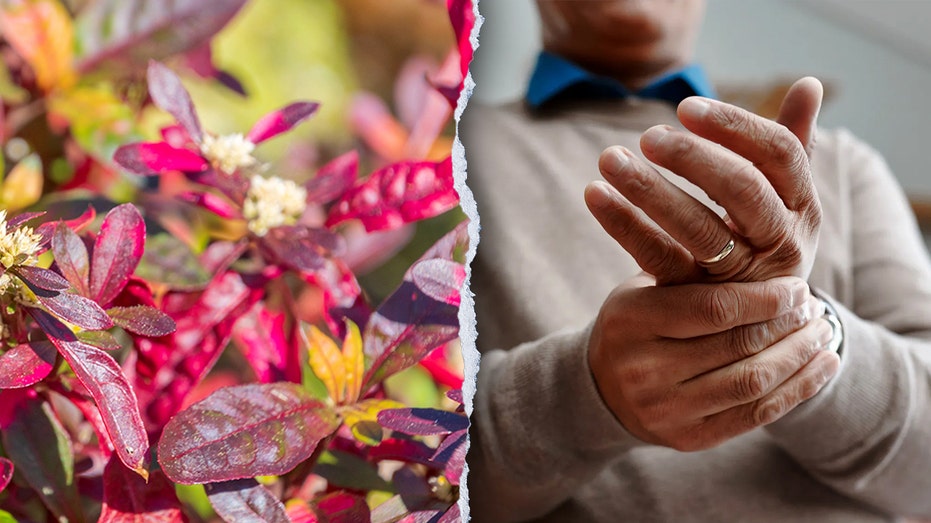
Researchers have discovered that a traditional Brazilian plant known as Joseph’s Coat (scientific name: Alternanthera littoralis) demonstrates significant potential in combating arthritis and other inflammatory conditions. A new study highlights the plant’s ability to reduce swelling and protect joint tissue, suggesting a promising alternative to conventional arthritis treatments.
The research, conducted by teams from various Brazilian universities including the Federal University of Grande Dourados, the State University of Campinas, and São Paulo State University, was published in the Journal of Ethnopharmacology. Traditionally, local communities have utilized Joseph’s Coat for its anti-inflammatory properties, yet scientific evidence supporting its efficacy had been lacking until now.
Promising Laboratory Findings
The study focused on the plant’s above-ground stems and leaves. Researchers prepared an ethanolic extract, using alcohol to extract the active compounds. In laboratory models simulating arthritis, this extract resulted in a notable reduction in visible swelling. According to Arielle Cristina Arena, an associate professor at the Institute of Biosciences at UNESP’s Botucatu Campus, “In the experimental models, we observed reduced edema, improved joint parameters, and modulation of inflammatory mediators, suggesting antioxidant and tissue-protective actions.”
The treatment also affected inflammatory pathways and signs of oxidative stress, which are critical factors in chronic inflammation. Animals treated with the extract exhibited less swelling and healthier joint tissue compared to untreated controls, suggesting the potential for these effects to translate into human applications.
Safety Profile and Future Research Needs
Safety tests conducted alongside the efficacy research showed that the plant extract did not produce harmful effects in the laboratory animals at the doses tested, indicating a favorable safety profile. Should further studies validate these findings, Joseph’s Coat could become a vital source for new plant-based anti-inflammatory treatments.
Modern arthritis medications can be effective but often carry side effects that may limit their long-term use. The research team posits that natural compounds like those found in Joseph’s Coat could serve as alternatives or complementary treatments in future therapies. However, it is crucial to note that while these findings are encouraging, they are based on animal studies and cannot be directly applied to humans at this stage.
The study highlights the need for additional research to identify the specific active compounds responsible for the plant’s anti-inflammatory effects. This knowledge is essential for standardizing dosages and predicting long-term outcomes for potential human use. Additionally, the controlled conditions under which the extract was prepared mean that commercially available or homemade versions of the plant may vary significantly in strength and safety.
In conclusion, while Joseph’s Coat shows significant promise as a natural remedy for arthritis, more rigorous studies are necessary to fully understand its potential benefits and risks in human patients. As research progresses, this traditional Brazilian plant may pave the way for innovative, plant-based approaches to managing arthritis and similar inflammatory conditions.

Urgent Tax Savings Alert: Maximize Deductions Before April 15

Trump’s Administration Faces Uncertainty Over Government Shutdowns

Cosmic Defects: The Mystery of the Universe’s Missing Anomalies

Rapid City Parks Department Opens Registration for Bocce Leagues

Samsung Galaxy Watch 9 to Feature Larger 435mAh Battery Soon

Two Dead After Student Boats Capsize Off Okinawa Coast

Healthy Choice Wellness Reports Earnings with Mixed Results

Prince Harry Positions Himself as Royal Family’s Image Reviver

All Points North Lodge Achieves FSPHP-ETA Accreditation

Send Holiday Parcels for £1.99 with New Comparison Service

University of Hawaiʻi Leads $25M AI Project to Monitor Natural Disasters

Maui County Reopens Upgraded Lānaʻi Fifth Street Courts Today!

Daily Codeword Puzzle Launches on October 21, 2025

Congresswoman Under Fire for Misleading Epstein Donation Claims

Interstellar Object 3I/ATLAS Emits Unique Metal Alloy, Says Scientist

Trump Vows to Resolve Afghanistan-Pakistan Crisis “Very Quickly”

Charles Darwin’s Address Book Reveals Hidden Aspects of His Life

Rediscovering Chrysler: 5 Overlooked Models from the 1980s
-
 Lifestyle8 months ago
Send Holiday Parcels for £1.99 with New Comparison Service
-
Science9 months ago
University of Hawaiʻi Leads $25M AI Project to Monitor Natural Disasters
-
 Top Stories8 months ago
Maui County Reopens Upgraded Lānaʻi Fifth Street Courts Today!
-
 Entertainment10 months ago
Daily Codeword Puzzle Launches on October 21, 2025
-
 Lifestyle9 months ago
Congresswoman Under Fire for Misleading Epstein Donation Claims
-
 Science10 months ago
Interstellar Object 3I/ATLAS Emits Unique Metal Alloy, Says Scientist
-
 Top Stories9 months ago
Trump Vows to Resolve Afghanistan-Pakistan Crisis “Very Quickly”
-
 Science8 months ago
Charles Darwin’s Address Book Reveals Hidden Aspects of His Life
-
 Lifestyle8 months ago
Rediscovering Chrysler: 5 Overlooked Models from the 1980s
-

 Science7 months ago
Understanding Generation Z: Strategies for Engaging the Workforce
-

 Entertainment10 months ago
Kelly McCreary Discusses Future of Maggie and Winston in Grey’s Anatomy
-

 Top Stories8 months ago
aespa Faces Backlash Over G-Dragon Interaction at 2025 MAMAs