
World
India Strengthens Military Ties in Southeast Asia Amid Rising Tensions

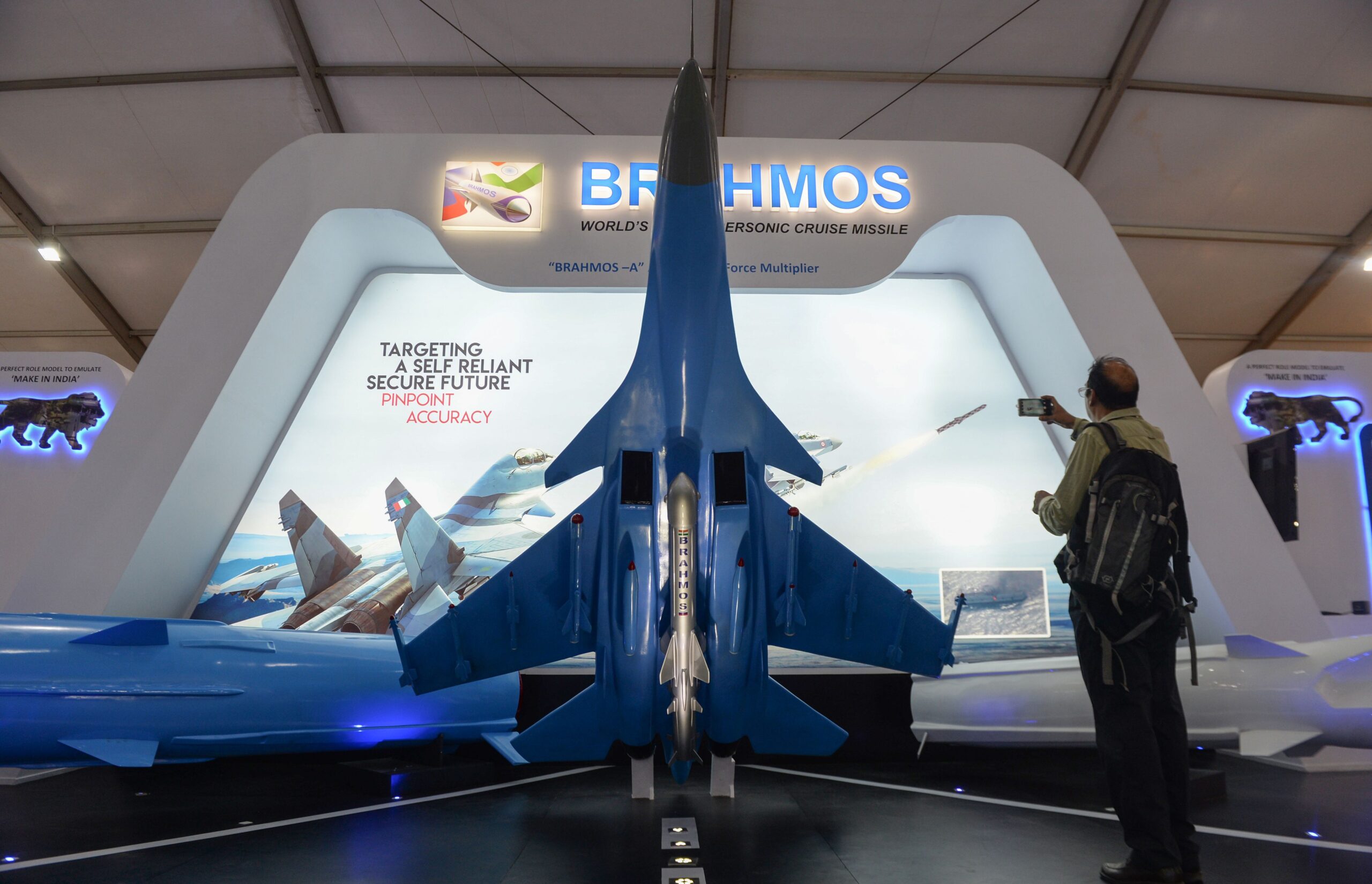
India is enhancing its military relationships with Southeast Asian nations through deals involving advanced missile technology and increased security cooperation. This initiative is particularly significant in the context of ongoing maritime disputes in the South China Sea, where several Southeast Asian countries are facing challenges from China. Analysts indicate that India’s engagement with Indonesia, the Philippines, and Vietnam highlights its expanding strategic role in the Indo-Pacific region, aligning with broader efforts by the United States and its allies to counterbalance China’s influence.
According to Chintamani Mahapatra, founder of the Kalinga Institute of Indo-Pacific Studies in New Delhi, “India is a relatively new player in the region where countries are trying to build up their own capacities.” He emphasizes that while China remains an important economic partner for these nations, it also presents a security challenge, prompting Southeast Asian countries to strengthen their defenses.
In a notable development, Indian Defense Minister Rajnath Singh recently met with his Indonesian counterpart, Sjafrie Sjamsoeddin, in New Delhi to discuss a deal involving the supply of BrahMos supersonic cruise missiles to Indonesia. If finalized, this agreement would position Indonesia as the second country to acquire these missiles, which are produced through a joint venture with Russia, where India holds the majority stake.
While the BrahMos missile system has been a focal point of India’s defense exports in the region, analysts suggest that this collaboration will not enhance Russia’s role as an arms supplier in Southeast Asia. Rahul Bedi, a defense analyst in New Delhi, notes that “Russia has been under sanctions since the Ukraine war, so countries would be extremely wary of any purchases from Moscow.”
India’s foray into Southeast Asian defense markets is already underway, with the Philippines receiving a shore-based, anti-ship BrahMos missile system as part of a $375 million deal struck last year. This acquisition aims to bolster the Philippines’ maritime defense capabilities amid increasing tensions with China, which claims most of the South China Sea.
In recent years, India has elevated its diplomatic engagements with various Southeast Asian nations to a comprehensive strategic partnership, encompassing areas such as economy, defense, and technology. New Delhi has also been actively involved in training military personnel from countries including Vietnam, Singapore, Malaysia, Indonesia, the Philippines, and Thailand, conducting joint naval and military exercises to bolster regional security.
India’s growing military ties with Southeast Asia are further fueled by its strengthened defense relationship with the United States. A significant milestone was reached in October when India and the U.S. signed a 10-year defense pact aimed at enhancing cooperation during the Association of Southeast Asian Nations (ASEAN) defense ministers meeting in Malaysia. U.S. Defense Secretary Pete Hegseth remarked that this agreement “advances our defense partnership, a cornerstone for regional stability and deterrence.”
Analysts point out that the U.S.-India security partnership has increasingly integrated India into the Southeast Asian security framework. Ivan Lidarev, a visiting research fellow at the National University of Singapore’s Institute of South Asian Studies, explained that this alignment is part of a U.S. strategy to encourage its allies and partners to forge closer political and security ties, thereby reducing the burden of balancing China.
Lidarev also highlighted that the improved relations are not solely driven by U.S. influence. “India and its Southeast Asian partners are pursuing their own strategic interests through their partnerships and not merely responding to American encouragement,” he stated.
The necessity for Southeast Asian nations to build their own deterrent capabilities has become increasingly apparent. Analysts assert that current uncertainties regarding U.S. strategy in the Indo-Pacific underscore the importance of diversifying defense partnerships. Don McLain Gill, a geopolitical analyst and lecturer at De La Salle University in Manila, noted that “diversification is definitely a practical step, and India seems a natural partner.” He emphasized that efforts by New Delhi and the Philippines to strengthen their resilience against external pressures are indicative of this trend.
Additionally, the procurement of military hardware from India reflects a broader reluctance among Southeast Asian countries to rely solely on the U.S. for security or as the dominant defense supplier in the region. Acquiring defense technology from India presents an attractive alternative, as it mitigates the risks of sanctions associated with purchases from Russia or China.
The chief of staff of the Philippine Armed Forces, Gen. Romeo Brawner Jr., stated in August that Manila plans to acquire more military equipment from India, citing both affordability and quality as key factors. He remarked that “the sale of weapons by India is without any strings attached.” According to Mahapatra, this lack of conditionality makes India a preferable partner compared to other major powers, as “when the U.S. or Chinese sell weapons, there are tangible or intangible strings attached.”
As India seeks to position itself as a defense exporter, this evolving dynamic appears mutually beneficial. It underscores a significant shift in the security landscape of Southeast Asia, where countries are increasingly looking towards India as a reliable partner in enhancing their military capabilities while navigating the complexities of regional geopolitics.

Urgent Tax Savings Alert: Maximize Deductions Before April 15

Trump’s Administration Faces Uncertainty Over Government Shutdowns

Cosmic Defects: The Mystery of the Universe’s Missing Anomalies

Rapid City Parks Department Opens Registration for Bocce Leagues

Samsung Galaxy Watch 9 to Feature Larger 435mAh Battery Soon

Two Dead After Student Boats Capsize Off Okinawa Coast

Healthy Choice Wellness Reports Earnings with Mixed Results

Prince Harry Positions Himself as Royal Family’s Image Reviver

All Points North Lodge Achieves FSPHP-ETA Accreditation

Send Holiday Parcels for £1.99 with New Comparison Service

University of Hawaiʻi Leads $25M AI Project to Monitor Natural Disasters

Maui County Reopens Upgraded Lānaʻi Fifth Street Courts Today!

Daily Codeword Puzzle Launches on October 21, 2025

Congresswoman Under Fire for Misleading Epstein Donation Claims

Interstellar Object 3I/ATLAS Emits Unique Metal Alloy, Says Scientist

Trump Vows to Resolve Afghanistan-Pakistan Crisis “Very Quickly”

Charles Darwin’s Address Book Reveals Hidden Aspects of His Life

Rediscovering Chrysler: 5 Overlooked Models from the 1980s
-
 Lifestyle8 months ago
Send Holiday Parcels for £1.99 with New Comparison Service
-
Science9 months ago
University of Hawaiʻi Leads $25M AI Project to Monitor Natural Disasters
-
 Top Stories8 months ago
Maui County Reopens Upgraded Lānaʻi Fifth Street Courts Today!
-
 Entertainment10 months ago
Daily Codeword Puzzle Launches on October 21, 2025
-
 Lifestyle9 months ago
Congresswoman Under Fire for Misleading Epstein Donation Claims
-
 Science10 months ago
Interstellar Object 3I/ATLAS Emits Unique Metal Alloy, Says Scientist
-
 Top Stories9 months ago
Trump Vows to Resolve Afghanistan-Pakistan Crisis “Very Quickly”
-
 Science8 months ago
Charles Darwin’s Address Book Reveals Hidden Aspects of His Life
-
 Lifestyle8 months ago
Rediscovering Chrysler: 5 Overlooked Models from the 1980s
-

 Science7 months ago
Understanding Generation Z: Strategies for Engaging the Workforce
-

 Entertainment10 months ago
Kelly McCreary Discusses Future of Maggie and Winston in Grey’s Anatomy
-

 Top Stories8 months ago
aespa Faces Backlash Over G-Dragon Interaction at 2025 MAMAs