
World
Yemen Council Expels Separatist Leader Over Treason Charges

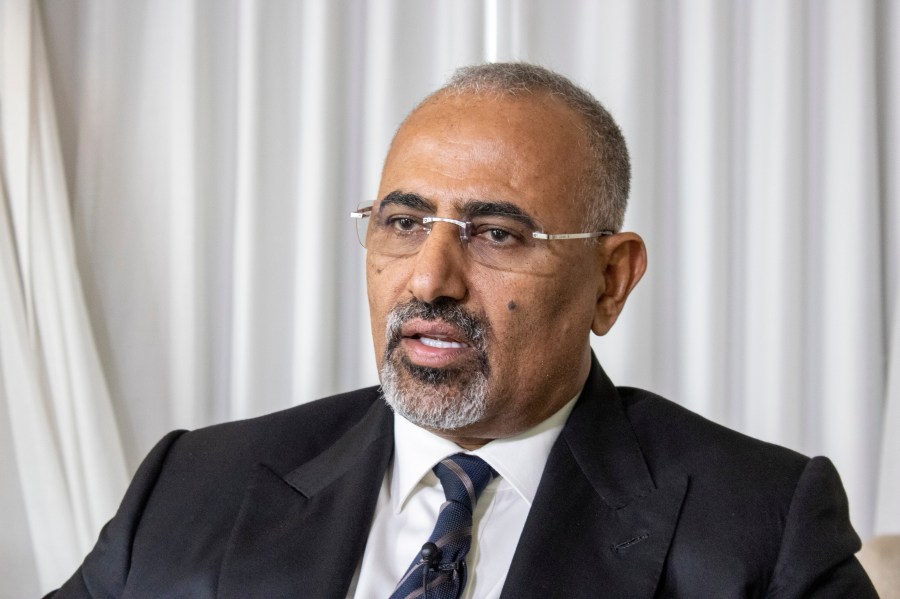
A council opposing Yemen’s Houthi rebels has expelled the leader of a separatist movement, accusing him of treason. This decision follows his refusal to travel to Saudi Arabia for scheduled talks aimed at addressing the ongoing conflict in the region. The announcement was disseminated by the SABA news agency, which is affiliated with anti-Houthi factions.
This action marks a significant escalation in the internal divisions among opposition groups in Yemen. The separatist leader, whose identity has not been disclosed in the initial reports, faced mounting pressure to engage in dialogue with Saudi officials. His decision not to participate in the negotiations has raised concerns about unity among the anti-Houthi forces.
The council’s statement asserted that the leadership of the separatist movement jeopardized the broader goals of the coalition fighting against the Houthi rebels. The charge of treason underscores the serious implications of such internal dissent as Yemen continues to grapple with prolonged instability. The internal conflict has been exacerbated by external influences, notably the involvement of Saudi Arabia, which has been a key player in the Yemeni civil war.
Political Ramifications of the Expulsion
The expulsion of the separatist leader may have profound implications for the anti-Houthi coalition. It highlights the fragility of alliances in a country torn apart by years of conflict. The council’s decision reflects its intent to maintain a united front against the Houthi forces, which have controlled significant portions of Yemen since the civil war began in 2014.
With this latest development, the council aims to strengthen its position in the ongoing negotiations with Saudi Arabia. The Saudis have been attempting to mediate peace talks between various factions, aiming to bring an end to the humanitarian crisis that has severely impacted millions of Yemenis. The council’s actions suggest a determination to eliminate any faction that could undermine these strategic discussions.
Supporters of the separatist leader have criticized the decision, arguing that it further complicates the landscape of Yemen’s political environment. They contend that internal divisions only serve to weaken the opposition against the Houthis, who remain entrenched in their strongholds.
International Context and Future Prospects
As the situation evolves, international observers are closely monitoring the dynamics within Yemen. The United Nations has repeatedly called for a ceasefire and a return to negotiations, emphasizing the need for a comprehensive solution to the crisis.
The expulsion of the separatist leader raises questions about the future of the anti-Houthi coalition. Should dissent continue to be met with such severe measures, it may lead to further fragmentation among opposition groups. Additionally, the potential for renewed violence could hinder humanitarian efforts and exacerbate the dire conditions faced by civilians.
Moving forward, the actions of the council will be pivotal in shaping Yemen’s political landscape. The effectiveness of its strategy to consolidate power and maintain unity among anti-Houthi factions will likely determine the prospects for peace in a country that has endured years of conflict and suffering.

Urgent Tax Savings Alert: Maximize Deductions Before April 15

Trump’s Administration Faces Uncertainty Over Government Shutdowns

Cosmic Defects: The Mystery of the Universe’s Missing Anomalies

Rapid City Parks Department Opens Registration for Bocce Leagues

Samsung Galaxy Watch 9 to Feature Larger 435mAh Battery Soon

Two Dead After Student Boats Capsize Off Okinawa Coast

Healthy Choice Wellness Reports Earnings with Mixed Results

Prince Harry Positions Himself as Royal Family’s Image Reviver

All Points North Lodge Achieves FSPHP-ETA Accreditation

Send Holiday Parcels for £1.99 with New Comparison Service

University of Hawaiʻi Leads $25M AI Project to Monitor Natural Disasters

Maui County Reopens Upgraded Lānaʻi Fifth Street Courts Today!

Daily Codeword Puzzle Launches on October 21, 2025

Congresswoman Under Fire for Misleading Epstein Donation Claims

Interstellar Object 3I/ATLAS Emits Unique Metal Alloy, Says Scientist

Trump Vows to Resolve Afghanistan-Pakistan Crisis “Very Quickly”

Charles Darwin’s Address Book Reveals Hidden Aspects of His Life

Rediscovering Chrysler: 5 Overlooked Models from the 1980s
-
 Lifestyle8 months ago
Send Holiday Parcels for £1.99 with New Comparison Service
-
Science9 months ago
University of Hawaiʻi Leads $25M AI Project to Monitor Natural Disasters
-
 Top Stories8 months ago
Maui County Reopens Upgraded Lānaʻi Fifth Street Courts Today!
-
 Entertainment10 months ago
Daily Codeword Puzzle Launches on October 21, 2025
-
 Lifestyle9 months ago
Congresswoman Under Fire for Misleading Epstein Donation Claims
-
 Science10 months ago
Interstellar Object 3I/ATLAS Emits Unique Metal Alloy, Says Scientist
-
 Top Stories9 months ago
Trump Vows to Resolve Afghanistan-Pakistan Crisis “Very Quickly”
-
 Science8 months ago
Charles Darwin’s Address Book Reveals Hidden Aspects of His Life
-
 Lifestyle8 months ago
Rediscovering Chrysler: 5 Overlooked Models from the 1980s
-

 Science7 months ago
Understanding Generation Z: Strategies for Engaging the Workforce
-

 Entertainment10 months ago
Kelly McCreary Discusses Future of Maggie and Winston in Grey’s Anatomy
-

 Top Stories8 months ago
aespa Faces Backlash Over G-Dragon Interaction at 2025 MAMAs