
Entertainment
Rediscovering Baltimore’s Charm: The Legacy of Double-Decker Buses

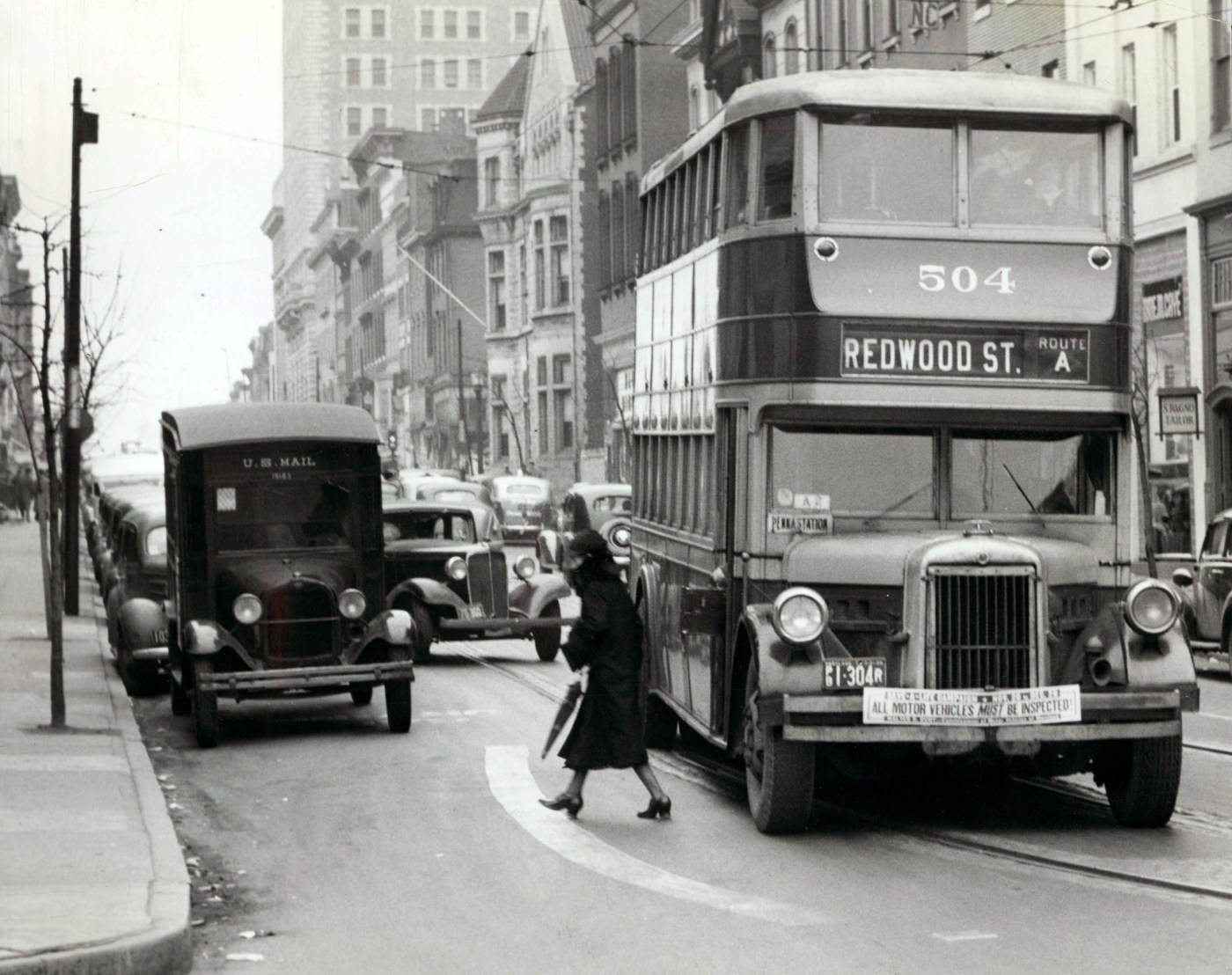
In the 1920s, Baltimore became home to double-decker buses, which transformed the city’s public transport and offered residents a unique way to experience their surroundings. Operating along Charles Street from 1921 to 1942, these buses provided an open-air ride for just a dime, attracting both commuters and sightseers.
The Allure of the Upper Deck
The double-decker buses featured a rooftop deck with 29 seats, allowing passengers to bask in the sun while traveling to work or enjoying a leisurely ride. This novel transport option quickly gained popularity, as evidenced by a headline in the Evening Sun in July 1922, which proclaimed, “Spooners Desert Front Parlor For Top Seats On New Buses.” The article highlighted how young couples flocked to the upper tier, using the charm of the open-air setting as a backdrop for romantic outings.
As the sun set, the upper deck became a favored spot for couples looking to share intimate moments. The appeal of these rides inspired a musical by the Vagabond Theater Co. in 1926, which was set atop a Charles Street bus and even broadcast on WCAO radio. Its hit song, “Love Is A Wonderful Thing,” perfectly encapsulated the era’s romantic spirit.
Despite operating along a single thoroughfare, the double-deckers were a significant addition to Baltimore’s public transit network, complementing existing bus lines. They avoided tree-lined avenues with low-hanging branches, which posed a risk to passengers seated above. Nonetheless, even Charles Street had its challenges. Noted author F. Scott Fitzgerald, who resided nearby, described the experience in an essay for Esquire Magazine in 1936. He recounted the soothing sound of green branches brushing against the bus windows as it traversed the route.
Challenges and the End of an Era
While the upper deck provided a panoramic view for passengers, it also attracted a curious audience. The Evening Sun remarked in 1921 that riders could peek into the second stories of houses lining the route, adding a layer of intrigue to the journey. Smokers appreciated the upper deck as well, enjoying their cigars in the fresh air, particularly since smoking was prohibited inside the bus.
However, safety concerns emerged. On one occasion in 1922, a gas explosion at the intersection of Charles and Mulberry streets sent a manhole cover crashing onto the upper deck, narrowly missing five students from Goucher College. This incident underscored the risks associated with the open-air seating arrangement.
Despite the challenges, the double-decker buses remained popular until the onset of World War II. By October 1942, these buses had transported 607,396 passengers that year alone. Yet, their operational days were numbered. The buses, dubbed “motorized mastodons” by the Evening Sun, were fuel inefficient, averaging just 1.5 miles per gallon. With resources redirected towards the war effort, the double-deckers were ultimately phased out by the end of that year.
The story of Baltimore’s double-decker buses serves as a nostalgic reminder of a time when public transport was not just about getting from point A to point B, but also about the experience of the journey itself. As the city continues to evolve, the legacy of these charming buses remains a cherished part of its history.

Urgent Tax Savings Alert: Maximize Deductions Before April 15

Trump’s Administration Faces Uncertainty Over Government Shutdowns

Cosmic Defects: The Mystery of the Universe’s Missing Anomalies

Rapid City Parks Department Opens Registration for Bocce Leagues

Samsung Galaxy Watch 9 to Feature Larger 435mAh Battery Soon

Two Dead After Student Boats Capsize Off Okinawa Coast

Healthy Choice Wellness Reports Earnings with Mixed Results

Prince Harry Positions Himself as Royal Family’s Image Reviver

All Points North Lodge Achieves FSPHP-ETA Accreditation

Send Holiday Parcels for £1.99 with New Comparison Service

University of Hawaiʻi Leads $25M AI Project to Monitor Natural Disasters

Maui County Reopens Upgraded Lānaʻi Fifth Street Courts Today!

Daily Codeword Puzzle Launches on October 21, 2025

Congresswoman Under Fire for Misleading Epstein Donation Claims

Interstellar Object 3I/ATLAS Emits Unique Metal Alloy, Says Scientist

Trump Vows to Resolve Afghanistan-Pakistan Crisis “Very Quickly”

Charles Darwin’s Address Book Reveals Hidden Aspects of His Life

Rediscovering Chrysler: 5 Overlooked Models from the 1980s
-
 Lifestyle8 months ago
Send Holiday Parcels for £1.99 with New Comparison Service
-
Science9 months ago
University of Hawaiʻi Leads $25M AI Project to Monitor Natural Disasters
-
 Top Stories8 months ago
Maui County Reopens Upgraded Lānaʻi Fifth Street Courts Today!
-
 Entertainment10 months ago
Daily Codeword Puzzle Launches on October 21, 2025
-
 Lifestyle9 months ago
Congresswoman Under Fire for Misleading Epstein Donation Claims
-
 Science10 months ago
Interstellar Object 3I/ATLAS Emits Unique Metal Alloy, Says Scientist
-
 Top Stories9 months ago
Trump Vows to Resolve Afghanistan-Pakistan Crisis “Very Quickly”
-
 Science8 months ago
Charles Darwin’s Address Book Reveals Hidden Aspects of His Life
-
 Lifestyle8 months ago
Rediscovering Chrysler: 5 Overlooked Models from the 1980s
-

 Science7 months ago
Understanding Generation Z: Strategies for Engaging the Workforce
-

 Entertainment10 months ago
Kelly McCreary Discusses Future of Maggie and Winston in Grey’s Anatomy
-

 Top Stories8 months ago
aespa Faces Backlash Over G-Dragon Interaction at 2025 MAMAs