
Top Stories
California Vineyard Innovates with AI and Supercomputing Power

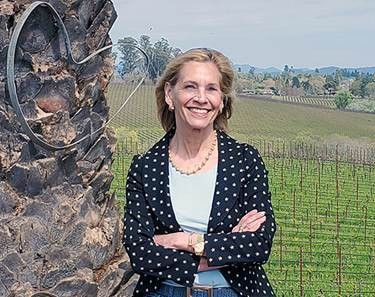
BREAKING: A groundbreaking initiative at Iron Horse Vineyards in Sonoma County, California, is set to revolutionize agriculture through advanced technology. This project, powered by the San Diego Supercomputer Center (SDSC) and CENIC, aims to transform traditional farming practices into a data-driven, precision agriculture model.
Researchers and farmers are harnessing real-time data from the vineyard to make informed decisions that could reshape the future of farming. With the help of a 10-gigabit-per-second connection established by AT&T, Iron Horse is now one of the most connected agricultural sites in the United States. This ultra-fast network allows for seamless streaming of critical environmental data, which is crucial for modern farming.
The initiative is led by Joy Sterling, the second-generation owner of Iron Horse, who advocates for integrating technology into agriculture. “This project is a living laboratory where we explore how AI and environmental sensors can enhance crop yields while conserving water,” Sterling stated.
Since its launch in late 2024, the project has implemented cutting-edge technologies, including drones equipped with high-resolution cameras and various environmental sensors that monitor soil moisture, temperature, and carbon dioxide levels. The data collected is processed at SDSC, enabling researchers to predict optimal watering schedules and identify the best times for harvest without disturbing the crops.
One of the project’s key goals is to create a “digital twin” of the vineyard, a virtual model that continuously updates with real-time data. This digital representation will allow researchers to run simulations, such as predicting how drought conditions could impact growth or determining the most effective placement for new sensors.
The implications of this project extend beyond Iron Horse. Similar technologies are already being deployed in other agricultural test beds across California’s Central Valley, where farmers have successfully reduced water usage by 10 percent using comparable sensors.
CENIC provides the essential connectivity for this initiative through its California Research and Education Network (CalREN), an extensive infrastructure that links universities and research institutions across the state. By enhancing collaboration among educational institutions, CENIC is not only fostering innovation but also creating opportunities for students in AI and agricultural sciences.
Louis Fox, CENIC President and CEO, emphasizes the educational impact: “This effort will generate remarkable new opportunities for students.” Internships and hands-on experiences at Iron Horse and related facilities are paving the way for the next generation of agricultural scientists.
Looking ahead, this partnership between farmers, researchers, and technology is a model for future agricultural practices nationwide. As climate change alters growing seasons and water availability, the need for precision agriculture tools becomes increasingly urgent.
The blend of tradition and technology at Iron Horse Vineyards is just the beginning. With a commitment to sustainable practices and a focus on education, this initiative demonstrates how agriculture can adapt to meet the challenges of a changing world.
Stay tuned as this innovative project unfolds, potentially setting a new standard for farming practices across the country and beyond.

Urgent Tax Savings Alert: Maximize Deductions Before April 15

Trump’s Administration Faces Uncertainty Over Government Shutdowns

Cosmic Defects: The Mystery of the Universe’s Missing Anomalies

Rapid City Parks Department Opens Registration for Bocce Leagues

Samsung Galaxy Watch 9 to Feature Larger 435mAh Battery Soon

Two Dead After Student Boats Capsize Off Okinawa Coast

Healthy Choice Wellness Reports Earnings with Mixed Results

Prince Harry Positions Himself as Royal Family’s Image Reviver

All Points North Lodge Achieves FSPHP-ETA Accreditation

Send Holiday Parcels for £1.99 with New Comparison Service

University of Hawaiʻi Leads $25M AI Project to Monitor Natural Disasters

Maui County Reopens Upgraded Lānaʻi Fifth Street Courts Today!

Daily Codeword Puzzle Launches on October 21, 2025

Congresswoman Under Fire for Misleading Epstein Donation Claims

Interstellar Object 3I/ATLAS Emits Unique Metal Alloy, Says Scientist

Trump Vows to Resolve Afghanistan-Pakistan Crisis “Very Quickly”

Charles Darwin’s Address Book Reveals Hidden Aspects of His Life

Rediscovering Chrysler: 5 Overlooked Models from the 1980s
-
 Lifestyle8 months ago
Send Holiday Parcels for £1.99 with New Comparison Service
-
Science9 months ago
University of Hawaiʻi Leads $25M AI Project to Monitor Natural Disasters
-
 Top Stories8 months ago
Maui County Reopens Upgraded Lānaʻi Fifth Street Courts Today!
-
 Entertainment10 months ago
Daily Codeword Puzzle Launches on October 21, 2025
-
 Lifestyle9 months ago
Congresswoman Under Fire for Misleading Epstein Donation Claims
-
 Science10 months ago
Interstellar Object 3I/ATLAS Emits Unique Metal Alloy, Says Scientist
-
 Top Stories9 months ago
Trump Vows to Resolve Afghanistan-Pakistan Crisis “Very Quickly”
-
 Science8 months ago
Charles Darwin’s Address Book Reveals Hidden Aspects of His Life
-
 Lifestyle8 months ago
Rediscovering Chrysler: 5 Overlooked Models from the 1980s
-

 Science7 months ago
Understanding Generation Z: Strategies for Engaging the Workforce
-

 Entertainment10 months ago
Kelly McCreary Discusses Future of Maggie and Winston in Grey’s Anatomy
-

 Top Stories8 months ago
aespa Faces Backlash Over G-Dragon Interaction at 2025 MAMAs