
World
HII Expands UK Facility to Boost Unmanned Underwater Vehicle Production

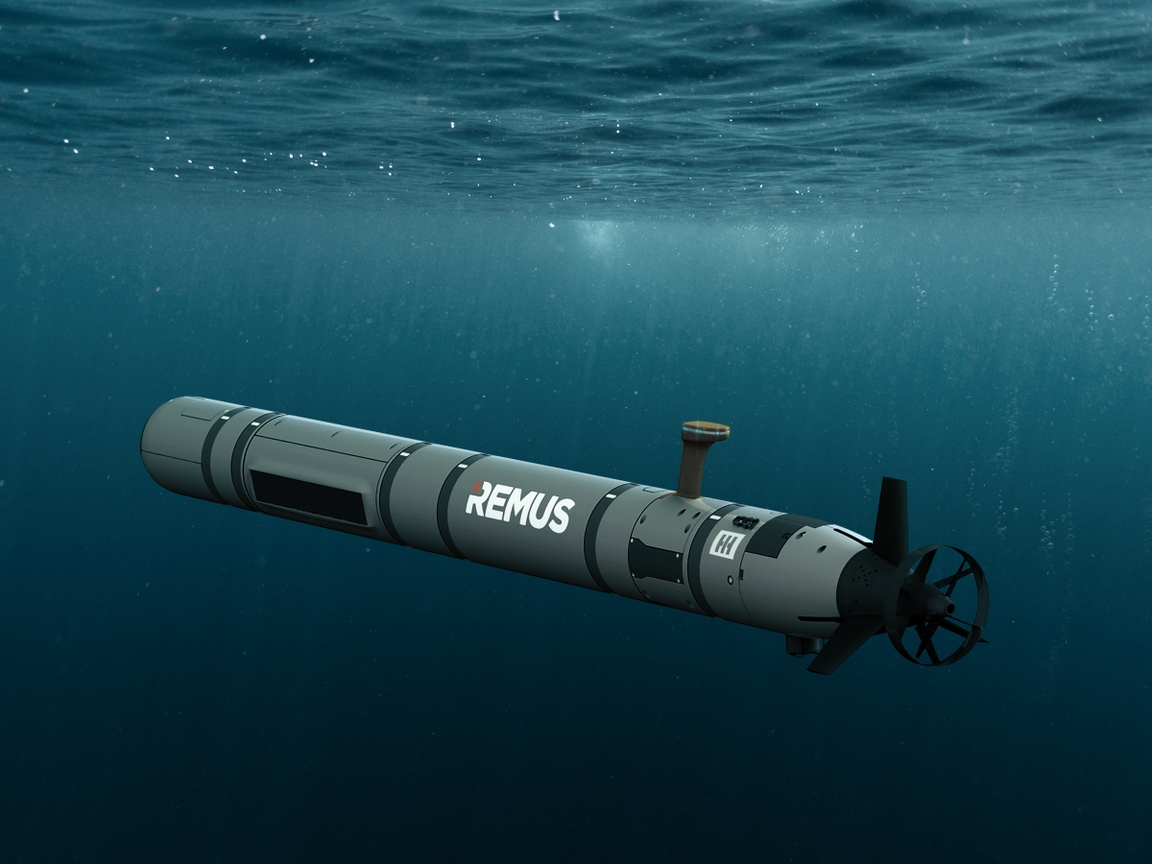
Huntington Ingalls Industries (HII) has significantly expanded its presence in the United Kingdom, doubling the size of its facility in Portchester. This move aims to support the growing demand for unmanned underwater vehicles (UUVs) from the Royal Navy and other European navies. The enhanced site will now enable HII to assemble the Remus 620, a medium-class modular UUV, and accelerate training programs for allied forces.
During a briefing on January 12, Nick Green, the facility manager, highlighted that advancements in technology have led to increased confidence among navies. This evolution has resulted in larger orders of 10 to 15 UUVs, a stark contrast to previous requests for one or two units. As European NATO members, including the U.K., the Netherlands, and Belgium, transition from traditional crewed minehunter vessels to unmanned systems, the demand for effective mine detection and neutralization capabilities continues to rise.
“The demand is there, the requirements are there as the technology is improving,” Green noted. The Royal Navy first acquired two Remus vehicles in 2001 for mine warfare and now operates a diverse fleet for similar purposes. Green stated that the new facility will enhance HII’s ability to meet its maintenance obligations for the Royal Navy.
HII reports that its Remus systems are currently utilized by 30 countries, including 14 NATO members. European clients beyond the U.K. include Germany, Norway, Sweden, and Estonia. According to Duane Fotheringham, president of HII’s Unmanned Systems group, there is “robust interest” in mine countermeasures. He emphasized that increased defense budgets and a focus on unmanned systems will further drive unit sales across the region.
While competition in the UUV space intensifies, Fotheringham expressed confidence in HII’s preparedness. The open architecture and modular design of the Remus drones allow for easy upgrades of software and hardware, accommodating various sensors and payloads from partners. “We’ve been building vehicles for a long time, and those vehicles have stood the test of time,” he stated.
The primary function of UUVs for U.K. and European clients centers around mine countermeasures. However, the capability for long-range patrol missions is becoming increasingly relevant, particularly for protecting critical infrastructure. Green mentioned that the payloads currently in development would enhance the vehicles’ future capabilities.
HII is committed to increasing local production in the U.K. wherever feasible. This includes developing launch and recovery systems for the Remus 620 and basic assembly of the vehicles themselves. “We believe that U.K. content for U.K. contracts is more and more important,” Green said, underscoring HII’s dedication to supporting local operations as a mature UUV and unmanned surface vehicle (USV) supplier.
The company has been actively testing torpedo-tube launch and recovery systems for the Remus 620. In collaboration with Babcock, HII is utilizing the British partner’s launch and recovery technology, which is already in use with the Royal Navy’s submarines. Most repair and maintenance tasks for U.K. and many European customers will continue to take place at the Portchester facility, reducing the need to transport equipment between the U.S. and Europe.
HII has delivered over 750 UUVs from the Remus family, including a substantial number across Europe. The company’s most popular model, the two-man portable Remus 100, has seen over 400 units sold worldwide. The Portchester site will also serve as a European support base for the upcoming Romulus family of unmanned surface vehicles. Fotheringham revealed that HII is currently testing an intelligence, surveillance, and reconnaissance version of a Romulus platform and a man-portable version in the United States.
Additionally, HII is developing a 190-foot Romulus vessel, slated for water testing and delivery by the end of 2026. The company plans to showcase these systems to the Royal Navy and other European naval customers, further demonstrating its commitment to enhancing maritime security capabilities across the continent.

Urgent Tax Savings Alert: Maximize Deductions Before April 15

Trump’s Administration Faces Uncertainty Over Government Shutdowns

Cosmic Defects: The Mystery of the Universe’s Missing Anomalies

Rapid City Parks Department Opens Registration for Bocce Leagues

Samsung Galaxy Watch 9 to Feature Larger 435mAh Battery Soon

Two Dead After Student Boats Capsize Off Okinawa Coast

Healthy Choice Wellness Reports Earnings with Mixed Results

Prince Harry Positions Himself as Royal Family’s Image Reviver

All Points North Lodge Achieves FSPHP-ETA Accreditation

Send Holiday Parcels for £1.99 with New Comparison Service

University of Hawaiʻi Leads $25M AI Project to Monitor Natural Disasters

Maui County Reopens Upgraded Lānaʻi Fifth Street Courts Today!

Daily Codeword Puzzle Launches on October 21, 2025

Congresswoman Under Fire for Misleading Epstein Donation Claims

Interstellar Object 3I/ATLAS Emits Unique Metal Alloy, Says Scientist

Trump Vows to Resolve Afghanistan-Pakistan Crisis “Very Quickly”

Charles Darwin’s Address Book Reveals Hidden Aspects of His Life

Rediscovering Chrysler: 5 Overlooked Models from the 1980s
-
 Lifestyle8 months ago
Send Holiday Parcels for £1.99 with New Comparison Service
-
Science9 months ago
University of Hawaiʻi Leads $25M AI Project to Monitor Natural Disasters
-
 Top Stories8 months ago
Maui County Reopens Upgraded Lānaʻi Fifth Street Courts Today!
-
 Entertainment10 months ago
Daily Codeword Puzzle Launches on October 21, 2025
-
 Lifestyle9 months ago
Congresswoman Under Fire for Misleading Epstein Donation Claims
-
 Science10 months ago
Interstellar Object 3I/ATLAS Emits Unique Metal Alloy, Says Scientist
-
 Top Stories9 months ago
Trump Vows to Resolve Afghanistan-Pakistan Crisis “Very Quickly”
-
 Science8 months ago
Charles Darwin’s Address Book Reveals Hidden Aspects of His Life
-
 Lifestyle8 months ago
Rediscovering Chrysler: 5 Overlooked Models from the 1980s
-

 Science7 months ago
Understanding Generation Z: Strategies for Engaging the Workforce
-

 Entertainment10 months ago
Kelly McCreary Discusses Future of Maggie and Winston in Grey’s Anatomy
-

 Top Stories8 months ago
aespa Faces Backlash Over G-Dragon Interaction at 2025 MAMAs