
World
Supreme Court Limits Dual Convictions Under Overlapping Gun Laws

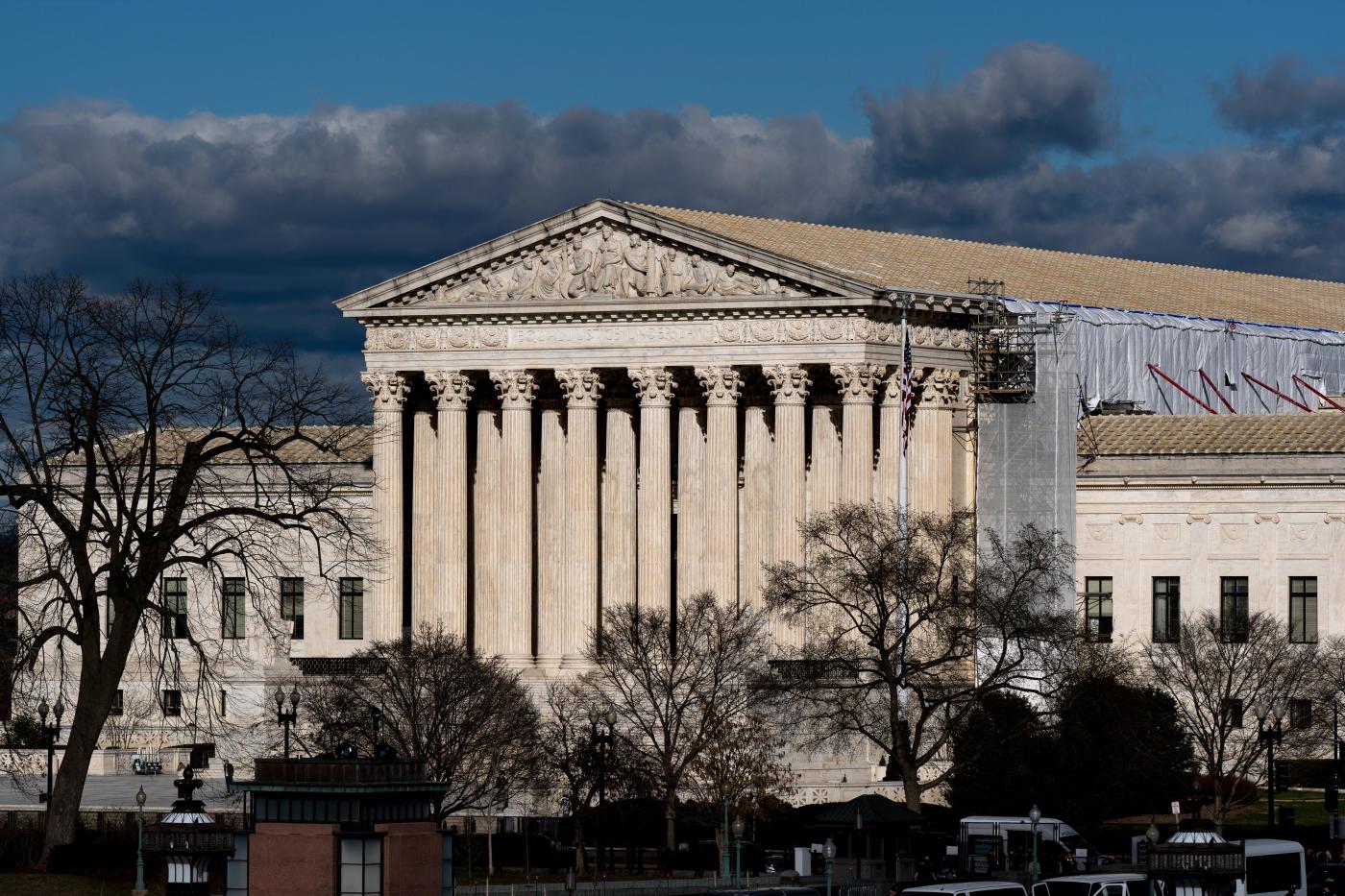
The U.S. Supreme Court made a significant ruling on October 11, 2023, concerning the application of federal gun statutes. The court clarified that prosecutors cannot secure separate convictions for the same act when it violates two overlapping provisions of gun laws. This decision arose from the case of Dwayne Barrett, who faced multiple charges related to violent robberies and the use of firearms.
The case stemmed from a series of robberies committed by Barrett between August 2011 and January 2012. During one of these incidents, Gamar Dafalla was shot and killed. Barrett was convicted in federal district court in March 2013 of robbery, murder, and associated gun offenses following a two-week jury trial.
Prosecutors charged Barrett under two separate federal statutes. One statute criminalizes the use of a firearm during a violent crime or drug trafficking, while the other escalates penalties when a death occurs during the commission of such offenses. The government argued that Barrett’s actions warranted convictions under both laws.
In a decisive opinion, the Supreme Court rejected this dual prosecution approach. The justices determined that Barrett’s conduct constituted a single offense under existing legal standards for distinguishing between separate crimes. They ruled that for two offenses to be considered distinct, each statute must require proof of an element that the other does not.
The court concluded that the statutes did not provide clear authorization for separate convictions based on one act that fulfilled both provisions. Congress had not indicated an intent to allow dual punishments for overlapping offenses, leading to the ruling that only one conviction can be sustained when a defendant’s actions violate both statutes.
This decision addresses a growing split among federal appellate courts regarding the permissibility of dual convictions for identical conduct. Legal analysts noted that this ruling upholds a fundamental principle in criminal law: when statutes overlap and Congress has not explicitly allowed for multiple punishments, courts must treat the offenses as a single crime for sentencing.
Supporters of the ruling argue that it restores predictability and fairness to federal sentencing practices. On the other hand, critics contend that it could diminish prosecutors’ leverage in complex violent crime cases involving firearms.
Following this decision, lower courts will be required to adhere to the Supreme Court’s guidance in Barrett v. United States and revisit previous cases where defendants received multiple convictions under overlapping gun provisions for the same conduct. This ruling represents a pivotal moment in the Supreme Court’s recent approach to federal criminal law and will influence how prosecutors charge and judges sentence gun-related offenses in the future.
The implications of this ruling will resonate across the judicial landscape, shaping the enforcement of gun laws and the nature of criminal prosecutions involving firearms.

Urgent Tax Savings Alert: Maximize Deductions Before April 15

Trump’s Administration Faces Uncertainty Over Government Shutdowns

Cosmic Defects: The Mystery of the Universe’s Missing Anomalies

Rapid City Parks Department Opens Registration for Bocce Leagues

Samsung Galaxy Watch 9 to Feature Larger 435mAh Battery Soon

Two Dead After Student Boats Capsize Off Okinawa Coast

Healthy Choice Wellness Reports Earnings with Mixed Results

Prince Harry Positions Himself as Royal Family’s Image Reviver

All Points North Lodge Achieves FSPHP-ETA Accreditation

Send Holiday Parcels for £1.99 with New Comparison Service

University of Hawaiʻi Leads $25M AI Project to Monitor Natural Disasters

Maui County Reopens Upgraded Lānaʻi Fifth Street Courts Today!

Daily Codeword Puzzle Launches on October 21, 2025

Congresswoman Under Fire for Misleading Epstein Donation Claims

Interstellar Object 3I/ATLAS Emits Unique Metal Alloy, Says Scientist

Trump Vows to Resolve Afghanistan-Pakistan Crisis “Very Quickly”

Charles Darwin’s Address Book Reveals Hidden Aspects of His Life

Rediscovering Chrysler: 5 Overlooked Models from the 1980s
-
 Lifestyle8 months ago
Send Holiday Parcels for £1.99 with New Comparison Service
-
Science9 months ago
University of Hawaiʻi Leads $25M AI Project to Monitor Natural Disasters
-
 Top Stories8 months ago
Maui County Reopens Upgraded Lānaʻi Fifth Street Courts Today!
-
 Entertainment10 months ago
Daily Codeword Puzzle Launches on October 21, 2025
-
 Lifestyle9 months ago
Congresswoman Under Fire for Misleading Epstein Donation Claims
-
 Science10 months ago
Interstellar Object 3I/ATLAS Emits Unique Metal Alloy, Says Scientist
-
 Top Stories9 months ago
Trump Vows to Resolve Afghanistan-Pakistan Crisis “Very Quickly”
-
 Science8 months ago
Charles Darwin’s Address Book Reveals Hidden Aspects of His Life
-
 Lifestyle8 months ago
Rediscovering Chrysler: 5 Overlooked Models from the 1980s
-

 Science7 months ago
Understanding Generation Z: Strategies for Engaging the Workforce
-

 Entertainment10 months ago
Kelly McCreary Discusses Future of Maggie and Winston in Grey’s Anatomy
-

 Entertainment7 months ago
Landmark Shift as Iconic Anime Series Concludes After 26 Years