
Health
Hawaii Health Insurer HMSA and HPH Partnership Faces Scrutiny

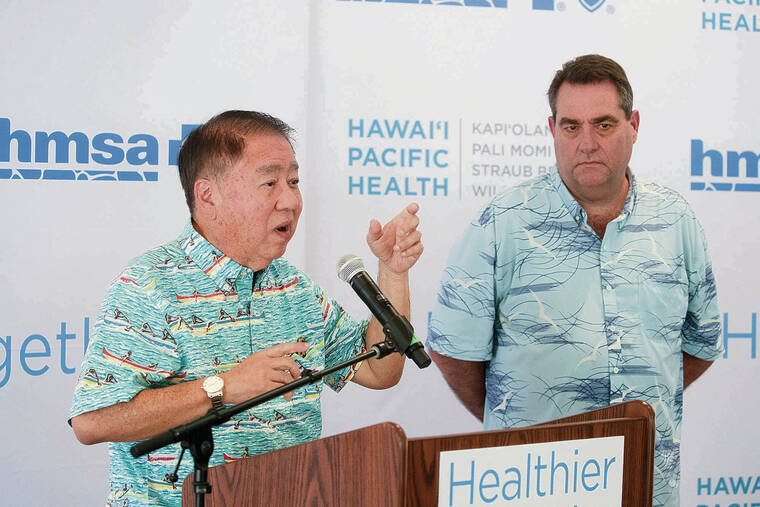
A proposed partnership between Hawaii’s largest health insurer, the Hawaii Medical Service Association (HMSA), and one of the state’s prominent health care systems, Hawai‘i Pacific Health (HPH), has raised significant concerns among state legislators and health care stakeholders. During a briefing held on March 12, 2024, state lawmakers questioned the potential implications of this alliance, particularly regarding its impact on the health care landscape in Hawaii.
State Representative Scot Matayoshi, chair of the House Committee on Consumer Protection and Commerce, expressed apprehension about the partnership’s “drastic ramifications.” He emphasized the need for further analysis before adopting firm positions either in favor or against the collaboration. This uncertainty surrounding the partnership calls for a cautious approach, as the merger of these two influential entities could reshape the state’s health care system.
HMSA and HPH plan to create a new entity called One Health Hawaii, which they argue will enhance health care services for consumers over time. However, competing health care organizations, including The Queen’s Health Systems and Adventist Health Castle, have voiced strong opposition. They fear that the merger could create an unfair competitive advantage, allowing the combined entity to reduce costs at the expense of other providers.
Critics worry that a joint organization may lead HMSA to favor its partner, HPH, directing patients to its facilities and thereby increasing profits per patient. There is also concern that this arrangement could encourage the selection of healthier patients who can afford higher premiums, while leaving other hospitals to manage the more costly care required for sicker patients. Representatives from Queen’s Health, which handles a substantial number of uninsured emergency care cases, particularly highlighted these concerns.
Despite these worries, both Ray Vara, president and CEO of HPH, and Mark Mugiishi, HMSA’s CEO, assured legislators that the two organizations would maintain separate operational structures. They stated that no layoffs are currently planned and that the partnership would remain open to all patients, with members retaining the freedom to choose their doctors. HMSA has promised that coverage options will remain unchanged but with improved coordination.
The concept of “better coordination” raises questions about how operational efficiencies could lead to cost savings without altering existing processes. Advocates of the partnership suggest that administrative redundancy will decrease over time as employees retire or leave voluntarily, leading to a more streamlined organization.
Supporters of the merger have quickly launched a public relations campaign, including television advertisements that highlight the high costs of health care and suggest that the partnership will help address these issues. Conversely, a representative from the Hawaii Medical Assurance Association (HMAA) expressed skepticism during the hearing, arguing that history shows a significant risk of increased health care costs. This representative pointed out that typically, the primary beneficiaries of such mergers are senior executives and government insiders, rather than patients.
The projected savings from shared administrative costs and the elimination of duplicate functions are substantial — over $2 billion over a decade, according to Vara. This figure raises questions about the potential for industry-wide streamlining that could reduce costs without leading to a more consolidated and less competitive environment.
Vara asserted that the current health care system in Hawaii is “unsustainable.” He noted that both major insurance companies and health systems in the state are projected to experience financial losses by 2025, while insured households have faced double-digit increases in health care costs. Many health care experts agree that the high expenses associated with the U.S. health care system present a significant challenge, with costs often outpacing those in other countries without delivering equivalent outcomes.
The push for reform in the U.S. health care system gained momentum with the passage of the Affordable Care Act, which aimed to address the complexities of insurance and care delivery. However, the act did not dismantle the intricate network of insurers, administrators, and service providers, each contributing to escalating costs. The removal of penalties for not purchasing insurance under the previous administration has further complicated the situation, leading to rising expenses.
As discussions continue about the HMSA-HPH partnership, it is crucial to evaluate whether this collaboration represents Hawaii’s best opportunity for reform. Stakeholders must ensure that any resulting structure prioritizes affordability, competition, innovation, and above all, quality of care for all residents. The outcome of this potential merger could have lasting implications for health care access and affordability in Hawaii.

Urgent Tax Savings Alert: Maximize Deductions Before April 15

Trump’s Administration Faces Uncertainty Over Government Shutdowns

Cosmic Defects: The Mystery of the Universe’s Missing Anomalies

Rapid City Parks Department Opens Registration for Bocce Leagues

Samsung Galaxy Watch 9 to Feature Larger 435mAh Battery Soon

Two Dead After Student Boats Capsize Off Okinawa Coast

Healthy Choice Wellness Reports Earnings with Mixed Results

Prince Harry Positions Himself as Royal Family’s Image Reviver

All Points North Lodge Achieves FSPHP-ETA Accreditation

Send Holiday Parcels for £1.99 with New Comparison Service

University of Hawaiʻi Leads $25M AI Project to Monitor Natural Disasters

Maui County Reopens Upgraded Lānaʻi Fifth Street Courts Today!

Daily Codeword Puzzle Launches on October 21, 2025

Congresswoman Under Fire for Misleading Epstein Donation Claims

Interstellar Object 3I/ATLAS Emits Unique Metal Alloy, Says Scientist

Trump Vows to Resolve Afghanistan-Pakistan Crisis “Very Quickly”

Charles Darwin’s Address Book Reveals Hidden Aspects of His Life

Rediscovering Chrysler: 5 Overlooked Models from the 1980s
-
 Lifestyle8 months ago
Send Holiday Parcels for £1.99 with New Comparison Service
-
Science9 months ago
University of Hawaiʻi Leads $25M AI Project to Monitor Natural Disasters
-
 Top Stories8 months ago
Maui County Reopens Upgraded Lānaʻi Fifth Street Courts Today!
-
 Entertainment10 months ago
Daily Codeword Puzzle Launches on October 21, 2025
-
 Lifestyle9 months ago
Congresswoman Under Fire for Misleading Epstein Donation Claims
-
 Science10 months ago
Interstellar Object 3I/ATLAS Emits Unique Metal Alloy, Says Scientist
-
 Top Stories9 months ago
Trump Vows to Resolve Afghanistan-Pakistan Crisis “Very Quickly”
-
 Science8 months ago
Charles Darwin’s Address Book Reveals Hidden Aspects of His Life
-
 Lifestyle8 months ago
Rediscovering Chrysler: 5 Overlooked Models from the 1980s
-

 Science7 months ago
Understanding Generation Z: Strategies for Engaging the Workforce
-

 Entertainment10 months ago
Kelly McCreary Discusses Future of Maggie and Winston in Grey’s Anatomy
-

 Top Stories8 months ago
aespa Faces Backlash Over G-Dragon Interaction at 2025 MAMAs