
World
Iran Claims Calm Amid Protests as Internet Access Gradually Returns

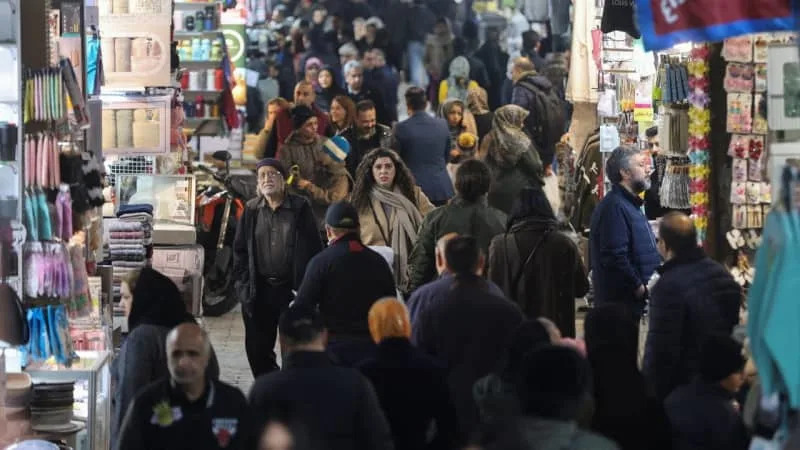
The Iranian government has attempted to project an image of calm in the capital, Tehran, despite ongoing protests and a significant digital blackout that has lasted over 200 hours. According to the internet monitoring organization NetBlocks, there was a notable restoration of some online services, including Google, indicating that heavily filtered access has resumed. This development comes as state media has focused on portraying normalcy in the city, claiming that life is returning to routine.
State-affiliated outlets, including the Islamic Republic of Iran Broadcasting (IRIB), have aired footage aimed at showcasing a peaceful Tehran, with reports suggesting that the city has “calmed down” following weeks of unrest. Videos of families skiing and enjoying winter activities have been broadcasted, accompanied by narrations highlighting the beauty of the snowfall. However, it is important to note that the Jerusalem Post has not been able to independently verify the authenticity of this footage.
As of January 16, 2023, the ongoing internet blackout has continued to isolate most Iranians from the global digital landscape, with only select users granted access through “white SIM cards.” Reports indicate that a gradual return to internet access may coincide with the 21st day of protests and the 10th day of the media blackout. Despite claims of a “calm” environment, many citizens remain cut off from reliable information and communication channels.
IRIB has also asserted that the internet is slowly coming back online, claiming that new footage is emerging which depicts protesters as “armed aggressors.” The videos in question reportedly date back to January 8 and 9, coinciding with the onset of the media blackout and the alleged violent crackdown on demonstrators. The situation remains tense, with ongoing uncertainty surrounding the number of casualties during this period.
State Media’s Narrative and Government Response
In a bid to reinforce the idea of stability, IRIB announced the reopening of schools and universities. Furthermore, the Iranian Judiciary has stated its commitment to distinguishing between protestors and those considered to be the “main leaders of the riots.” This statement suggests an intent to mitigate backlash and address grievances without broad punitive measures against the general population.
Despite the government’s efforts to control the narrative, digital rights watchdog Filterwatch has reported that Iran has adopted a strategy of “absolute digital isolation.” This approach raises concerns about the long-term implications for internet access in the country, indicating that unrestricted access may not be feasible in the foreseeable future. Filterwatch is dedicated to monitoring and analyzing internet censorship and digital rights issues within Iran, emphasizing the severity of the current situation.
As the authorities strive to paint a picture of normalcy, the reality for many Iranians remains one of uncertainty and disconnection. The ongoing protests, ignited by various socio-political grievances, continue to challenge the government’s capacity to maintain control and address the demands of its citizens. The international community watches closely as the situation unfolds, noting the implications for human rights and civil liberties in Iran.

Urgent Tax Savings Alert: Maximize Deductions Before April 15

Trump’s Administration Faces Uncertainty Over Government Shutdowns

Cosmic Defects: The Mystery of the Universe’s Missing Anomalies

Rapid City Parks Department Opens Registration for Bocce Leagues

Samsung Galaxy Watch 9 to Feature Larger 435mAh Battery Soon

Two Dead After Student Boats Capsize Off Okinawa Coast

Healthy Choice Wellness Reports Earnings with Mixed Results

Prince Harry Positions Himself as Royal Family’s Image Reviver

All Points North Lodge Achieves FSPHP-ETA Accreditation

Send Holiday Parcels for £1.99 with New Comparison Service

University of Hawaiʻi Leads $25M AI Project to Monitor Natural Disasters

Maui County Reopens Upgraded Lānaʻi Fifth Street Courts Today!

Daily Codeword Puzzle Launches on October 21, 2025

Congresswoman Under Fire for Misleading Epstein Donation Claims

Interstellar Object 3I/ATLAS Emits Unique Metal Alloy, Says Scientist

Trump Vows to Resolve Afghanistan-Pakistan Crisis “Very Quickly”

Charles Darwin’s Address Book Reveals Hidden Aspects of His Life

Rediscovering Chrysler: 5 Overlooked Models from the 1980s
-
 Lifestyle8 months ago
Send Holiday Parcels for £1.99 with New Comparison Service
-
Science9 months ago
University of Hawaiʻi Leads $25M AI Project to Monitor Natural Disasters
-
 Top Stories8 months ago
Maui County Reopens Upgraded Lānaʻi Fifth Street Courts Today!
-
 Entertainment10 months ago
Daily Codeword Puzzle Launches on October 21, 2025
-
 Lifestyle9 months ago
Congresswoman Under Fire for Misleading Epstein Donation Claims
-
 Science10 months ago
Interstellar Object 3I/ATLAS Emits Unique Metal Alloy, Says Scientist
-
 Top Stories9 months ago
Trump Vows to Resolve Afghanistan-Pakistan Crisis “Very Quickly”
-
 Science8 months ago
Charles Darwin’s Address Book Reveals Hidden Aspects of His Life
-
 Lifestyle8 months ago
Rediscovering Chrysler: 5 Overlooked Models from the 1980s
-

 Science7 months ago
Understanding Generation Z: Strategies for Engaging the Workforce
-

 Entertainment10 months ago
Kelly McCreary Discusses Future of Maggie and Winston in Grey’s Anatomy
-

 Top Stories8 months ago
aespa Faces Backlash Over G-Dragon Interaction at 2025 MAMAs