
Top Stories
Vinod Khosla Reveals Key Metric for AI Bubble Assessment

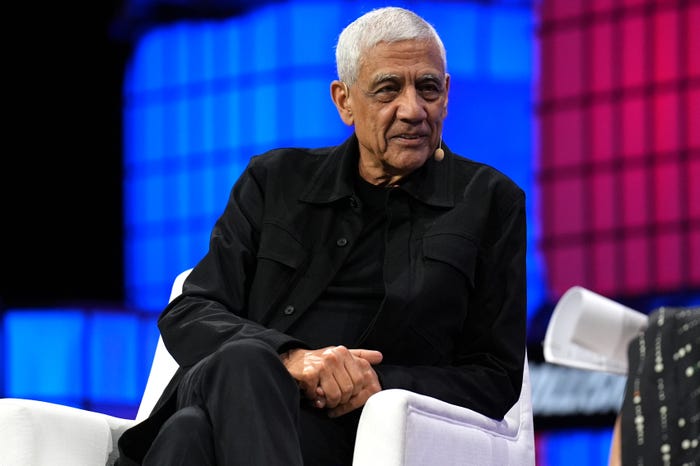
URGENT UPDATE: Venture capitalist Vinod Khosla has just revealed a critical metric he uses to assess the health of the AI industry: API calls. In a recent episode of OpenAI’s podcast aired on October 30, 2025, Khosla emphasized that traditional stock prices are not the right measure for determining whether we are in an AI bubble, a topic that has ignited fierce debate among industry leaders.
Khosla’s declaration comes amid a surge in AI investments, with various high-profile figures, including Bill Gates and Michael Burry, weighing in on the potential risks of an overvalued market. As corporations pour billions into AI technologies, the question of sustainability looms large.
The renowned investor stated, “People equate bubble to stock prices, which has nothing to do with anything other than fear and greed among investors.” He believes that focusing on API calls—requests made between software applications—provides a more accurate picture of AI’s real-world usage and demand. This metric is particularly relevant as AI applications become increasingly pervasive.
Khosla compared the current situation to the dot-com bubble of the late 1990s, where internet traffic served as a key indicator of market health. He asserted, “If that’s your fundamental metric of what’s the real use of your AI, usefulness of AI, demand for AI, you’re not going to see a bubble in API calls.”
The conversation around an AI bubble has gained momentum, with AlphaSense reporting that the term “AI bubble” appeared in 42 earnings calls and investor conference transcripts from October to December 2025, marking a staggering 740% increase from the previous quarter. This spike indicates rising concerns among investors about the valuation of AI companies.
While Khosla remains optimistic about API calls, others express caution. Bill Gates recently remarked that while AI holds immense value, it also exists within a bubble fueled by a frenzy of investment. He noted, “Some of these companies will be glad they spent all this money. Some of them, you know, they’ll commit to data centers whose electricity is too expensive.”
Adding to the urgency, Michael Burry, known for his “Big Short” investment strategy, voiced alarm in a recent Substack post, warning that many companies, including Microsoft and Alphabet, could be squandering trillions on technology that may quickly become obsolete. Burry emphasized the lack of a “clear path to utilization by the real economy.”
In stark contrast, Jensen Huang, CEO of Nvidia, dismissed the notion of an AI bubble entirely. Nvidia recently achieved a historic milestone, becoming the world’s first company with a $5 trillion market cap in October, driven by the AI boom. During an appearance on Bloomberg TV, Huang stated that AI represents a significant shift in computing, rather than mere market speculation.
As the debate over the sustainability of AI investments intensifies, all eyes will be on Khosla’s API calls metric as a potential benchmark for industry health.
What happens next? Investors and analysts will closely monitor API usage trends as a gauge of actual demand versus speculative hype in the AI sector. The implications of these developments are profound, affecting not only investors but also the future of technology and its integration into everyday life.
Stay tuned for further updates on this evolving story as industry leaders continue to weigh in on the future of AI.

Urgent Tax Savings Alert: Maximize Deductions Before April 15

Trump’s Administration Faces Uncertainty Over Government Shutdowns

Cosmic Defects: The Mystery of the Universe’s Missing Anomalies

Rapid City Parks Department Opens Registration for Bocce Leagues

Samsung Galaxy Watch 9 to Feature Larger 435mAh Battery Soon

Two Dead After Student Boats Capsize Off Okinawa Coast

Healthy Choice Wellness Reports Earnings with Mixed Results

Prince Harry Positions Himself as Royal Family’s Image Reviver

All Points North Lodge Achieves FSPHP-ETA Accreditation

Send Holiday Parcels for £1.99 with New Comparison Service

University of Hawaiʻi Leads $25M AI Project to Monitor Natural Disasters

Maui County Reopens Upgraded Lānaʻi Fifth Street Courts Today!

Daily Codeword Puzzle Launches on October 21, 2025

Congresswoman Under Fire for Misleading Epstein Donation Claims

Interstellar Object 3I/ATLAS Emits Unique Metal Alloy, Says Scientist

Trump Vows to Resolve Afghanistan-Pakistan Crisis “Very Quickly”

Charles Darwin’s Address Book Reveals Hidden Aspects of His Life

Rediscovering Chrysler: 5 Overlooked Models from the 1980s
-
 Lifestyle8 months ago
Send Holiday Parcels for £1.99 with New Comparison Service
-
Science9 months ago
University of Hawaiʻi Leads $25M AI Project to Monitor Natural Disasters
-
 Top Stories8 months ago
Maui County Reopens Upgraded Lānaʻi Fifth Street Courts Today!
-
 Entertainment10 months ago
Daily Codeword Puzzle Launches on October 21, 2025
-
 Lifestyle9 months ago
Congresswoman Under Fire for Misleading Epstein Donation Claims
-
 Science10 months ago
Interstellar Object 3I/ATLAS Emits Unique Metal Alloy, Says Scientist
-
 Top Stories10 months ago
Trump Vows to Resolve Afghanistan-Pakistan Crisis “Very Quickly”
-
 Science9 months ago
Charles Darwin’s Address Book Reveals Hidden Aspects of His Life
-
 Lifestyle8 months ago
Rediscovering Chrysler: 5 Overlooked Models from the 1980s
-
 Science7 months ago
Understanding Generation Z: Strategies for Engaging the Workforce
-

 Entertainment10 months ago
Kelly McCreary Discusses Future of Maggie and Winston in Grey’s Anatomy
-

 Top Stories8 months ago
aespa Faces Backlash Over G-Dragon Interaction at 2025 MAMAs