
World
Japan’s Takaichi Dissolves Parliament, Calls Snap Election for Feb. 8

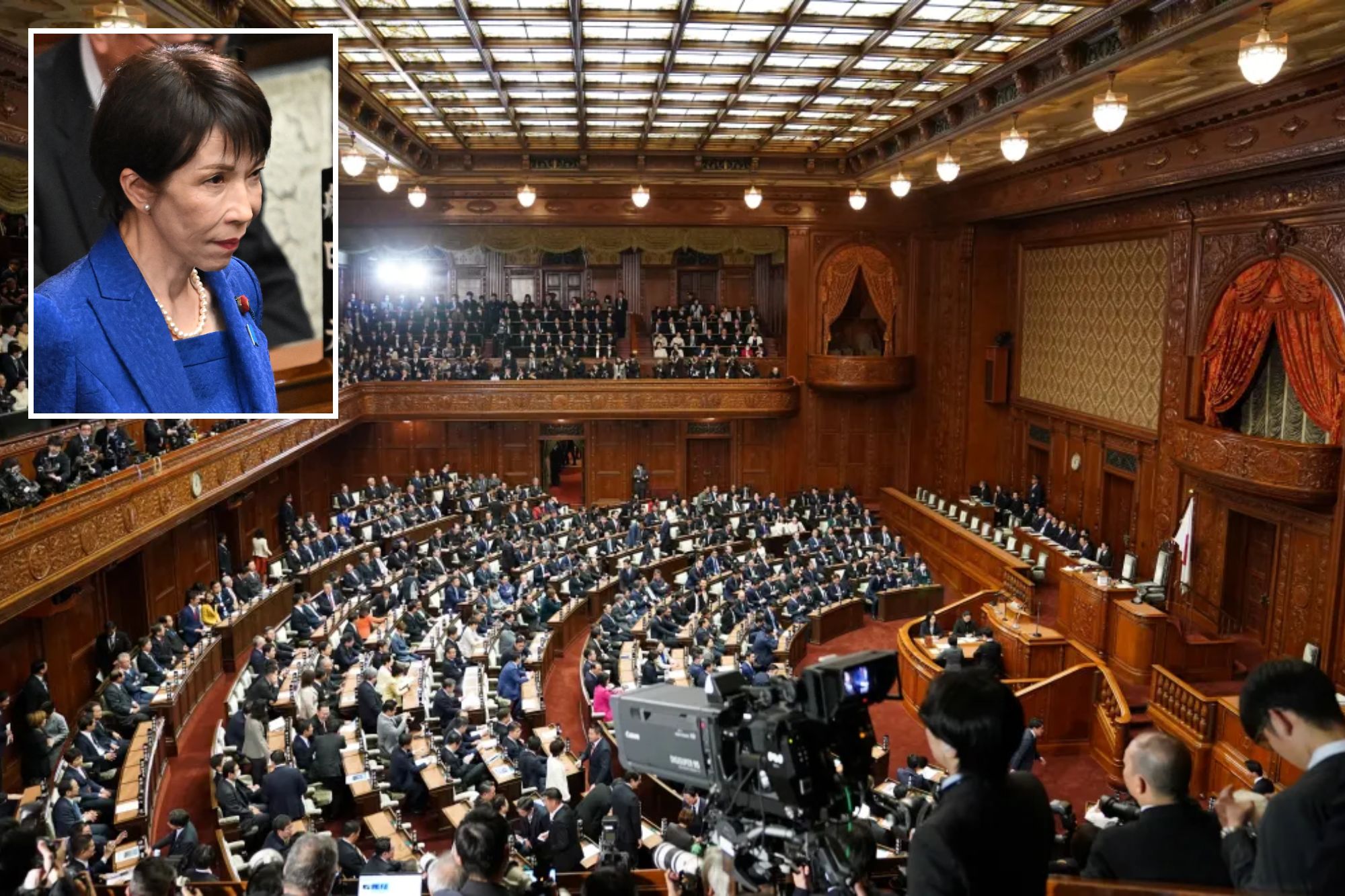
Japan’s Prime Minister Sanae Takaichi announced the dissolution of the lower house of Parliament on Friday, setting the stage for a snap election scheduled for February 8, 2024. This decision, made after only three months in office, aims to leverage her current popularity and to help the ruling Liberal Democratic Party (LDP) regain political ground following significant electoral losses in recent years.
The dissolution of the 465-member lower house was officially declared by House Speaker Fukushiro Nukaga, prompting assembled parliamentarians to express their approval by shouting “banzai,” meaning “long live,” three times. The subsequent campaign period will last for 12 days, beginning this Tuesday.
Takaichi, who made history as Japan’s first female leader when she was elected in October 2023, currently holds approval ratings around 70%. Her administration is now navigating a complex political landscape that includes rising tensions with China and calls from former U.S. President Donald Trump for increased military spending.
Political Strategy and Economic Implications
Takaichi’s early election strategy seeks to capitalize on her favorable ratings to expand the governing majority in the lower house, which is the more influential chamber of Japan’s two-part Parliament. The LDP, marred by scandal and recovering from a 2024 election loss, currently holds a slim majority in the lower house but lacks a majority in the upper house. This situation compels the coalition to seek support from opposition members to pass its legislative agenda.
Critics, including opposition leaders, have raised concerns about the timing of the election, arguing that it delays crucial discussions on a budget aimed at stimulating Japan’s struggling economy and addressing rising prices. Takaichi defended her decision, stating, “I believe that the only option is for the people, as sovereign citizens, to decide whether Sanae Takaichi should be prime minister. I’m staking my career as prime minister on it.”
As a hardline conservative, Takaichi is keen to distinguish her policies from those of her centrist predecessor, Shigeru Ishiba. She emphasizes the need for voters to evaluate her proposals for fiscal spending, military enhancement, and stricter immigration policies, all aimed at making Japan “strong and prosperous.”
International Relations and Domestic Challenges
Japan’s geopolitical stance has become increasingly complex under Takaichi, particularly regarding its relationship with China. Her comments suggesting that Japan could intervene should China take military action against Taiwan, a self-governing island claimed by Beijing, have inflamed tensions. In response, China has ramped up economic and diplomatic retaliation against Japan.
The Prime Minister’s push for increased military spending aligns with pressures from the United States, specifically from Trump, who has advocated for stronger defense capabilities in the region as tensions between Washington and Beijing escalate.
While Takaichi’s assertive political image has resonated with younger voters, the LDP faces challenges from emerging far-right populist parties, such as the anti-globalist Sanseito. Many traditional LDP supporters are gravitating towards these new options, complicating Takaichi’s bid to solidify her party’s standing ahead of the upcoming election.
As Japan approaches the election day, the implications of Takaichi’s decisions will be closely scrutinized both domestically and in the context of international relations, particularly with the ongoing challenges presented by China and defense commitments to the United States.

Urgent Tax Savings Alert: Maximize Deductions Before April 15

Trump’s Administration Faces Uncertainty Over Government Shutdowns

Cosmic Defects: The Mystery of the Universe’s Missing Anomalies

Rapid City Parks Department Opens Registration for Bocce Leagues

Samsung Galaxy Watch 9 to Feature Larger 435mAh Battery Soon

Two Dead After Student Boats Capsize Off Okinawa Coast

Healthy Choice Wellness Reports Earnings with Mixed Results

Prince Harry Positions Himself as Royal Family’s Image Reviver

All Points North Lodge Achieves FSPHP-ETA Accreditation

Send Holiday Parcels for £1.99 with New Comparison Service

University of Hawaiʻi Leads $25M AI Project to Monitor Natural Disasters

Maui County Reopens Upgraded Lānaʻi Fifth Street Courts Today!

Daily Codeword Puzzle Launches on October 21, 2025

Congresswoman Under Fire for Misleading Epstein Donation Claims

Interstellar Object 3I/ATLAS Emits Unique Metal Alloy, Says Scientist

Trump Vows to Resolve Afghanistan-Pakistan Crisis “Very Quickly”

Charles Darwin’s Address Book Reveals Hidden Aspects of His Life

Rediscovering Chrysler: 5 Overlooked Models from the 1980s
-
 Lifestyle8 months ago
Send Holiday Parcels for £1.99 with New Comparison Service
-
Science9 months ago
University of Hawaiʻi Leads $25M AI Project to Monitor Natural Disasters
-
 Top Stories8 months ago
Maui County Reopens Upgraded Lānaʻi Fifth Street Courts Today!
-
 Entertainment10 months ago
Daily Codeword Puzzle Launches on October 21, 2025
-
 Lifestyle9 months ago
Congresswoman Under Fire for Misleading Epstein Donation Claims
-
 Science10 months ago
Interstellar Object 3I/ATLAS Emits Unique Metal Alloy, Says Scientist
-
 Top Stories9 months ago
Trump Vows to Resolve Afghanistan-Pakistan Crisis “Very Quickly”
-
 Science8 months ago
Charles Darwin’s Address Book Reveals Hidden Aspects of His Life
-
 Lifestyle8 months ago
Rediscovering Chrysler: 5 Overlooked Models from the 1980s
-

 Science7 months ago
Understanding Generation Z: Strategies for Engaging the Workforce
-

 Entertainment10 months ago
Kelly McCreary Discusses Future of Maggie and Winston in Grey’s Anatomy
-

 Entertainment7 months ago
Landmark Shift as Iconic Anime Series Concludes After 26 Years