
World
Oil Execs Reflect on Iraq Lessons as Venezuela Beckons

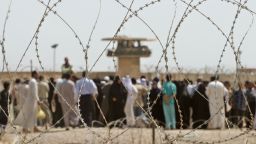
The complexities of the oil landscape in Venezuela are garnering attention as President Donald Trump advocates for U.S. intervention in the country. Drawing parallels with the post-invasion experience in Iraq, experts warn that the situation in Venezuela may prove to be similarly challenging for oil companies considering investment.
President Trump has suggested a straightforward approach to Venezuela: seize the oil resources and initiate exports. However, the lessons learned from Iraq’s tumultuous aftermath following the 2003 invasion highlight that such a strategy could face significant hurdles. The U.S. military operation in Iraq led to years of instability, and the rebuilding of the oil sector took much longer than anticipated.
Analysts emphasize that the absence of U.S. troops on the ground in Venezuela presents a different context compared to Iraq. Yet, the security landscape remains uncertain, and oil companies are likely to proceed cautiously. According to Bill Farren-Price, a senior research fellow at the Oxford Institute for Energy Studies, the journey for these firms will be fraught with difficulties. “It’s really going to be a very, very difficult mountain to climb,” he stated, noting that efforts to rehabilitate oil industries can take years, even in established producers like Iraq and Venezuela.
The backdrop in Iraq provides critical insights. Following the invasion, then-Deputy Defense Secretary Paul Wolfowitz asserted that Iraq’s vast oil reserves would help finance the country’s reconstruction. However, this expectation did not materialize. According to Mohamad Bazzi, director of the Center for Near Eastern Studies at New York University, the Bush administration underestimated the time required for the Iraqi oil sector to yield economic benefits.
When the U.S. invaded Iraq, the oil industry had been nationalized and closed to Western companies since the 1970s. The U.S. disbanded the Iraqi armed forces and removed thousands of members of Saddam Hussein’s Baath Party from government positions. This left the oil ministry under temporary U.S. control. It wasn’t until around 2009 that foreign contracts were offered, and even then, the terms were unattractive. Raad Alkadiri, managing partner at 3TEN32 Associates, explained that contracts allowed foreign firms to operate as contractors without ownership rights over oil reserves.
Alkadiri, who advised UK diplomats in Iraq, recalled that the initial enthusiasm from oil companies was quickly tempered by the Iraqi government’s new system. The security situation further complicated matters. The post-invasion chaos led to looting, sabotage, and civil unrest, greatly affecting oil production and infrastructure.
As the U.S. considers its approach to Venezuela, the security dynamics differ significantly. Unlike Iraq, remnants of the Maduro regime remain influential. Carlos Solar, senior research fellow at the Royal United Services Institute, pointed out that Venezuela is a “highly militarized country,” with multiple armed groups vying for control. These include the Venezuelan army, organized crime, Colombian guerrilla factions, and paramilitary groups loyal to Maduro.
Instead of deploying U.S. troops, the Trump administration is reportedly leaning towards utilizing private military contractors to safeguard oil assets in Venezuela. During the Iraq War, billions were spent on private security and logistics, though this approach faced controversies, including incidents involving civilian casualties.
The security landscape in Venezuela presents numerous uncertainties. Amy Myers Jaffe, director of the Energy, Climate Justice and Sustainability Lab at New York University, emphasized that the current conditions are not favorable for oil companies to commit substantial investments. Questions about the stability of the Maduro government, potential elections, and the overall security scenario loom large.
“The lesson of Iraq is that it’s not really about how much oil is there — it’s about what’s going to happen on the ground,” Jaffe said, highlighting the need for oil majors to carefully assess the situation before proceeding.
As the prospect of U.S. involvement in Venezuela unfolds, the experiences of Iraq serve as a crucial reminder of the complexities and challenges inherent in international oil operations.

Urgent Tax Savings Alert: Maximize Deductions Before April 15

Trump’s Administration Faces Uncertainty Over Government Shutdowns

Cosmic Defects: The Mystery of the Universe’s Missing Anomalies

Rapid City Parks Department Opens Registration for Bocce Leagues

Samsung Galaxy Watch 9 to Feature Larger 435mAh Battery Soon

Two Dead After Student Boats Capsize Off Okinawa Coast

Healthy Choice Wellness Reports Earnings with Mixed Results

Prince Harry Positions Himself as Royal Family’s Image Reviver

All Points North Lodge Achieves FSPHP-ETA Accreditation

Send Holiday Parcels for £1.99 with New Comparison Service

University of Hawaiʻi Leads $25M AI Project to Monitor Natural Disasters

Maui County Reopens Upgraded Lānaʻi Fifth Street Courts Today!

Daily Codeword Puzzle Launches on October 21, 2025

Congresswoman Under Fire for Misleading Epstein Donation Claims

Interstellar Object 3I/ATLAS Emits Unique Metal Alloy, Says Scientist

Trump Vows to Resolve Afghanistan-Pakistan Crisis “Very Quickly”

Charles Darwin’s Address Book Reveals Hidden Aspects of His Life

Rediscovering Chrysler: 5 Overlooked Models from the 1980s
-
 Lifestyle8 months ago
Send Holiday Parcels for £1.99 with New Comparison Service
-
Science9 months ago
University of Hawaiʻi Leads $25M AI Project to Monitor Natural Disasters
-
 Top Stories8 months ago
Maui County Reopens Upgraded Lānaʻi Fifth Street Courts Today!
-
 Entertainment10 months ago
Daily Codeword Puzzle Launches on October 21, 2025
-
 Lifestyle9 months ago
Congresswoman Under Fire for Misleading Epstein Donation Claims
-
 Science10 months ago
Interstellar Object 3I/ATLAS Emits Unique Metal Alloy, Says Scientist
-
 Top Stories9 months ago
Trump Vows to Resolve Afghanistan-Pakistan Crisis “Very Quickly”
-
 Science8 months ago
Charles Darwin’s Address Book Reveals Hidden Aspects of His Life
-
 Lifestyle8 months ago
Rediscovering Chrysler: 5 Overlooked Models from the 1980s
-

 Science7 months ago
Understanding Generation Z: Strategies for Engaging the Workforce
-

 Entertainment10 months ago
Kelly McCreary Discusses Future of Maggie and Winston in Grey’s Anatomy
-

 Top Stories8 months ago
aespa Faces Backlash Over G-Dragon Interaction at 2025 MAMAs