
World
Iran’s Diplomat Asserts Strength in Rejecting US Negotiations

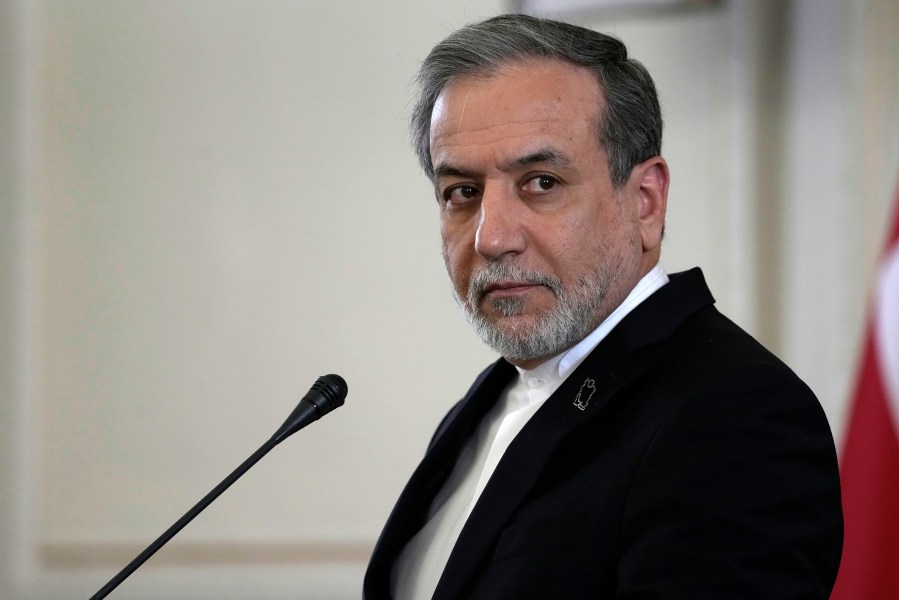
Iran’s Foreign Minister, Abbas Araghchi, asserted on March 10, 2024, that Iran’s power lies in its ability to “say no to the great powers,” emphasizing a firm stance following recent negotiations with the United States regarding its nuclear program. His comments came during a diplomatic gathering in Dubai, United Arab Emirates, where he addressed the implications of these discussions amidst ongoing protests across the nation.
Araghchi described Iran’s resilience as rooted in its unwillingness to capitulate to external pressures. This declaration follows a series of protests that have swept through Iran, reflecting widespread discontent over various economic and social issues. The backdrop of these protests adds a layer of complexity to Iran’s diplomatic posture, particularly in the context of its contentious relationship with the United States.
During the meeting with diplomats, Araghchi reiterated that Iran’s nuclear ambitions are not up for negotiation. He characterized the discussions with the United States as an opportunity for the nation to assert its sovereignty rather than a chance to yield to foreign demands. His remarks underscore a broader strategy aimed at reinforcing Iran’s position on the international stage, particularly as tensions remain high between Tehran and Washington.
In the wake of the protests, which have garnered considerable attention both domestically and internationally, Araghchi’s comments signal a deliberate choice to project strength. The Iranian government has often framed its nuclear program as a matter of national pride and self-determination, further complicating the prospects for any potential agreements with the United States.
The diplomatic landscape surrounding Iran’s nuclear program has been fraught with challenges. Previous negotiations have yielded limited progress, and Araghchi’s latest statements suggest that Tehran is unlikely to compromise further. The foreign minister’s rhetoric also reflects a broader national sentiment that resists external influence, particularly from nations viewed as adversaries.
Iran’s insistence on maintaining a hardline stance may have significant implications for future diplomatic efforts. The international community, particularly the United States and its allies, will need to navigate these complexities as they seek to engage with Iran on pressing issues such as nuclear proliferation and regional stability.
As the situation continues to evolve, the reactions from global powers will be crucial in determining the trajectory of Iran’s foreign relations. The dynamics at play highlight the delicate balance between diplomacy and national sovereignty, a theme that remains central to Iran’s identity on the world stage.

Urgent Tax Savings Alert: Maximize Deductions Before April 15

Trump’s Administration Faces Uncertainty Over Government Shutdowns

Cosmic Defects: The Mystery of the Universe’s Missing Anomalies

Rapid City Parks Department Opens Registration for Bocce Leagues

Samsung Galaxy Watch 9 to Feature Larger 435mAh Battery Soon

Two Dead After Student Boats Capsize Off Okinawa Coast

Healthy Choice Wellness Reports Earnings with Mixed Results

Prince Harry Positions Himself as Royal Family’s Image Reviver

All Points North Lodge Achieves FSPHP-ETA Accreditation

Send Holiday Parcels for £1.99 with New Comparison Service

University of Hawaiʻi Leads $25M AI Project to Monitor Natural Disasters

Maui County Reopens Upgraded Lānaʻi Fifth Street Courts Today!

Daily Codeword Puzzle Launches on October 21, 2025

Congresswoman Under Fire for Misleading Epstein Donation Claims

Interstellar Object 3I/ATLAS Emits Unique Metal Alloy, Says Scientist

Trump Vows to Resolve Afghanistan-Pakistan Crisis “Very Quickly”

Charles Darwin’s Address Book Reveals Hidden Aspects of His Life

Rediscovering Chrysler: 5 Overlooked Models from the 1980s
-
 Lifestyle8 months ago
Send Holiday Parcels for £1.99 with New Comparison Service
-
Science9 months ago
University of Hawaiʻi Leads $25M AI Project to Monitor Natural Disasters
-
 Top Stories8 months ago
Maui County Reopens Upgraded Lānaʻi Fifth Street Courts Today!
-
 Entertainment10 months ago
Daily Codeword Puzzle Launches on October 21, 2025
-
 Lifestyle9 months ago
Congresswoman Under Fire for Misleading Epstein Donation Claims
-
 Science10 months ago
Interstellar Object 3I/ATLAS Emits Unique Metal Alloy, Says Scientist
-
 Top Stories9 months ago
Trump Vows to Resolve Afghanistan-Pakistan Crisis “Very Quickly”
-
 Science8 months ago
Charles Darwin’s Address Book Reveals Hidden Aspects of His Life
-
 Lifestyle8 months ago
Rediscovering Chrysler: 5 Overlooked Models from the 1980s
-

 Science7 months ago
Understanding Generation Z: Strategies for Engaging the Workforce
-

 Entertainment10 months ago
Kelly McCreary Discusses Future of Maggie and Winston in Grey’s Anatomy
-

 Top Stories8 months ago
aespa Faces Backlash Over G-Dragon Interaction at 2025 MAMAs