
World
Family Seeks Capitol Honor for Jesse Jackson; Speaker Denies Request

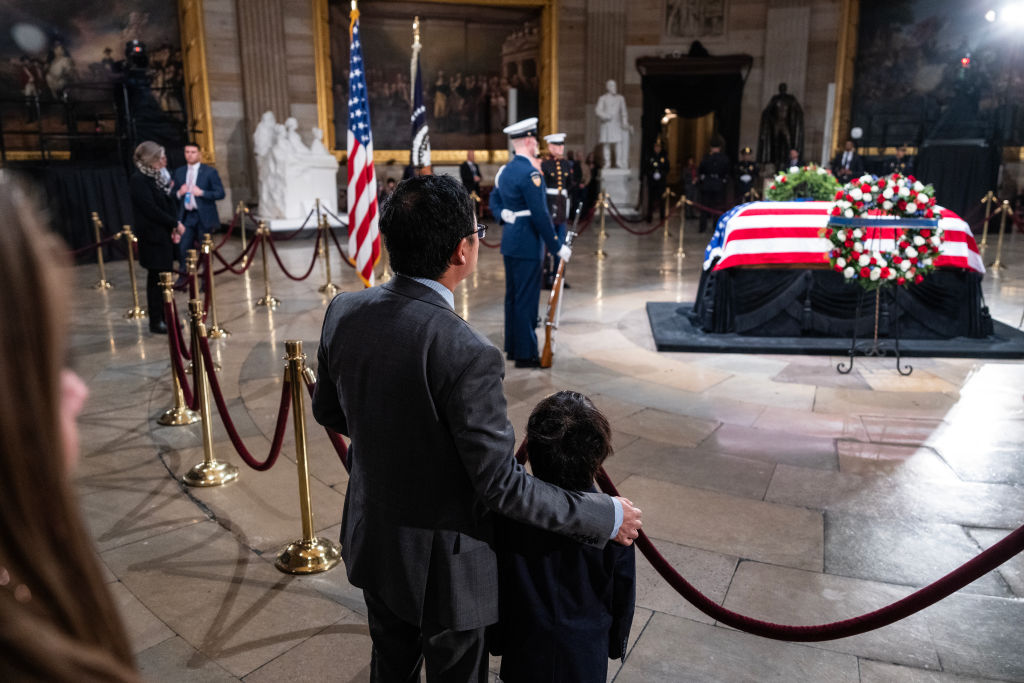
House Speaker Mike Johnson has denied a request from the family of civil rights leader Jesse Jackson to allow him to lie in honor in the Capitol Rotunda following his death at age 84. Johnson’s office cited a longstanding House precedent that reserves the Rotunda for presidents, former members of Congress, military leaders, and Supreme Court justices. According to officials, since Jackson never held federal office, he did not meet the traditional criteria for this honor.
The decision has drawn criticism from civil rights leaders and Jackson’s supporters, who argue that it reflects a limited view of public service. In a statement released upon Jackson’s passing, his family emphasized his significant legacy: “Our father was a servant leader — not only to our family, but to the oppressed, the voiceless, and the overlooked around the world… His unwavering belief in justice, equality, and love uplifted millions, and we ask you to honor his memory by continuing the fight for the values he lived by.”
Jackson’s daughter, Santita Jackson, expressed disappointment at the denial. “What we want is for the people to get a chance to be with him,” she stated, highlighting the desire for a public tribute to honor her father’s contributions.
The term “lie in honor” refers to a rare ceremonial distinction that allows the remains of private citizens to be displayed in the Capitol Rotunda for public viewing. This honor is distinct from “lying in state,” which is reserved for government officials. Historically, this privilege has been granted only a limited number of times, notably to civil rights pioneer Rosa Parks in 2005 and evangelist Billy Graham in 2018. In both instances, lawmakers contended that the individuals’ moral authority and national significance warranted special recognition.
Supporters of Jackson assert that his legacy aligns closely with this tradition. A two-time presidential candidate and dedicated activist, Jackson spent over five decades organizing efforts to register voters, build political coalitions, and advance racial and economic justice on a national scale. NAACP President Derrick Johnson criticized the decision, stating it reveals “everything you need to know about Mike Johnson and his gross disregard for our Constitution and our democracy.”
While memorial services for Jackson are set to take place in Chicago, Washington, and South Carolina, drawing leaders, activists, and admirers from across the nation, the absence of a Capitol tribute raises questions about how America honors its reformers. This situation underscores a persistent tension: although the nation publicly celebrates figures like Jackson, its institutions often fail to fully recognize their contributions.
It is also noteworthy that recent requests for similar honors have been denied for other prominent figures, including former Vice President Dick Cheney and conservative activist Charlie Kirk. In death, as in life, Jackson’s legacy continues to transcend the limitations of official recognition, inviting reflection on the broader implications of public service and honor in American society.

Urgent Tax Savings Alert: Maximize Deductions Before April 15

Trump’s Administration Faces Uncertainty Over Government Shutdowns

Cosmic Defects: The Mystery of the Universe’s Missing Anomalies

Rapid City Parks Department Opens Registration for Bocce Leagues

Samsung Galaxy Watch 9 to Feature Larger 435mAh Battery Soon

Two Dead After Student Boats Capsize Off Okinawa Coast

Healthy Choice Wellness Reports Earnings with Mixed Results

Prince Harry Positions Himself as Royal Family’s Image Reviver

All Points North Lodge Achieves FSPHP-ETA Accreditation

Send Holiday Parcels for £1.99 with New Comparison Service

University of Hawaiʻi Leads $25M AI Project to Monitor Natural Disasters

Maui County Reopens Upgraded Lānaʻi Fifth Street Courts Today!

Daily Codeword Puzzle Launches on October 21, 2025

Congresswoman Under Fire for Misleading Epstein Donation Claims

Interstellar Object 3I/ATLAS Emits Unique Metal Alloy, Says Scientist

Trump Vows to Resolve Afghanistan-Pakistan Crisis “Very Quickly”

Charles Darwin’s Address Book Reveals Hidden Aspects of His Life

Rediscovering Chrysler: 5 Overlooked Models from the 1980s
-
 Lifestyle8 months ago
Send Holiday Parcels for £1.99 with New Comparison Service
-
Science9 months ago
University of Hawaiʻi Leads $25M AI Project to Monitor Natural Disasters
-
 Top Stories8 months ago
Maui County Reopens Upgraded Lānaʻi Fifth Street Courts Today!
-
 Entertainment10 months ago
Daily Codeword Puzzle Launches on October 21, 2025
-
 Lifestyle9 months ago
Congresswoman Under Fire for Misleading Epstein Donation Claims
-
 Science10 months ago
Interstellar Object 3I/ATLAS Emits Unique Metal Alloy, Says Scientist
-
 Top Stories9 months ago
Trump Vows to Resolve Afghanistan-Pakistan Crisis “Very Quickly”
-
 Science8 months ago
Charles Darwin’s Address Book Reveals Hidden Aspects of His Life
-
 Lifestyle8 months ago
Rediscovering Chrysler: 5 Overlooked Models from the 1980s
-

 Science7 months ago
Understanding Generation Z: Strategies for Engaging the Workforce
-

 Entertainment10 months ago
Kelly McCreary Discusses Future of Maggie and Winston in Grey’s Anatomy
-

 Entertainment7 months ago
Landmark Shift as Iconic Anime Series Concludes After 26 Years