
Health
Rabies Threat Persists as Cases Rise Across the United States

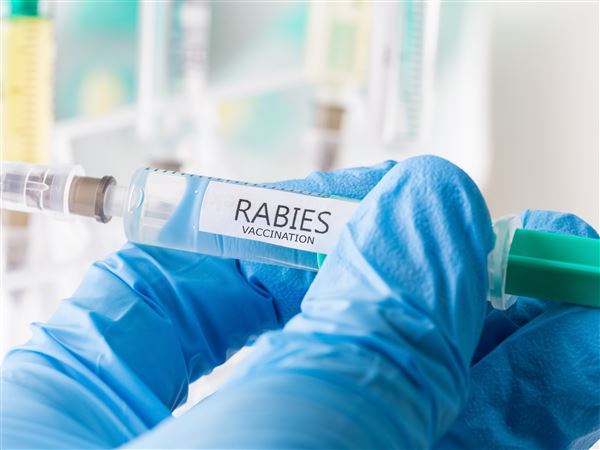
Rabies continues to pose a serious health threat despite being a preventable disease. According to the Centers for Disease Control and Prevention (CDC), approximately 4,000 rabies cases are reported annually in the United States, culminating in six deaths last year. As of October 2025, Ohio has recorded 216 cases, highlighting the urgency of awareness and vaccination efforts.
Understanding rabies is essential for prevention. The virus is primarily transmitted through the bite of an infected animal, most commonly bats, raccoons, and domestic dogs. Once symptoms appear, rabies is nearly always fatal, which underscores the importance of prompt medical intervention after potential exposure.
Current State of Rabies in the U.S.
In the United States, rabies remains a public health concern. The CDC notes that while the number of rabies cases is relatively low compared to other diseases, the risk of transmission is significant in certain areas. The cases in Ohio represent an increase that could reflect changing environmental factors or heightened interaction between wildlife and human populations.
Vaccination is a critical tool in combating rabies. The CDC recommends that pet owners ensure their animals are vaccinated against the virus. This is particularly important in areas where rabies is prevalent. In addition, public health officials advocate for community education on the risks associated with wildlife encounters.
Preventive Measures and Community Responsibility
Prevention strategies extend beyond vaccination. Individuals are encouraged to avoid contact with wild animals and report any suspicious behavior in pets. When traveling to areas where rabies is more common, taking precautions—such as keeping pets on leashes and ensuring they receive booster vaccinations—can significantly reduce the risk of transmission.
Local health departments also play a vital role in managing rabies cases. They monitor animal populations, conduct public awareness campaigns, and provide vaccination clinics. Residents are urged to participate in these initiatives to help control the spread of the virus.
As the incidence of rabies varies by region, local statistics can provide valuable insight. The CDC emphasizes that while rabies is preventable, vigilance is necessary to protect both human and animal health. As seen in Ohio, rising case numbers remind communities of the ongoing threat and the importance of proactive measures.
In conclusion, rabies remains a deadly but preventable disease. Educational efforts, vaccination programs, and community involvement are crucial in managing its impact. Public health organizations continue to stress the importance of awareness and preventive actions to keep rabies at bay.

Urgent Tax Savings Alert: Maximize Deductions Before April 15

Trump’s Administration Faces Uncertainty Over Government Shutdowns

Cosmic Defects: The Mystery of the Universe’s Missing Anomalies

Rapid City Parks Department Opens Registration for Bocce Leagues

Samsung Galaxy Watch 9 to Feature Larger 435mAh Battery Soon

Two Dead After Student Boats Capsize Off Okinawa Coast

Healthy Choice Wellness Reports Earnings with Mixed Results

Prince Harry Positions Himself as Royal Family’s Image Reviver

All Points North Lodge Achieves FSPHP-ETA Accreditation

Send Holiday Parcels for £1.99 with New Comparison Service

University of Hawaiʻi Leads $25M AI Project to Monitor Natural Disasters

Maui County Reopens Upgraded Lānaʻi Fifth Street Courts Today!

Daily Codeword Puzzle Launches on October 21, 2025

Congresswoman Under Fire for Misleading Epstein Donation Claims

Interstellar Object 3I/ATLAS Emits Unique Metal Alloy, Says Scientist

Trump Vows to Resolve Afghanistan-Pakistan Crisis “Very Quickly”

Charles Darwin’s Address Book Reveals Hidden Aspects of His Life

Rediscovering Chrysler: 5 Overlooked Models from the 1980s
-
 Lifestyle8 months ago
Send Holiday Parcels for £1.99 with New Comparison Service
-
Science9 months ago
University of Hawaiʻi Leads $25M AI Project to Monitor Natural Disasters
-
 Top Stories8 months ago
Maui County Reopens Upgraded Lānaʻi Fifth Street Courts Today!
-
 Entertainment10 months ago
Daily Codeword Puzzle Launches on October 21, 2025
-
 Lifestyle9 months ago
Congresswoman Under Fire for Misleading Epstein Donation Claims
-
 Science10 months ago
Interstellar Object 3I/ATLAS Emits Unique Metal Alloy, Says Scientist
-
 Top Stories9 months ago
Trump Vows to Resolve Afghanistan-Pakistan Crisis “Very Quickly”
-
 Science8 months ago
Charles Darwin’s Address Book Reveals Hidden Aspects of His Life
-
 Lifestyle8 months ago
Rediscovering Chrysler: 5 Overlooked Models from the 1980s
-

 Science7 months ago
Understanding Generation Z: Strategies for Engaging the Workforce
-

 Entertainment10 months ago
Kelly McCreary Discusses Future of Maggie and Winston in Grey’s Anatomy
-

 Top Stories8 months ago
aespa Faces Backlash Over G-Dragon Interaction at 2025 MAMAs