
World
Exploring the Legacy of the McDonnell Douglas MD-11: 200 Built

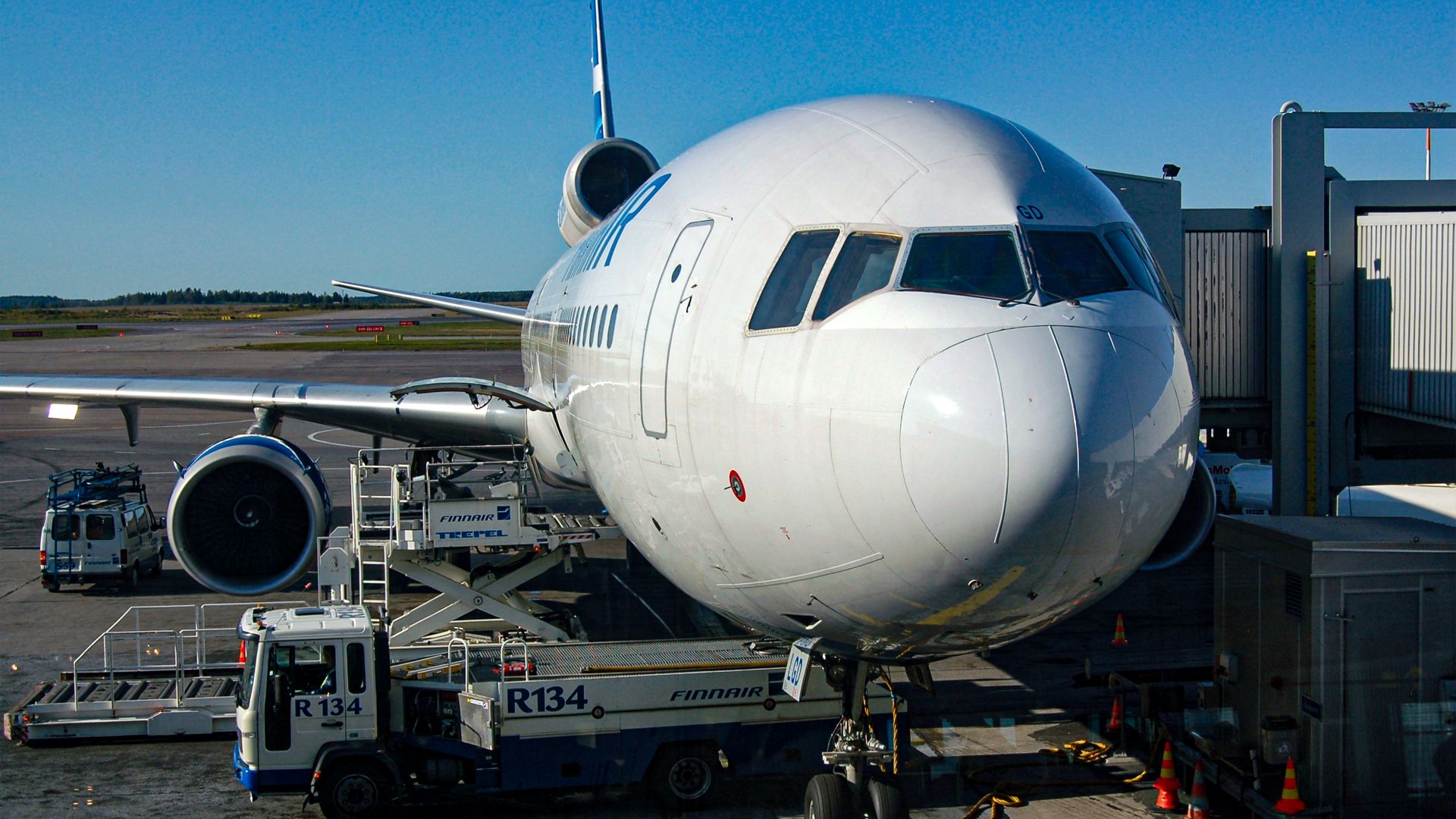
The McDonnell Douglas MD-11, a notable figure in commercial aviation, saw a total of 200 aircraft produced during its run. Designed as a successor to the DC-10, the MD-11 aimed to enhance range, efficiency, and avionics at a time when airlines were evolving their long-haul travel strategies. Despite its ambitious design and distinctive three-engine layout, the MD-11 struggled to achieve the commercial success anticipated by its manufacturer.
The roots of the MD-11 trace back to the DC-10 program, which first entered service with American Airlines in 1971. The DC-10 was developed to address the demand for a widebody aircraft capable of carrying a large number of passengers on medium- to long-haul routes. Its tri-engine configuration provided the necessary performance for long-distance flights while allowing airlines to operate from shorter runways. Over its production span, the DC-10 was built in various passenger and cargo variants, achieving significant worldwide adoption.
The Transition to the MD-11
By the early 1980s, advancements in technology began to outstrip the DC-10’s capabilities. Airlines sought aircraft that offered higher fuel efficiency, extended range, and reduced crew requirements. Responding to these demands, McDonnell Douglas evolved the DC-10 into the MD-11, introducing critical design improvements while retaining enough similarities to appeal to existing DC-10 operators.
The MD-11 launched its first flight on January 10, 1990, marking the last commercial airliner designed by McDonnell Douglas. It entered service later that year with Finnair as the launch customer. Despite its promising features, the MD-11 arrived during a transformative period for the aviation industry, as airlines began favoring increasingly efficient twin-engine widebody aircraft.
The MD-11’s specifications were markedly different from its predecessor. With a length of 200 feet 10 inches compared to the DC-10’s 181 feet 5 inches, the MD-11 offered increased passenger and cargo capacity. Aerodynamic enhancements, such as redesigned wings and advanced flight control systems, positioned the MD-11 as one of the most advanced tri-jets ever produced.
Production and Market Challenges
Production of the MD-11 took place at McDonnell Douglas’s facility in Long Beach, California. Initial deliveries began in the early 1990s, predominantly comprising passenger variants. However, as market dynamics shifted, airlines increasingly preferred twin-engine models that provided similar range with lower operational costs. Consequently, orders for the MD-11 slowed, leading to a reliance on freighter and convertible variants.
Major operators of the MD-11 included Varig with 23 aircraft, Swissair with 22, and American Airlines with 19. The merger between Boeing and McDonnell Douglas in 1997 further complicated the MD-11’s prospects, as it was excluded from Boeing’s long-term strategy. Ultimately, production ceased in 2000 after the final aircraft was delivered.
Despite its modern design, the MD-11 encountered difficulties in gaining widespread acceptance in commercial aviation. The aircraft often burned more fuel than expected and struggled to reach its maximum range when fully loaded. These performance issues translated into higher operational costs, making it less competitive against more efficient alternatives like the Boeing 777 and Airbus A330. Major airlines began to retire their MD-11 fleets as they transitioned to more economical options.
While the MD-11 faced challenges as a passenger aircraft, it found renewed success in the cargo sector. Many of the 200 units built were converted into freighters or sold to cargo operators. Companies such as FedEx and UPS Airlines relied on the MD-11F for its long range and substantial payload capacity, cementing its reputation as a prominent freighter.
The MD-11’s freighter operations came under scrutiny following a tragic incident on November 4, 2025, when a UPS-operated MD-11F crashed shortly after takeoff from Louisville Muhammad Ali International Airport, resulting in the loss of 14 lives, including crew and individuals on the ground. In the aftermath, the FAA grounded all MD-11 aircraft pending thorough inspections, leading to significant operational changes.
The Enduring Legacy of the MD-11
The MD-11’s legacy encapsulates both ambition and outcome. While it did not achieve its intended status as a long-term passenger aircraft, it remains one of the most recognizable widebody jets in aviation history. The MD-11’s innovations, which reflected the industry’s shift towards automation and efficiency, have left a lasting impact.
Although the production number reached a modest 200 units, the MD-11’s influence extends beyond its limited fleet. The aircraft’s adaptability and durability in cargo service have solidified its place as an iconic figure in the annals of commercial aviation. As it transitions into retirement, the MD-11 continues to be celebrated for its unique contributions to the evolving landscape of air travel.

Urgent Tax Savings Alert: Maximize Deductions Before April 15

Trump’s Administration Faces Uncertainty Over Government Shutdowns

Cosmic Defects: The Mystery of the Universe’s Missing Anomalies

Rapid City Parks Department Opens Registration for Bocce Leagues

Samsung Galaxy Watch 9 to Feature Larger 435mAh Battery Soon

Two Dead After Student Boats Capsize Off Okinawa Coast

Healthy Choice Wellness Reports Earnings with Mixed Results

Prince Harry Positions Himself as Royal Family’s Image Reviver

All Points North Lodge Achieves FSPHP-ETA Accreditation

Send Holiday Parcels for £1.99 with New Comparison Service

University of Hawaiʻi Leads $25M AI Project to Monitor Natural Disasters

Maui County Reopens Upgraded Lānaʻi Fifth Street Courts Today!

Daily Codeword Puzzle Launches on October 21, 2025

Congresswoman Under Fire for Misleading Epstein Donation Claims

Interstellar Object 3I/ATLAS Emits Unique Metal Alloy, Says Scientist

Trump Vows to Resolve Afghanistan-Pakistan Crisis “Very Quickly”

Charles Darwin’s Address Book Reveals Hidden Aspects of His Life

Rediscovering Chrysler: 5 Overlooked Models from the 1980s
-
 Lifestyle8 months ago
Send Holiday Parcels for £1.99 with New Comparison Service
-
Science9 months ago
University of Hawaiʻi Leads $25M AI Project to Monitor Natural Disasters
-
 Top Stories8 months ago
Maui County Reopens Upgraded Lānaʻi Fifth Street Courts Today!
-
 Entertainment10 months ago
Daily Codeword Puzzle Launches on October 21, 2025
-
 Lifestyle9 months ago
Congresswoman Under Fire for Misleading Epstein Donation Claims
-
 Science10 months ago
Interstellar Object 3I/ATLAS Emits Unique Metal Alloy, Says Scientist
-
 Top Stories9 months ago
Trump Vows to Resolve Afghanistan-Pakistan Crisis “Very Quickly”
-
 Science8 months ago
Charles Darwin’s Address Book Reveals Hidden Aspects of His Life
-
 Lifestyle8 months ago
Rediscovering Chrysler: 5 Overlooked Models from the 1980s
-

 Science7 months ago
Understanding Generation Z: Strategies for Engaging the Workforce
-

 Entertainment10 months ago
Kelly McCreary Discusses Future of Maggie and Winston in Grey’s Anatomy
-

 Entertainment7 months ago
Landmark Shift as Iconic Anime Series Concludes After 26 Years