
Politics
Surge in Campaign Spending Shapes San Antonio Legislative Races

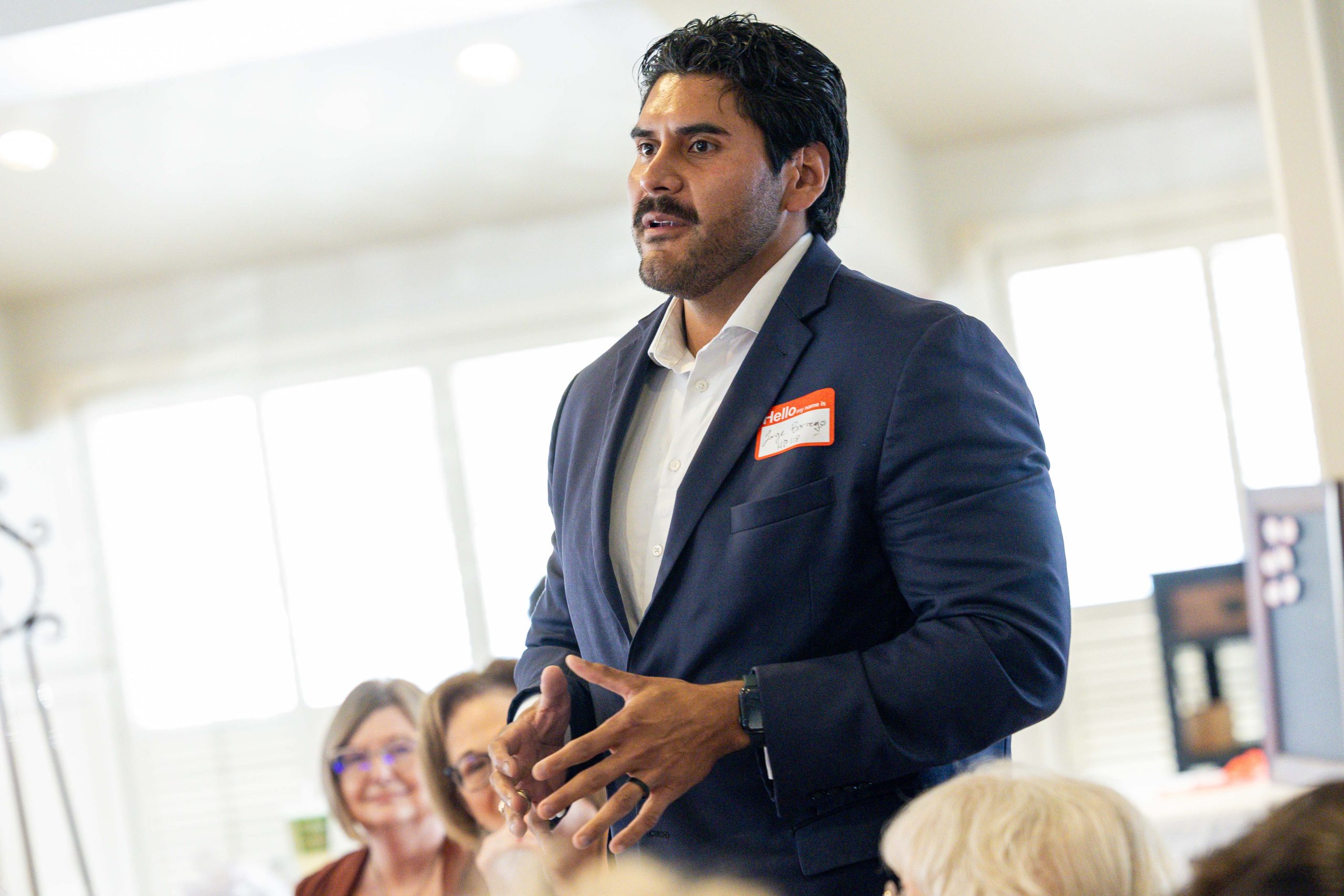
A significant increase in campaign spending is transforming two state legislative races in the San Antonio area, drawing attention to contests that previously received little focus. Recent campaign finance reports covering the period from January 23 to February 21, 2024, reveal that both state and national political action committees (PACs) are heavily investing in these races, particularly in the Republican primary on the South Side. Candidates are vying to succeed state Representative John Lujan (R-San Antonio), who is not seeking re-election.
In the Republican primary, the spotlight is on Jorge Borrego, a former scholar at the Texas Public Policy Foundation and architect of Governor Greg Abbott’s Education Savings Account program. Borrego faces attorney Desi Martinez, who was initially considered the frontrunner. The race has shifted dramatically with Borrego’s campaign receiving substantial financial backing, amounting to approximately $360,000, largely from the statewide group Texans for Lawsuit Reform (TLR). TLR’s involvement underscores the organization’s commitment to electing candidates who support tort reform and its opposition to trial lawyers within the Republican Party.
Meanwhile, Martinez’s campaign has been responding to a series of attack ads funded by Borrego’s supporters, including the AFC Victory Fund. These ads depict Martinez in a manner reminiscent of the Obama-era hope poster, criticizing his past affiliation with the Democratic Party. Martinez’s campaign asserts he does not support school vouchers, a contentious issue in previous GOP primaries, yet the topic has not been extensively debated this cycle since their approval in the last legislative session.
Competitive Landscape in State Legislature
The dynamics of the race have intensified, with Greg Brockhouse, a Republican consultant assisting Martinez, noting the unprecedented nature of the financial influx from external interests. “Jorge Borrego moved into the district just to run,” Brockhouse remarked, emphasizing that the funding is primarily coming from outside the community rather than local voters. Borrego, who claims he has lived in San Antonio for over a decade, has faced scrutiny regarding his residency, as he was previously listed as a resident of College Station.
Lujan has been the sole Republican to win the competitive House District 118, managing to fend off significant Democratic spending during his tenure. His decision to run for Congress prompted him to actively seek a successor capable of maintaining his seat. Martinez, who runs a law firm on the South Side, was identified by Lujan as a strong candidate due to his local ties and charitable contributions.
In a contrasting Democratic primary, Liz Campos faces a challenge from Ryan Ayala, a 25-year-old attorney with strong family political connections. Campos, who has represented the Southwest side since 2020, is also ramping up her spending as new Democratic voters emerge. Reports indicate that Campos raised $180,000 and spent $115,000 leading into early voting.
Ayala has countered Campos’s attacks, which target his family’s political background, stating, “They have nothing to smear [me] because I’m only 25 and I’m just starting out, so they’re going after my family.” He has contributed around $100,000 to his campaign, a mix of personal and family funds, while spending $52,000 in the final stretch.
Broader Implications for Local Politics
The implications of these races extend beyond individual campaigns. The winner of the GOP primary is set to face Ayala, who narrowly lost to Lujan by approximately 3.5 points in the previous election. State and national Democratic organizations are already preparing to target this competitive seat in the 2026 elections.
In other legislative races, Republican Mark Dorazio is facing an unexpectedly costly primary in Texas House District 122, where he raised $96,000 and spent $320,000. His challenger, Willie Ng, has also attracted significant support from tort reform advocates, raising $365,000.
As the elections approach, the financial landscape of these races highlights the growing influence of PACs and special interests in local politics, raising questions about the potential impact on voter engagement and representation. The upcoming primaries will test the candidates’ ability to navigate this unpredictable terrain, as both traditional party support and external funding redefine the electoral landscape.

Urgent Tax Savings Alert: Maximize Deductions Before April 15

Trump’s Administration Faces Uncertainty Over Government Shutdowns

Cosmic Defects: The Mystery of the Universe’s Missing Anomalies

Rapid City Parks Department Opens Registration for Bocce Leagues

Samsung Galaxy Watch 9 to Feature Larger 435mAh Battery Soon

Two Dead After Student Boats Capsize Off Okinawa Coast

Healthy Choice Wellness Reports Earnings with Mixed Results

Prince Harry Positions Himself as Royal Family’s Image Reviver

All Points North Lodge Achieves FSPHP-ETA Accreditation

Send Holiday Parcels for £1.99 with New Comparison Service

University of Hawaiʻi Leads $25M AI Project to Monitor Natural Disasters

Maui County Reopens Upgraded Lānaʻi Fifth Street Courts Today!

Daily Codeword Puzzle Launches on October 21, 2025

Congresswoman Under Fire for Misleading Epstein Donation Claims

Interstellar Object 3I/ATLAS Emits Unique Metal Alloy, Says Scientist

Trump Vows to Resolve Afghanistan-Pakistan Crisis “Very Quickly”

Charles Darwin’s Address Book Reveals Hidden Aspects of His Life

Rediscovering Chrysler: 5 Overlooked Models from the 1980s
-
 Lifestyle8 months ago
Send Holiday Parcels for £1.99 with New Comparison Service
-
Science9 months ago
University of Hawaiʻi Leads $25M AI Project to Monitor Natural Disasters
-
 Top Stories8 months ago
Maui County Reopens Upgraded Lānaʻi Fifth Street Courts Today!
-
 Entertainment10 months ago
Daily Codeword Puzzle Launches on October 21, 2025
-
 Lifestyle9 months ago
Congresswoman Under Fire for Misleading Epstein Donation Claims
-
 Science10 months ago
Interstellar Object 3I/ATLAS Emits Unique Metal Alloy, Says Scientist
-
 Top Stories9 months ago
Trump Vows to Resolve Afghanistan-Pakistan Crisis “Very Quickly”
-
 Science9 months ago
Charles Darwin’s Address Book Reveals Hidden Aspects of His Life
-
 Lifestyle8 months ago
Rediscovering Chrysler: 5 Overlooked Models from the 1980s
-

 Science7 months ago
Understanding Generation Z: Strategies for Engaging the Workforce
-

 Entertainment10 months ago
Kelly McCreary Discusses Future of Maggie and Winston in Grey’s Anatomy
-

 Top Stories8 months ago
aespa Faces Backlash Over G-Dragon Interaction at 2025 MAMAs