
Politics
Appeals Court Clarifies DMCA Safe Harbor in Photographer Case

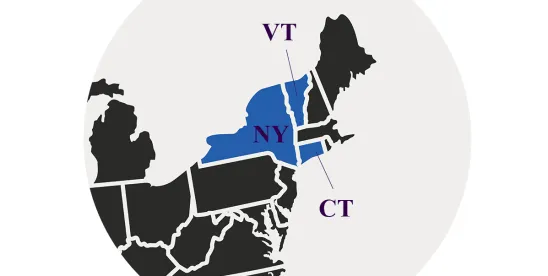
The US Court of Appeals for the Second Circuit has upheld the dismissal of a professional photographer’s claims under the Digital Millennium Copyright Act (DMCA) against Shutterstock Inc. The court ruled on February 10, 2026, that the photographer, Elliott McGucken, did not substantiate his claims regarding the digital media platform’s knowledge of copyright infringement. However, the court vacated summary judgment on copyright claims and remanded the case for further examination of DMCA safe harbor protections.
McGucken discovered that several hundred of his copyrighted photographs were uploaded to Shutterstock by three user accounts, generating over $2,000 in licensing revenue. In response to takedown notices, Shutterstock removed the images within four days and terminated the offending accounts. Despite this, McGucken initiated a lawsuit alleging copyright infringement under 17 U.S.C. § 106 and false copyright management information (CMI) under 17 U.S.C. § 1202. Initially, the district court granted summary judgment in favor of Shutterstock on all claims.
The Second Circuit agreed with the lower court’s findings regarding McGucken’s failure to establish a triable issue concerning Shutterstock’s knowledge of false CMI under the DMCA. The court noted that Shutterstock’s practice of watermarking all images did not indicate that the platform knowingly affixed false CMI to facilitate infringement. Additionally, the automated removal of CMI from uploaded images, intended to prevent malware and protect personal information, did not demonstrate that Shutterstock was aware it was removing McGucken’s CMI without authorization.
Key Issues in Safe Harbor Determination
While the court upheld that Shutterstock qualified as a service provider with a repeat infringer policy and did not interfere with standard technical measures, it identified unresolved issues concerning the safe harbor provision for copyright infringement claims. The Second Circuit found that a factfinder must determine if the storage of the images was “at the direction of the user.” This assessment will look into whether Shutterstock exercised “substantive and discretionary control” over the uploaded content, including any aesthetic or editorial judgment in image selection.
Another critical point for consideration is whether Shutterstock had the “right and ability to control” the alleged infringing activities. The court explained that safe harbor protections may not apply if a provider exerts substantial control over user activities, suggesting that decisions regarding content acceptance or rejection extend beyond simply promoting or demoting material. Control could also be inferred if Shutterstock selectively reviewed only a subset of user submissions.
Since these issues remain open for further examination, the Second Circuit vacated the summary judgment on the copyright claim and remanded the case for additional proceedings.
Implications for Copyright Owners and Service Providers
The implications of this ruling are significant for both online service providers and copyright owners. The Second Circuit’s clarification regarding the terms “at the direction of a user” and “right and ability to control” will likely influence future interpretations of DMCA safe harbor protections. As the case returns to the US District Court for the Southern District of New York, both parties will be closely monitoring how these standards are applied in practice.
This decision highlights the ongoing challenges in balancing copyright protections with the operational realities of digital platforms. As litigation evolves, it will be crucial for stakeholders to stay informed about how these legal standards could shape the landscape of online copyright enforcement.

Urgent Tax Savings Alert: Maximize Deductions Before April 15

Trump’s Administration Faces Uncertainty Over Government Shutdowns

Cosmic Defects: The Mystery of the Universe’s Missing Anomalies

Rapid City Parks Department Opens Registration for Bocce Leagues

Samsung Galaxy Watch 9 to Feature Larger 435mAh Battery Soon

Two Dead After Student Boats Capsize Off Okinawa Coast

Healthy Choice Wellness Reports Earnings with Mixed Results

Prince Harry Positions Himself as Royal Family’s Image Reviver

All Points North Lodge Achieves FSPHP-ETA Accreditation

Send Holiday Parcels for £1.99 with New Comparison Service

University of Hawaiʻi Leads $25M AI Project to Monitor Natural Disasters

Maui County Reopens Upgraded Lānaʻi Fifth Street Courts Today!

Daily Codeword Puzzle Launches on October 21, 2025

Congresswoman Under Fire for Misleading Epstein Donation Claims

Interstellar Object 3I/ATLAS Emits Unique Metal Alloy, Says Scientist

Trump Vows to Resolve Afghanistan-Pakistan Crisis “Very Quickly”

Charles Darwin’s Address Book Reveals Hidden Aspects of His Life

Rediscovering Chrysler: 5 Overlooked Models from the 1980s
-
 Lifestyle8 months ago
Send Holiday Parcels for £1.99 with New Comparison Service
-
Science9 months ago
University of Hawaiʻi Leads $25M AI Project to Monitor Natural Disasters
-
 Top Stories8 months ago
Maui County Reopens Upgraded Lānaʻi Fifth Street Courts Today!
-
 Entertainment10 months ago
Daily Codeword Puzzle Launches on October 21, 2025
-
 Lifestyle9 months ago
Congresswoman Under Fire for Misleading Epstein Donation Claims
-
 Science10 months ago
Interstellar Object 3I/ATLAS Emits Unique Metal Alloy, Says Scientist
-
 Top Stories9 months ago
Trump Vows to Resolve Afghanistan-Pakistan Crisis “Very Quickly”
-
 Science9 months ago
Charles Darwin’s Address Book Reveals Hidden Aspects of His Life
-
 Lifestyle8 months ago
Rediscovering Chrysler: 5 Overlooked Models from the 1980s
-

 Science7 months ago
Understanding Generation Z: Strategies for Engaging the Workforce
-

 Entertainment10 months ago
Kelly McCreary Discusses Future of Maggie and Winston in Grey’s Anatomy
-

 Top Stories8 months ago
aespa Faces Backlash Over G-Dragon Interaction at 2025 MAMAs