
Health
Stanford Experts Address Measles Cases, Ensure Campus Safety

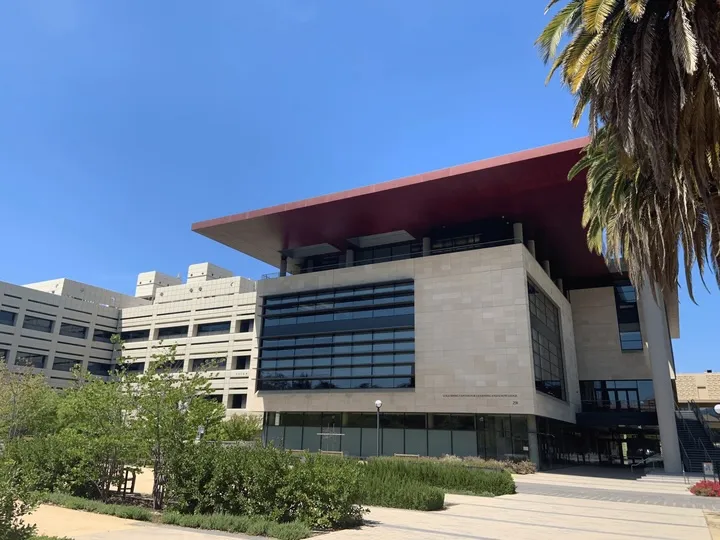
As the United States grapples with its first national measles outbreak since the disease was declared eliminated in 2000, experts at Stanford University remain cautiously optimistic about the situation on campus. As of February 26, 2025, the U.S. has reported a total of 1,136 confirmed cases, marking the highest number of infections in decades.
Recent clusters of measles cases have emerged in California, with 14 cases reported in January across six counties, including Napa and San Mateo, all linked to a single traveler. February saw an additional 12 cases identified in Shasta and Santa Clara counties. Despite these incidents, health officials assert that there is currently no widespread outbreak in the Bay Area.
Hayley Gans, a clinical professor of pediatrics and infectious diseases at Stanford, emphasized that these cases have not indicated sustained community spread of a domestic strain. “If a single strain were to circulate within the country for more than 12 months, we could lose our elimination status,” Gans noted, highlighting a scenario with “high risk.”
The nature of measles makes it particularly concerning; according to Yvonne Maldonado, a professor specializing in global health and infectious diseases, it is “probably the most infectious disease that we know of in humans.” The virus spreads through tiny airborne droplets, which can remain in the air for up to two hours after an infected individual leaves a space. This high level of transmissibility, nearly five times that of COVID-19, necessitates robust community immunity to prevent outbreaks.
To effectively prevent an outbreak, Maldonado indicated that approximately 95% of a community must be immune. While a single dose of the measles vaccine offers about 95% protection, a second dose raises immunity to 97%. “Over 95% of the cases that we’ve seen so far in the U.S. are people who just didn’t get vaccinated,” she added.
At Stanford, all students are required to be vaccinated for measles. Robyn S. Tepper, the Medical Director of the Vaden Health Center, explained that the two doses of the measles vaccine provide approximately 97% protection, and any breakthrough cases typically result in mild symptoms. The university mandates that students provide vaccination documentation upon enrollment, helping to safeguard the community against measles.
Tepper also stressed the importance of ensuring that family members are vaccinated and up to date on routine immunizations. For those traveling internationally, she recommends consulting a travel clinic for additional vaccine requirements.
Given the global nature of Stanford, which attracts numerous visitors, Gans noted that the campus is not isolated from the risk of exposure. “We remain committed to supporting a healthy campus and will continue to monitor public health alerts,” Tepper stated.
Experts agree that vaccination is the most effective way to protect against measles. “The vaccine is really our only way of protecting people,” Gans reiterated, underscoring the critical role of vaccination in maintaining community health amidst rising national cases.

Urgent Tax Savings Alert: Maximize Deductions Before April 15

Trump’s Administration Faces Uncertainty Over Government Shutdowns

Cosmic Defects: The Mystery of the Universe’s Missing Anomalies

Rapid City Parks Department Opens Registration for Bocce Leagues

Samsung Galaxy Watch 9 to Feature Larger 435mAh Battery Soon

Two Dead After Student Boats Capsize Off Okinawa Coast

Healthy Choice Wellness Reports Earnings with Mixed Results

Prince Harry Positions Himself as Royal Family’s Image Reviver

All Points North Lodge Achieves FSPHP-ETA Accreditation

Send Holiday Parcels for £1.99 with New Comparison Service

University of Hawaiʻi Leads $25M AI Project to Monitor Natural Disasters

Maui County Reopens Upgraded Lānaʻi Fifth Street Courts Today!

Daily Codeword Puzzle Launches on October 21, 2025

Congresswoman Under Fire for Misleading Epstein Donation Claims

Interstellar Object 3I/ATLAS Emits Unique Metal Alloy, Says Scientist

Trump Vows to Resolve Afghanistan-Pakistan Crisis “Very Quickly”

Charles Darwin’s Address Book Reveals Hidden Aspects of His Life

Rediscovering Chrysler: 5 Overlooked Models from the 1980s
-
 Lifestyle8 months ago
Send Holiday Parcels for £1.99 with New Comparison Service
-
Science9 months ago
University of Hawaiʻi Leads $25M AI Project to Monitor Natural Disasters
-
 Top Stories8 months ago
Maui County Reopens Upgraded Lānaʻi Fifth Street Courts Today!
-
 Entertainment10 months ago
Daily Codeword Puzzle Launches on October 21, 2025
-
 Lifestyle9 months ago
Congresswoman Under Fire for Misleading Epstein Donation Claims
-
 Science10 months ago
Interstellar Object 3I/ATLAS Emits Unique Metal Alloy, Says Scientist
-
 Top Stories9 months ago
Trump Vows to Resolve Afghanistan-Pakistan Crisis “Very Quickly”
-
 Science8 months ago
Charles Darwin’s Address Book Reveals Hidden Aspects of His Life
-
 Lifestyle8 months ago
Rediscovering Chrysler: 5 Overlooked Models from the 1980s
-

 Science7 months ago
Understanding Generation Z: Strategies for Engaging the Workforce
-

 Entertainment10 months ago
Kelly McCreary Discusses Future of Maggie and Winston in Grey’s Anatomy
-

 Entertainment7 months ago
Landmark Shift as Iconic Anime Series Concludes After 26 Years