
World
U.S.-Israeli Strikes Kill Ayatollah Khamenei, Sparking Outrage

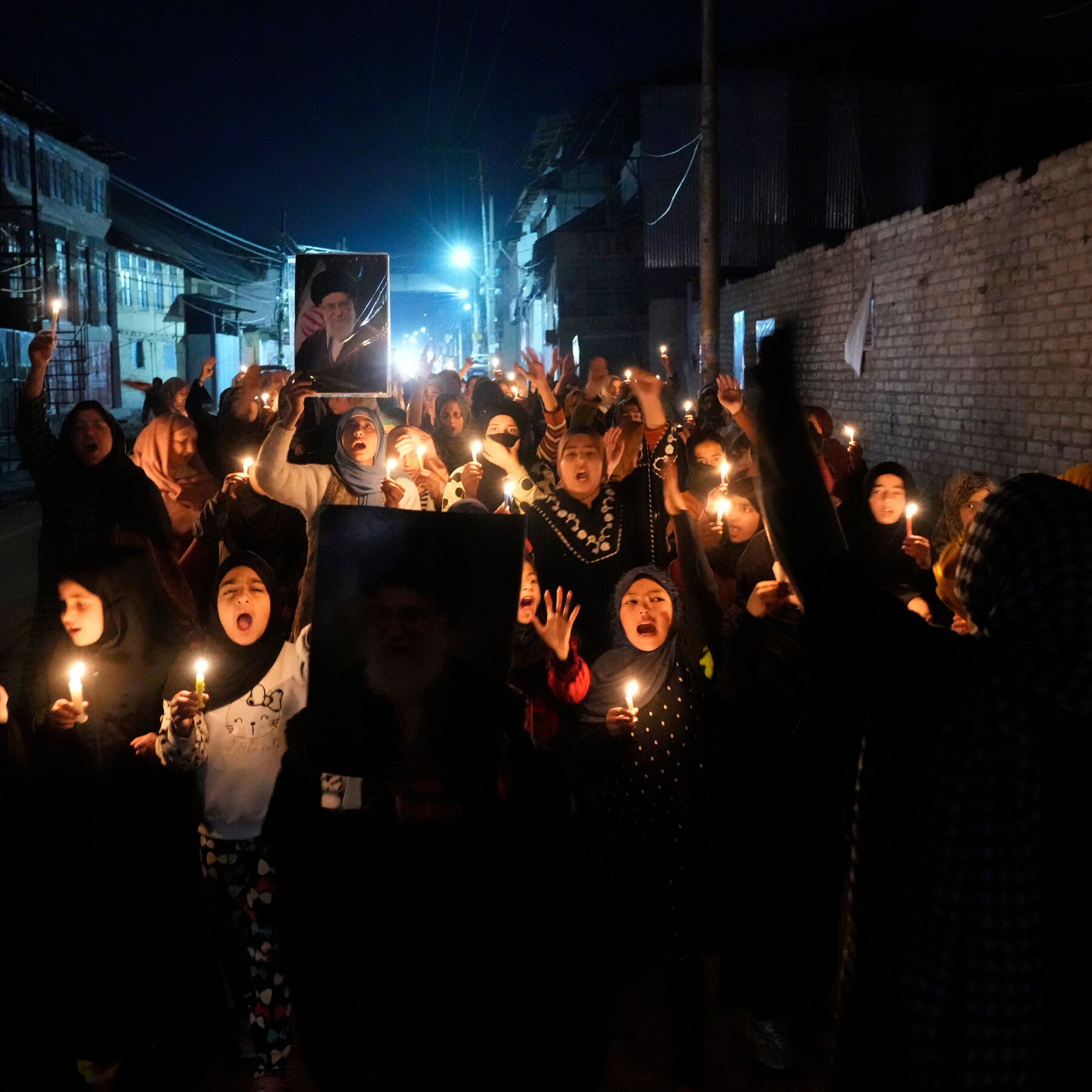
The death of Ayatollah Ali Khamenei, a prominent Iranian religious leader, during recent military strikes by the United States and Israel has ignited widespread anger and grief among Shiite Muslims in South Asia, particularly in Pakistan and India. Khamenei, who held significant influence over millions of Shiite followers, was killed on October 5, 2023, leading to an immediate outpouring of emotions from communities that revered him.
Khamenei’s leadership played a crucial role in shaping Shiite identity and political sentiment in the region. His death has been met with protests and memorial gatherings across major cities in Pakistan and India, where many view him as a symbol of resistance against perceived Western aggression. In Pakistan, thousands took to the streets, chanting slogans and expressing solidarity with Iran. Similarly, in India, demonstrations erupted in various cities, underscoring the deep respect many Shiite Muslims had for Khamenei.
In the aftermath of his death, religious leaders and community activists have called for unity among Shiite Muslims, emphasizing the need to remain steadfast in their beliefs. Many are concerned that the incident could further escalate tensions in an already volatile region. Prominent clerics have urged followers to honor Khamenei’s legacy by continuing to advocate for their rights and standing against oppression.
The international community is closely monitoring the situation, as reactions to Khamenei’s killing could have significant geopolitical implications. The Iranian government has condemned the attacks, vowing to respond decisively to what it describes as an act of aggression. Iranian President Ebrahim Raisi addressed the nation following the incident, stating that “the blood of our martyrs will not be shed in vain.”
As the mourning continues, analysts are examining the potential fallout from this incident. The Shiite community in both Pakistan and India has historically faced discrimination and violence, and Khamenei’s death could serve as a rallying point for renewed activism. Observers fear that this moment might exacerbate sectarian tensions, especially given the already strained relations between Iran and its regional adversaries.
The situation remains fluid, with calls for peace and solidarity juxtaposed against rising anger and demands for justice. As communities grieve their lost leader, the full impact of Khamenei’s assassination will unfold in the coming weeks, affecting both local and international dynamics. The world watches as Shiite Muslims navigate this period of mourning and reflection, seeking to honor a figure who held great significance for many.

Urgent Tax Savings Alert: Maximize Deductions Before April 15

Trump’s Administration Faces Uncertainty Over Government Shutdowns

Cosmic Defects: The Mystery of the Universe’s Missing Anomalies

Rapid City Parks Department Opens Registration for Bocce Leagues

Samsung Galaxy Watch 9 to Feature Larger 435mAh Battery Soon

Two Dead After Student Boats Capsize Off Okinawa Coast

Healthy Choice Wellness Reports Earnings with Mixed Results

Prince Harry Positions Himself as Royal Family’s Image Reviver

All Points North Lodge Achieves FSPHP-ETA Accreditation

Send Holiday Parcels for £1.99 with New Comparison Service

University of Hawaiʻi Leads $25M AI Project to Monitor Natural Disasters

Maui County Reopens Upgraded Lānaʻi Fifth Street Courts Today!

Daily Codeword Puzzle Launches on October 21, 2025

Congresswoman Under Fire for Misleading Epstein Donation Claims

Interstellar Object 3I/ATLAS Emits Unique Metal Alloy, Says Scientist

Trump Vows to Resolve Afghanistan-Pakistan Crisis “Very Quickly”

Charles Darwin’s Address Book Reveals Hidden Aspects of His Life

Rediscovering Chrysler: 5 Overlooked Models from the 1980s
-
 Lifestyle8 months ago
Send Holiday Parcels for £1.99 with New Comparison Service
-
Science9 months ago
University of Hawaiʻi Leads $25M AI Project to Monitor Natural Disasters
-
 Top Stories8 months ago
Maui County Reopens Upgraded Lānaʻi Fifth Street Courts Today!
-
 Entertainment10 months ago
Daily Codeword Puzzle Launches on October 21, 2025
-
 Lifestyle9 months ago
Congresswoman Under Fire for Misleading Epstein Donation Claims
-
 Science10 months ago
Interstellar Object 3I/ATLAS Emits Unique Metal Alloy, Says Scientist
-
 Top Stories9 months ago
Trump Vows to Resolve Afghanistan-Pakistan Crisis “Very Quickly”
-
 Science8 months ago
Charles Darwin’s Address Book Reveals Hidden Aspects of His Life
-
 Lifestyle8 months ago
Rediscovering Chrysler: 5 Overlooked Models from the 1980s
-

 Science7 months ago
Understanding Generation Z: Strategies for Engaging the Workforce
-

 Entertainment10 months ago
Kelly McCreary Discusses Future of Maggie and Winston in Grey’s Anatomy
-

 Entertainment7 months ago
Landmark Shift as Iconic Anime Series Concludes After 26 Years