
Top Stories
World’s First Private Space Telescope Set to Search for Habitable Exoplanets

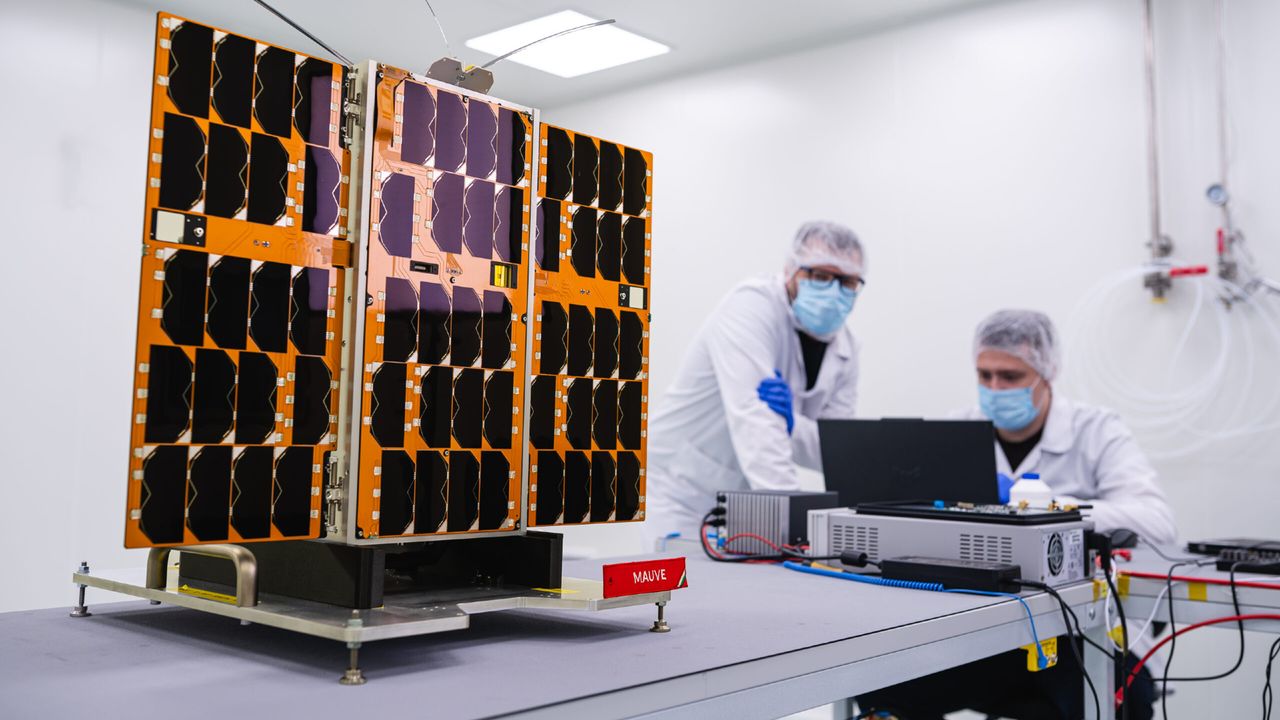
BREAKING: The world’s first commercial astronomy telescope, the Mauve telescope, is poised to revolutionize our understanding of the universe by searching for stars that may host habitable exoplanets. Developed by the London-based start-up Blue Skies Space, this innovative telescope will launch aboard SpaceX’s Transporter-15 mission, scheduled for November 2025.
This urgent mission comes as scientific interest in exoplanets surges. The Mauve telescope, which is about the size of a small suitcase, carries a modified ultraviolet spectrometer designed to monitor flaring stars. Understanding these stellar flares is crucial, as some stars emit intense bursts of radiation that could render nearby planets inhospitable.
“Mauve will allow us to understand the behavior of stars when they emit large amounts of energy,” said Marcell Tessenyi, founder and CEO of Blue Skies Space, in an exclusive interview with Space.com. This groundbreaking telescope aims to identify which stars are likely to support life by tracking hundreds of stellar flares.
The significance of this mission cannot be overstated. The last dedicated mission to observe stellar ultraviolet light, the International Ultraviolet Explorer, ended in 1996. With the Hubble Space Telescope often oversubscribed, researchers face long waits for observation time. Mauve aims to fill this gap with a low-cost solution, offering annual data subscriptions to scientists worldwide.
The potential impact of Mauve extends beyond mere observation. By pinpointing which stars may be damaging to life, researchers can focus their efforts on the most promising stellar systems.
The telescope will operate at an altitude of 310 miles (500 kilometers) above Earth for at least three years. With initial skepticism from the scientific community, interest has grown rapidly, with 19 universities already signing up for data access. This will enable them to receive information as early as next year.
While Mauve is Blue Skies Space’s first satellite, the company is already looking ahead to its next mission, the Twinkle satellite, which will analyze the chemical composition of exoplanets. It is expected to launch later this decade, weighing 330 pounds (150 kilograms) and featuring an 18-inch (45 cm) telescope.
“We finance the satellites upfront, put them into space, and recover costs over time through data sales,” Tessenyi explained. If successful, Blue Skies Space plans to expand its fleet, potentially launching a more advanced Mauve+ in the future.
The urgency of this mission is palpable, as scientists worldwide are eager to unlock the secrets of our galaxy. Stay tuned for updates as the launch date approaches and the potential for discovering habitable worlds draws nearer.

Urgent Tax Savings Alert: Maximize Deductions Before April 15

Trump’s Administration Faces Uncertainty Over Government Shutdowns

Cosmic Defects: The Mystery of the Universe’s Missing Anomalies

Rapid City Parks Department Opens Registration for Bocce Leagues

Samsung Galaxy Watch 9 to Feature Larger 435mAh Battery Soon

Two Dead After Student Boats Capsize Off Okinawa Coast

Healthy Choice Wellness Reports Earnings with Mixed Results

Prince Harry Positions Himself as Royal Family’s Image Reviver

All Points North Lodge Achieves FSPHP-ETA Accreditation

Send Holiday Parcels for £1.99 with New Comparison Service

University of Hawaiʻi Leads $25M AI Project to Monitor Natural Disasters

Maui County Reopens Upgraded Lānaʻi Fifth Street Courts Today!

Daily Codeword Puzzle Launches on October 21, 2025

Congresswoman Under Fire for Misleading Epstein Donation Claims

Interstellar Object 3I/ATLAS Emits Unique Metal Alloy, Says Scientist

Trump Vows to Resolve Afghanistan-Pakistan Crisis “Very Quickly”

Charles Darwin’s Address Book Reveals Hidden Aspects of His Life

Rediscovering Chrysler: 5 Overlooked Models from the 1980s
-
 Lifestyle8 months ago
Send Holiday Parcels for £1.99 with New Comparison Service
-
Science9 months ago
University of Hawaiʻi Leads $25M AI Project to Monitor Natural Disasters
-
 Top Stories8 months ago
Maui County Reopens Upgraded Lānaʻi Fifth Street Courts Today!
-
 Entertainment10 months ago
Daily Codeword Puzzle Launches on October 21, 2025
-
 Lifestyle9 months ago
Congresswoman Under Fire for Misleading Epstein Donation Claims
-
 Science10 months ago
Interstellar Object 3I/ATLAS Emits Unique Metal Alloy, Says Scientist
-
 Top Stories9 months ago
Trump Vows to Resolve Afghanistan-Pakistan Crisis “Very Quickly”
-
 Science8 months ago
Charles Darwin’s Address Book Reveals Hidden Aspects of His Life
-
 Lifestyle8 months ago
Rediscovering Chrysler: 5 Overlooked Models from the 1980s
-

 Science7 months ago
Understanding Generation Z: Strategies for Engaging the Workforce
-

 Entertainment10 months ago
Kelly McCreary Discusses Future of Maggie and Winston in Grey’s Anatomy
-

 Top Stories8 months ago
aespa Faces Backlash Over G-Dragon Interaction at 2025 MAMAs