
World
US to Share Nuclear Submarine Technology with South Korea

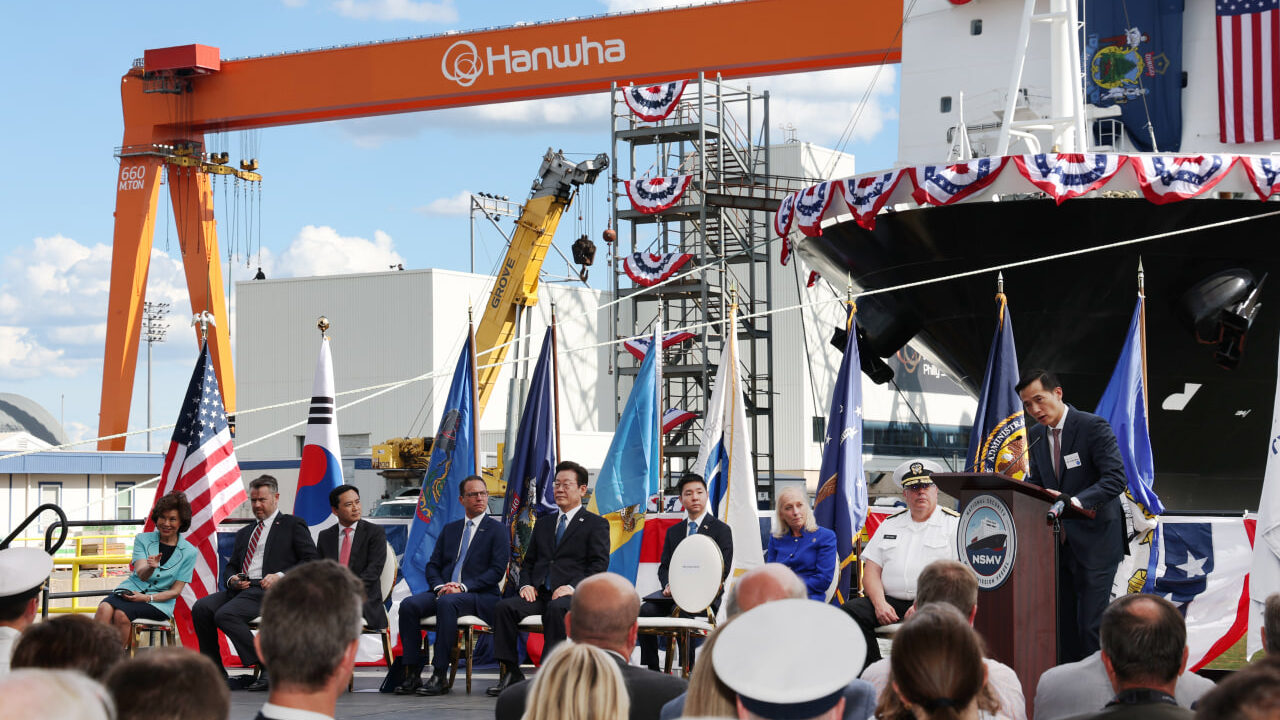
In a significant diplomatic move, President Donald Trump announced on social media that the United States will share sensitive nuclear submarine propulsion technology with South Korea. This decision marks a notable shift from the previous administration, which had withheld such access from the key Indo-Pacific ally. Trump stated that South Korea will construct its nuclear-powered submarines at the Philadelphia Shipyard, revitalizing American shipbuilding capabilities.
In his post on Truth Social, Trump emphasized, “Shipbuilding in our Country will soon be making a BIG COMEBACK.” The announcement comes as South Korea’s Hanwha Group acquired the Philadelphia Shipyard from a Norwegian investment firm last year. This acquisition reflects South Korea’s strategic intent to enhance its collaboration with the U.S. Navy.
Details of the Agreement
Trump further indicated that South Korea has agreed to pay $350 billion in exchange for the reduction of tariffs imposed by the White House. This financial arrangement underscores the importance of trade relations between the two nations. The nuclear propulsion technology, which is closely held by the United States, the United Kingdom, and Australia under the AUKUS agreement, has been sought after by South Korea for its potential benefits in regional security.
South Korean President Lee Jae Myung commented on the past discussions surrounding this technology, suggesting that previous negotiations may have been misinterpreted by the Trump administration as South Korea seeking nuclear weapons rather than merely the fuel necessary for submarines. Lee articulated that acquiring nuclear-powered submarines would enhance South Korea’s contributions to regional security, echoing points made by U.S. and British officials during their support for Australia’s submarine acquisition in 2021.
Challenges Ahead for Philadelphia Shipyard
The proposal for South Korea to build its submarines in the United States raises numerous questions about the capabilities of the American maritime industrial base. Historically, the Philadelphia Shipyard focused on commercial ship construction; however, under the new management from Hanwha, there is a clear commitment to pursue U.S. Navy programs. Transitioning to a facility capable of constructing nuclear submarines represents an enormous challenge, one that Australia is expected to navigate over the next two decades.
Hanwha will likely encounter significant hurdles in attracting a skilled workforce necessary for such complex construction. The U.S. Navy has initiated an extensive, multi-year campaign to bolster its maritime workforce, aimed specifically at submarine production, yet is struggling to meet its recruitment goals due to high attrition rates among new workers.
This development in U.S.-South Korea relations, along with the implications for the American shipbuilding industry, will be closely monitored as both nations navigate the complexities of defense collaboration in an evolving geopolitical landscape.

Urgent Tax Savings Alert: Maximize Deductions Before April 15

Trump’s Administration Faces Uncertainty Over Government Shutdowns

Cosmic Defects: The Mystery of the Universe’s Missing Anomalies

Rapid City Parks Department Opens Registration for Bocce Leagues

Samsung Galaxy Watch 9 to Feature Larger 435mAh Battery Soon

Two Dead After Student Boats Capsize Off Okinawa Coast

Healthy Choice Wellness Reports Earnings with Mixed Results

Prince Harry Positions Himself as Royal Family’s Image Reviver

All Points North Lodge Achieves FSPHP-ETA Accreditation

Send Holiday Parcels for £1.99 with New Comparison Service

University of Hawaiʻi Leads $25M AI Project to Monitor Natural Disasters

Maui County Reopens Upgraded Lānaʻi Fifth Street Courts Today!

Daily Codeword Puzzle Launches on October 21, 2025

Congresswoman Under Fire for Misleading Epstein Donation Claims

Interstellar Object 3I/ATLAS Emits Unique Metal Alloy, Says Scientist

Trump Vows to Resolve Afghanistan-Pakistan Crisis “Very Quickly”

Charles Darwin’s Address Book Reveals Hidden Aspects of His Life

Rediscovering Chrysler: 5 Overlooked Models from the 1980s
-
 Lifestyle8 months ago
Send Holiday Parcels for £1.99 with New Comparison Service
-
Science9 months ago
University of Hawaiʻi Leads $25M AI Project to Monitor Natural Disasters
-
 Top Stories8 months ago
Maui County Reopens Upgraded Lānaʻi Fifth Street Courts Today!
-
 Entertainment10 months ago
Daily Codeword Puzzle Launches on October 21, 2025
-
 Lifestyle9 months ago
Congresswoman Under Fire for Misleading Epstein Donation Claims
-
 Science10 months ago
Interstellar Object 3I/ATLAS Emits Unique Metal Alloy, Says Scientist
-
 Top Stories9 months ago
Trump Vows to Resolve Afghanistan-Pakistan Crisis “Very Quickly”
-
 Science8 months ago
Charles Darwin’s Address Book Reveals Hidden Aspects of His Life
-
 Lifestyle8 months ago
Rediscovering Chrysler: 5 Overlooked Models from the 1980s
-
 Science7 months ago
Understanding Generation Z: Strategies for Engaging the Workforce
-

 Entertainment10 months ago
Kelly McCreary Discusses Future of Maggie and Winston in Grey’s Anatomy
-

 Top Stories8 months ago
aespa Faces Backlash Over G-Dragon Interaction at 2025 MAMAs