
World
Americans Divided on Childhood Vaccines: New Pew Research Findings

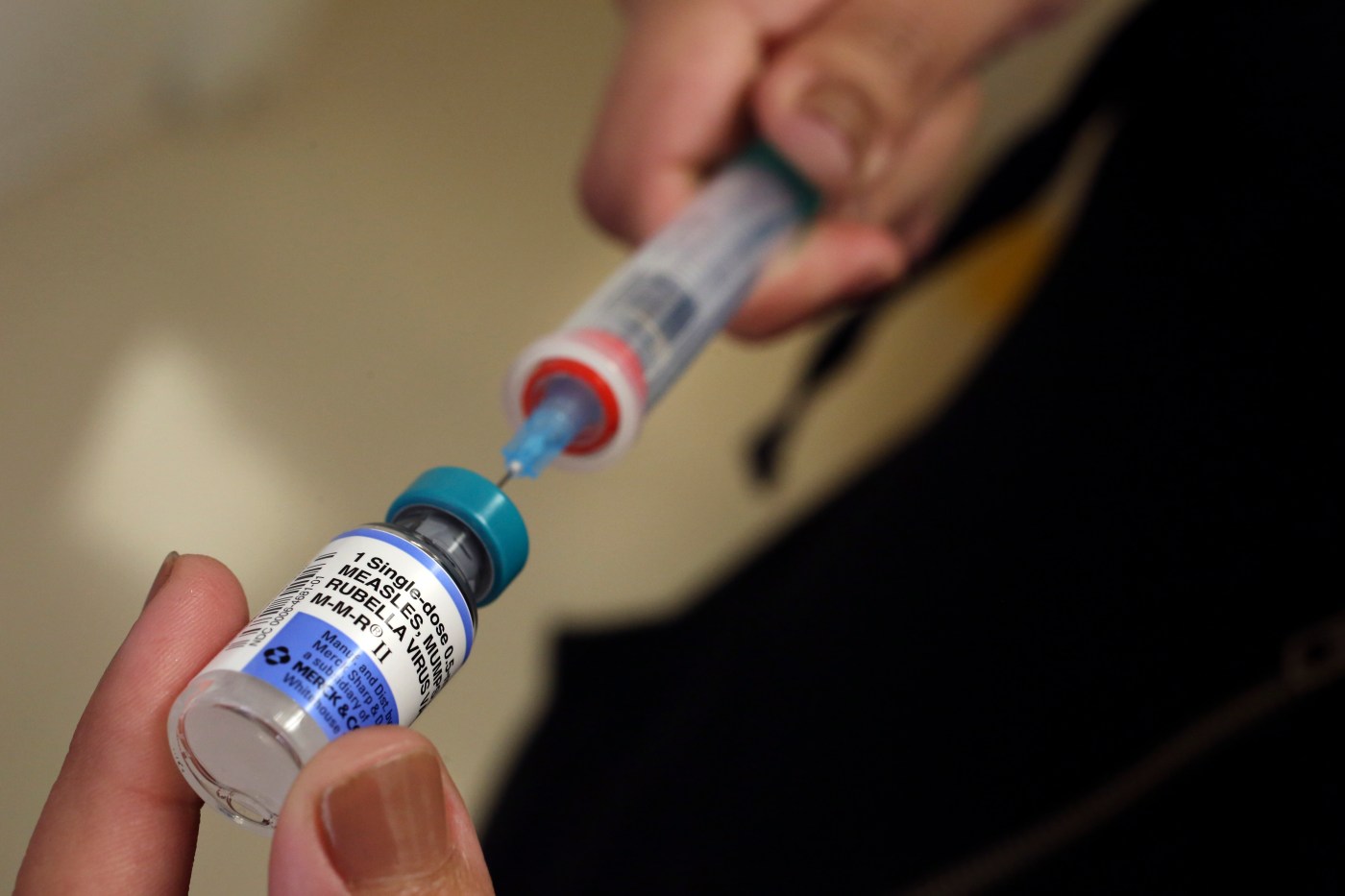
A recent survey by the Pew Research Center reveals that while a majority of Americans believe childhood vaccines are safe and effective, significant skepticism remains. Conducted last month and published this week, the poll found that 63% of respondents expressed high confidence in the effectiveness of childhood vaccines. In contrast, only 53% believe these vaccines have undergone sufficient safety testing.
Demographic and political divisions shape public opinion on this critical health issue. Among those surveyed, 80% of Democrats reported strong confidence in vaccine efficacy, compared to just 48% of Republicans. Parental attitudes also reflect this divide; only 57% of parents with children under 18 expressed high confidence in the vaccines’ ability to prevent serious illnesses.
The survey further highlighted disparities in perceptions of vaccine safety. Roughly 73% of Democrats believe childhood vaccines have been adequately tested, whereas only about 33% of Republicans share this view. For parents, the figure drops to 44% who believe vaccines are sufficiently tested for safety.
Confidence in childhood vaccines seems to correlate with age and education levels. Older Americans and those with higher educational attainment exhibit greater assurance in vaccine safety. Additionally, the survey indicated racial disparities, with 66% of white respondents expressing high confidence in vaccine efficacy, compared to 54% of Black respondents and lower figures among Hispanic individuals.
Jennifer Nuzzo, director of the Brown University Pandemic Center, emphasized the need for higher confidence in childhood vaccines. “I would hope it would be close to 100%,” she stated, reinforcing that vaccines not only protect children but also contribute to the broader community’s health.
Currently, all 50 states enforce vaccination requirements for public school attendance, although Florida is attempting to become the first state to eliminate such mandates. Nuzzo pointed out the importance of vaccination for the protection of vulnerable populations, including those who cannot be vaccinated for medical reasons.
The Pew Research Center’s survey specifically addressed the MMR (measles, mumps, rubella) vaccine, which has historically enjoyed strong support. While 84% of participants still acknowledge that the benefits of the MMR vaccine outweigh its risks, this figure has dropped from 88%% in previous years. Notably, Republicans have become increasingly skeptical of the MMR vaccine’s benefits compared to prior years, while Democrats are more likely to affirm its preventive health advantages.
Nuzzo classified the MMR vaccine as “crucially important,” particularly as the United States faces rising cases of measles. “It’s a disease that we can absolutely prevent with the vaccine. It’s a safe vaccine. Measles is a terrible disease,” she stated, reaffirming her confidence in the full list of recommended childhood vaccines.
Public trust in medical professionals involved in vaccine research also varies along political lines. The survey indicated that Democrats are more inclined than Republicans to trust these experts to act in the best interests of scientific evidence and children’s health. Nuzzo described the political polarization surrounding vaccines as “deeply troubling,” noting that viruses do not discriminate based on political affiliation.
As discussions about childhood vaccinations continue, the results from the Pew Research Center highlight the ongoing debates, concerns, and attitudes that shape public health in the United States. The importance of understanding and addressing these sentiments remains crucial for fostering community health and ensuring widespread vaccine acceptance.

Urgent Tax Savings Alert: Maximize Deductions Before April 15

Trump’s Administration Faces Uncertainty Over Government Shutdowns

Cosmic Defects: The Mystery of the Universe’s Missing Anomalies

Rapid City Parks Department Opens Registration for Bocce Leagues

Samsung Galaxy Watch 9 to Feature Larger 435mAh Battery Soon

Two Dead After Student Boats Capsize Off Okinawa Coast

Healthy Choice Wellness Reports Earnings with Mixed Results

Prince Harry Positions Himself as Royal Family’s Image Reviver

All Points North Lodge Achieves FSPHP-ETA Accreditation

Send Holiday Parcels for £1.99 with New Comparison Service

University of Hawaiʻi Leads $25M AI Project to Monitor Natural Disasters

Maui County Reopens Upgraded Lānaʻi Fifth Street Courts Today!

Daily Codeword Puzzle Launches on October 21, 2025

Congresswoman Under Fire for Misleading Epstein Donation Claims

Interstellar Object 3I/ATLAS Emits Unique Metal Alloy, Says Scientist

Trump Vows to Resolve Afghanistan-Pakistan Crisis “Very Quickly”

Charles Darwin’s Address Book Reveals Hidden Aspects of His Life

Rediscovering Chrysler: 5 Overlooked Models from the 1980s
-
 Lifestyle8 months ago
Send Holiday Parcels for £1.99 with New Comparison Service
-
Science9 months ago
University of Hawaiʻi Leads $25M AI Project to Monitor Natural Disasters
-
 Top Stories8 months ago
Maui County Reopens Upgraded Lānaʻi Fifth Street Courts Today!
-
 Entertainment10 months ago
Daily Codeword Puzzle Launches on October 21, 2025
-
 Lifestyle9 months ago
Congresswoman Under Fire for Misleading Epstein Donation Claims
-
 Science10 months ago
Interstellar Object 3I/ATLAS Emits Unique Metal Alloy, Says Scientist
-
 Top Stories9 months ago
Trump Vows to Resolve Afghanistan-Pakistan Crisis “Very Quickly”
-
 Science8 months ago
Charles Darwin’s Address Book Reveals Hidden Aspects of His Life
-
 Lifestyle8 months ago
Rediscovering Chrysler: 5 Overlooked Models from the 1980s
-

 Science7 months ago
Understanding Generation Z: Strategies for Engaging the Workforce
-

 Entertainment10 months ago
Kelly McCreary Discusses Future of Maggie and Winston in Grey’s Anatomy
-

 Top Stories8 months ago
aespa Faces Backlash Over G-Dragon Interaction at 2025 MAMAs