
Business
Maine Faces Regulatory Challenges as Aroostook Wind Project Emerges

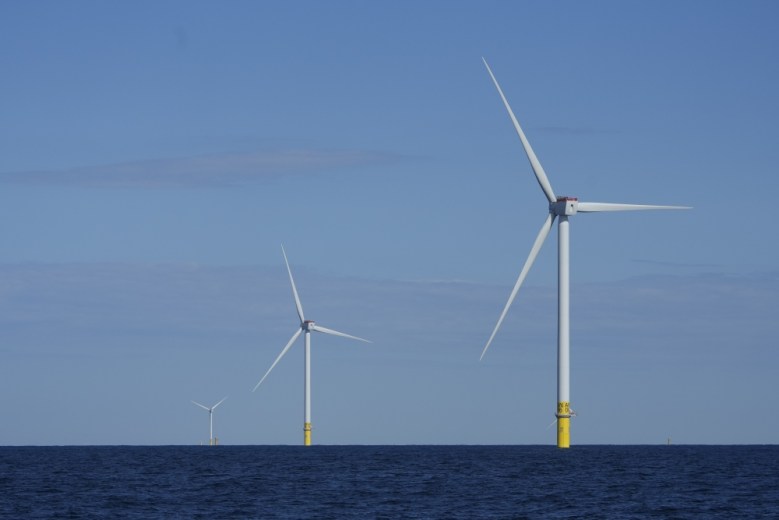
Maine is at a crossroads as it seeks to enhance its wind energy capacity with the ambitious Aroostook Wind project. This initiative, which aims to generate an initial output of 1,200 megawatts, presents a significant opportunity for the state to bolster its renewable energy resources. However, concerns are rising over how the project is being managed and regulated, particularly regarding the benefits that Maine will receive from this large-scale wind farm.
When Paul LePage took office in 2011, he displayed a mixed attitude towards wind energy developments initiated by previous legislation from John Baldacci, who set a target of 3,000 megawatts in 2003. Under LePage, new turbine projects stalled, and Maine’s wind energy capacity remained stagnant at 923 megawatts. In contrast, developers shifted their focus to the Great Plains, where significant installations now span from the Dakotas to Texas. Despite this, wind energy remains a vital part of Maine’s energy mix, contributing to about 25% of the state’s electricity.
Aroostook Wind stands out as a potential game-changer, particularly as turbine technology has evolved significantly. The project is expected to utilize larger and more efficient towers capable of generating energy even in lighter wind conditions. Aroostook’s location is advantageous, with strong nighttime winds complementing the substantial growth of solar energy in Maine over the past decade.
All New England states, barring New Hampshire, have established renewable energy mandates, with Maine’s objectives being the most stringent. The state aims for 100% carbon-neutral electricity by 2040. Aroostook Wind and similar projects represent the most cost-effective pathway to meet these targets, operating at roughly one-third the cost of recent offshore wind projections.
Nevertheless, the current framework set forth by the Maine Public Utilities Commission (PUC) raises significant concerns. Following a previous request for proposal (RFP) that faced challenges due to rising costs, the PUC has opted for a model where the Aroostook project will not be owned by Maine. Instead, the energy produced will be shared across New England states on equal terms, benefiting larger markets like Massachusetts and Connecticut, which have a combined population nearly ten times that of Maine.
Former State Planning Director Richard Silkman has described this decision as “regulatory malpractice,” highlighting the missed opportunity for Maine to retain control over the energy generated within its borders. This echoes the backlash faced during the NECEC line referendum in 2021, where 60% of voters opposed the project despite its anticipated $500 million benefits. The timing of that referendum, occurring after construction commenced, allowed the project to proceed due to a ruling by the Maine Supreme Judicial Court affirming vested rights.
As news of the PUC’s plans to export the majority of Aroostook Wind’s power without substantial benefits to Maine circulates, public sentiment is likely to mirror that of the NECEC line referendum. The economic implications of this decision are troubling. If Maine were to take full control of Aroostook Wind, it could prioritize local energy needs and capitalize on market demand for surplus energy.
Maine may not be recognized as “the Saudi Arabia of wind,” as Sen. Angus King once suggested, but it possesses the potential to make a significant impact on clean energy in New England. Additionally, establishing a turbine fabrication operation within the state could position Maine favorably for future offshore wind developments in the Gulf of Maine.
Advanced energy projects are inherently complex and multifaceted. However, the fundamental takeaway is clear: Maine must secure a significant share of the energy produced by Aroostook Wind and ensure it maintains control over how that power is distributed. Achieving this will necessitate a comprehensive reassessment of how the state approaches energy planning and project development, moving away from reliance solely on the PUC to guide Maine’s energy future.
In the coming week, a deeper examination of the necessary reforms and strategies to empower Maine in its energy endeavors will be presented, outlining the steps needed to put the state in the driver’s seat for its energy future.

Urgent Tax Savings Alert: Maximize Deductions Before April 15

Trump’s Administration Faces Uncertainty Over Government Shutdowns

Cosmic Defects: The Mystery of the Universe’s Missing Anomalies

Rapid City Parks Department Opens Registration for Bocce Leagues

Samsung Galaxy Watch 9 to Feature Larger 435mAh Battery Soon

Two Dead After Student Boats Capsize Off Okinawa Coast

Healthy Choice Wellness Reports Earnings with Mixed Results

Prince Harry Positions Himself as Royal Family’s Image Reviver

All Points North Lodge Achieves FSPHP-ETA Accreditation

Send Holiday Parcels for £1.99 with New Comparison Service

University of Hawaiʻi Leads $25M AI Project to Monitor Natural Disasters

Maui County Reopens Upgraded Lānaʻi Fifth Street Courts Today!

Daily Codeword Puzzle Launches on October 21, 2025

Congresswoman Under Fire for Misleading Epstein Donation Claims

Interstellar Object 3I/ATLAS Emits Unique Metal Alloy, Says Scientist

Trump Vows to Resolve Afghanistan-Pakistan Crisis “Very Quickly”

Charles Darwin’s Address Book Reveals Hidden Aspects of His Life

Rediscovering Chrysler: 5 Overlooked Models from the 1980s
-
 Lifestyle8 months ago
Send Holiday Parcels for £1.99 with New Comparison Service
-
Science9 months ago
University of Hawaiʻi Leads $25M AI Project to Monitor Natural Disasters
-
 Top Stories8 months ago
Maui County Reopens Upgraded Lānaʻi Fifth Street Courts Today!
-
 Entertainment10 months ago
Daily Codeword Puzzle Launches on October 21, 2025
-
 Lifestyle9 months ago
Congresswoman Under Fire for Misleading Epstein Donation Claims
-
 Science10 months ago
Interstellar Object 3I/ATLAS Emits Unique Metal Alloy, Says Scientist
-
 Top Stories9 months ago
Trump Vows to Resolve Afghanistan-Pakistan Crisis “Very Quickly”
-
 Science9 months ago
Charles Darwin’s Address Book Reveals Hidden Aspects of His Life
-
 Lifestyle8 months ago
Rediscovering Chrysler: 5 Overlooked Models from the 1980s
-
 Science7 months ago
Understanding Generation Z: Strategies for Engaging the Workforce
-

 Entertainment10 months ago
Kelly McCreary Discusses Future of Maggie and Winston in Grey’s Anatomy
-

 Top Stories8 months ago
aespa Faces Backlash Over G-Dragon Interaction at 2025 MAMAs