
Business
U.S. Farmers Face New Challenges Amid Ongoing Tariff Turmoil

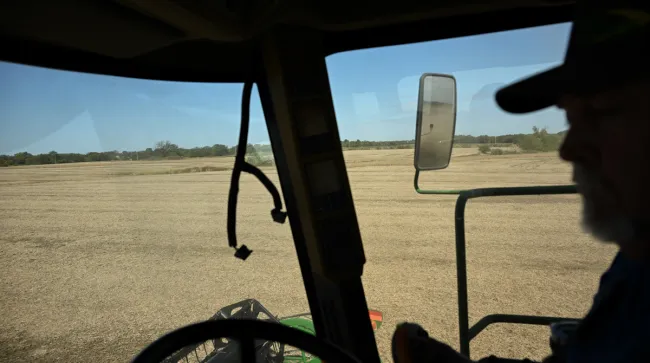
U.S. farmers are grappling with renewed uncertainty following the recent implementation of a global tariff by President Donald Trump. The 10% tariff, introduced after the U.S. Supreme Court invalidated earlier sweeping duties, adds a layer of complexity to an already volatile agricultural market. Farmers, who have already faced over a year of trade disruptions, are concerned about the implications for their operations and the broader agricultural economy.
At the Commodity Classic conference held in San Antonio, Texas, experts shared the growing frustrations within the farming community. “One of the things in this industry is that there’s always uncertainties,” stated Krista Swanson, chief economist at the National Corn Growers Association, emphasizing the ongoing challenges farmers face. The recent tariff announcement has exacerbated existing pressures, including low crop prices and high input costs, creating an environment of anxiety as farmers navigate their future prospects.
The latest tariff initiative comes as Trump seeks to solidify his trade agenda. He has hinted at increasing the tariff to 15% if necessary, further deepening worries among farmers. The agricultural sector has felt the effects of tariffs acutely, particularly with regard to access to vital markets such as China. This instability threatens to undermine the support of a key voter base for the Republican Party as sentiment among farmers has soured at the start of 2026.
The discussions at the Commodity Classic highlighted the growing frustrations regarding tariffs and their impact on competitiveness. Caleb Ragland, chairman of the American Soybean Association, remarked, “The global tariff now throws more volatility and uncertainty into the market.” Farmers feel significantly hindered by these trade barriers, which complicate their ability to compete effectively on the international stage.
Trump’s previous encouragement for farmers to “bear with me” has not shifted significantly, as administration officials conveyed similar sentiments at the conference. Richard Fordyce, an undersecretary at the Department of Agriculture, encouraged patience, noting that agriculture plays a vital role in ongoing trade discussions. The president has made concerted efforts to push for increased soybean purchases from China, despite Brazil currently offering lower prices for the commodity.
China’s role as the world’s largest consumer of soybeans has raised questions about future purchases from the U.S. The Asian nation has recently resumed buying American soybeans, committing to purchase 12 million tons this season. However, uncertainty remains about whether it will honor a longer-term commitment to buy 25 million tons annually through 2028, especially in light of recent trade tensions.
Jim Sutter, CEO of the U.S. Soybean Export Council, expressed that the relationship between the U.S. and China will be critical in determining future trade flows. He noted the importance of diversifying export markets to mitigate risk, particularly as new trade agreements are established.
At the Commodity Classic, Agriculture Secretary Brooke Rollins conveyed optimism regarding China’s purchasing behavior through 2028, stating that the administration is focused on increasing soybean sales while also seeking to reduce dependence on the Chinese market. Farmers are calling for more robust domestic policies, including addressing high input costs and the promotion of biofuels, as they seek a healthier agricultural market.
As pressure mounts from a challenging farm economy, the U.S. Department of Agriculture (USDA) is distributing aid through a $12 billion farm bailout. Despite concerns about persistently high prices for inputs like fertilizer and seeds, Rollins mentioned that some costs have begun to moderate.
Biofuels policy is also under scrutiny, particularly concerning the administration’s efforts to finalize mandates for blending renewable fuels with gasoline and diesel. There is growing frustration among farmers regarding the slow progress in Washington towards expanding the use of E15 gasoline, a measure that could significantly boost domestic demand for renewable fuel feedstocks such as corn and soybeans.
At the conference, many attendees displayed buttons advocating for “E15 NOW,” highlighting the urgency felt by the farming community. Jed Bower, president of the National Corn Growers Association, urged for a more aggressive approach, stating, “We need to be aggressive,” as applause echoed in the room.
As U.S. farmers confront ongoing challenges, the interplay between domestic policies, international trade, and market dynamics remains critical in shaping the future of agriculture in America.

Urgent Tax Savings Alert: Maximize Deductions Before April 15

Trump’s Administration Faces Uncertainty Over Government Shutdowns

Cosmic Defects: The Mystery of the Universe’s Missing Anomalies

Rapid City Parks Department Opens Registration for Bocce Leagues

Samsung Galaxy Watch 9 to Feature Larger 435mAh Battery Soon

Two Dead After Student Boats Capsize Off Okinawa Coast

Healthy Choice Wellness Reports Earnings with Mixed Results

Prince Harry Positions Himself as Royal Family’s Image Reviver

All Points North Lodge Achieves FSPHP-ETA Accreditation

Send Holiday Parcels for £1.99 with New Comparison Service

University of Hawaiʻi Leads $25M AI Project to Monitor Natural Disasters

Maui County Reopens Upgraded Lānaʻi Fifth Street Courts Today!

Daily Codeword Puzzle Launches on October 21, 2025

Congresswoman Under Fire for Misleading Epstein Donation Claims

Interstellar Object 3I/ATLAS Emits Unique Metal Alloy, Says Scientist

Trump Vows to Resolve Afghanistan-Pakistan Crisis “Very Quickly”

Charles Darwin’s Address Book Reveals Hidden Aspects of His Life

Rediscovering Chrysler: 5 Overlooked Models from the 1980s
-
 Lifestyle8 months ago
Send Holiday Parcels for £1.99 with New Comparison Service
-
Science9 months ago
University of Hawaiʻi Leads $25M AI Project to Monitor Natural Disasters
-
 Top Stories8 months ago
Maui County Reopens Upgraded Lānaʻi Fifth Street Courts Today!
-
 Entertainment10 months ago
Daily Codeword Puzzle Launches on October 21, 2025
-
 Lifestyle9 months ago
Congresswoman Under Fire for Misleading Epstein Donation Claims
-
 Science10 months ago
Interstellar Object 3I/ATLAS Emits Unique Metal Alloy, Says Scientist
-
 Top Stories9 months ago
Trump Vows to Resolve Afghanistan-Pakistan Crisis “Very Quickly”
-
 Science8 months ago
Charles Darwin’s Address Book Reveals Hidden Aspects of His Life
-
 Lifestyle8 months ago
Rediscovering Chrysler: 5 Overlooked Models from the 1980s
-

 Science7 months ago
Understanding Generation Z: Strategies for Engaging the Workforce
-

 Entertainment10 months ago
Kelly McCreary Discusses Future of Maggie and Winston in Grey’s Anatomy
-

 Top Stories8 months ago
aespa Faces Backlash Over G-Dragon Interaction at 2025 MAMAs