
Entertainment
Discovering the Origins of the First Wireless TV Remote Control

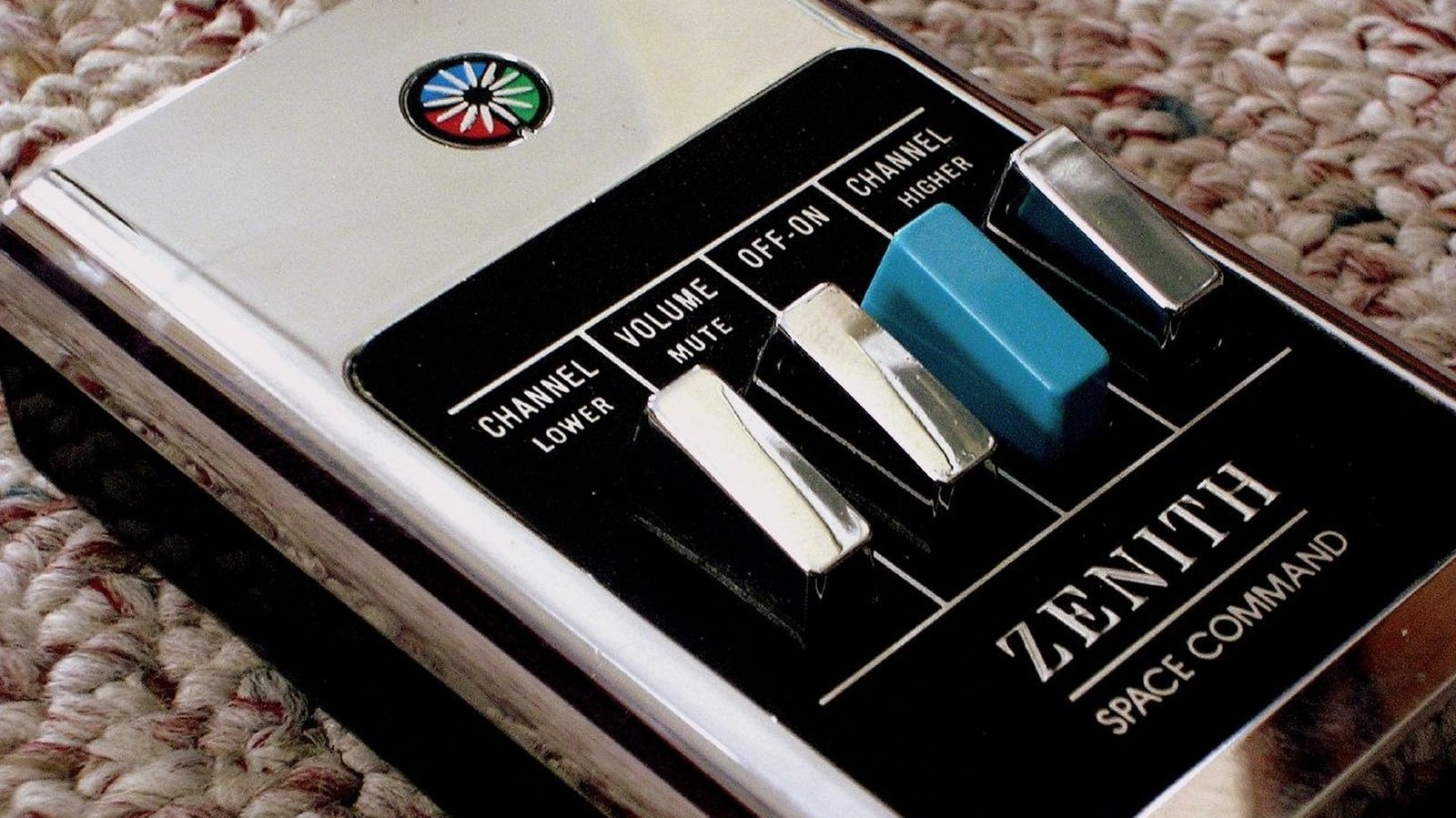
The history of television remotes began with a groundbreaking invention in the mid-20th century. In 1956, the first practical wireless TV remote control, known as the Space Command, was developed by Robert Adler at Zenith. This innovative device operated without electronics or batteries, marking a significant leap in television technology.
Before the introduction of the remote, viewers had to physically get up to change the channel or adjust the volume. The Space Command transformed this experience. It worked through an all-mechanical system that utilized sound. When a button was pressed, a tiny hammer struck one of four aluminum rods, producing unique high-frequency sounds. These sounds were converted by the television into commands, allowing users to control functions such as “channel-up,” “channel-down,” “sound on or off,” and “power on or off.” The distinct clicking sound from the remote quickly earned it the nickname “clicker,” which became synonymous with all remotes for decades.
Despite its revolutionary design, the original Space Command was relatively expensive, adding as much as 30% to the retail price of the television. This was due to the advanced receiver inside the set that required six additional vacuum tubes to process the sound. Nevertheless, the technology gained traction and became an industry standard until the early 1960s, when solid-state circuitry began to replace vacuum tubes.
Wireless Innovation and Early Challenges
Interestingly, the Space Command was not the first remote control. That distinction goes to a wired version called the Lazy Bones, also created by Zenith in 1950. The Lazy Bones allowed users to change channels and adjust volume with buttons, but it was tethered by a cord, which many found cumbersome. Eugene F. McDonald Jr., one of the company’s founders, was motivated by the intrusive nature of commercials and sought a solution to mute the sound quickly.
The first wireless remote came five years later in 1955 with the introduction of the Flash-Matic, designed by engineer Eugene Polley. This device resembled a flashlight and operated by directing a light beam at photocells situated at the corners of the television. Users could turn the TV on or off, adjust the volume, and change channels by aiming the light. However, the Flash-Matic had significant drawbacks. Ambient light could inadvertently trigger the photocells, leading to unintended adjustments, particularly in brightly lit rooms.
Despite its flaws, the Flash-Matic paved the way for further advancements. At the time, the television itself sold for $400—equivalent to nearly $4,800 today—while the remote added an additional $100 (approximately $1,200 now) to the overall cost. Production was limited, with only about 30,000 units made, and the remote was only available in the United States.
The Shift to Infrared Technology
With the introduction of solid-state circuitry in the early 1980s, the television industry began to shift significantly. This technological advancement led to the widespread adoption of infrared (IR) remote controls, which use low-frequency light beams that are invisible to the human eye. The IR technology converted light signals into commands, enhancing the user experience and eliminating many of the issues faced by earlier systems.
Today, the evolution of remote controls continues with various innovations, from voice-activated systems to smartphone apps that allow users to operate their televisions from anywhere. Each advancement builds upon the legacy of those early designs, highlighting how far the television industry has come since the first wireless remote control.
The story of the Space Command and its predecessors serves as a fascinating glimpse into the ingenuity of early television technology. As we enjoy the conveniences of modern viewing, it is essential to recognize the innovative minds that paved the way for our current experiences.

Urgent Tax Savings Alert: Maximize Deductions Before April 15

Trump’s Administration Faces Uncertainty Over Government Shutdowns

Cosmic Defects: The Mystery of the Universe’s Missing Anomalies

Rapid City Parks Department Opens Registration for Bocce Leagues

Samsung Galaxy Watch 9 to Feature Larger 435mAh Battery Soon

Two Dead After Student Boats Capsize Off Okinawa Coast

Healthy Choice Wellness Reports Earnings with Mixed Results

Prince Harry Positions Himself as Royal Family’s Image Reviver

All Points North Lodge Achieves FSPHP-ETA Accreditation

Send Holiday Parcels for £1.99 with New Comparison Service

University of Hawaiʻi Leads $25M AI Project to Monitor Natural Disasters

Maui County Reopens Upgraded Lānaʻi Fifth Street Courts Today!

Interstellar Object 3I/ATLAS Emits Unique Metal Alloy, Says Scientist

Kelly McCreary Discusses Future of Maggie and Winston in Grey’s Anatomy

Daily Codeword Puzzle Launches on October 21, 2025

Congresswoman Under Fire for Misleading Epstein Donation Claims

Trump Vows to Resolve Afghanistan-Pakistan Crisis “Very Quickly”

Researchers Achieve Fastest Genome Sequencing in Under Four Hours
-
 Lifestyle4 months ago
Send Holiday Parcels for £1.99 with New Comparison Service
-
Science5 months ago
University of Hawaiʻi Leads $25M AI Project to Monitor Natural Disasters
-
 Top Stories4 months ago
Maui County Reopens Upgraded Lānaʻi Fifth Street Courts Today!
-
 Science6 months ago
Interstellar Object 3I/ATLAS Emits Unique Metal Alloy, Says Scientist
-
 Entertainment6 months ago
Kelly McCreary Discusses Future of Maggie and Winston in Grey’s Anatomy
-
 Entertainment6 months ago
Daily Codeword Puzzle Launches on October 21, 2025
-
 Lifestyle5 months ago
Congresswoman Under Fire for Misleading Epstein Donation Claims
-
 Top Stories6 months ago
Trump Vows to Resolve Afghanistan-Pakistan Crisis “Very Quickly”
-
 Science6 months ago
Researchers Achieve Fastest Genome Sequencing in Under Four Hours
-

 Business6 months ago
Iconic Sand Dollar Social Club Listed for $3 Million in Folly Beach
-

 Science5 months ago
Charles Darwin’s Address Book Reveals Hidden Aspects of His Life
-

 Politics6 months ago
Afghan Refugee Detained by ICE After Asylum Hearing in New York