
Health
Federal Reserve Faces Oil Crisis Challenges Amid Rising Prices

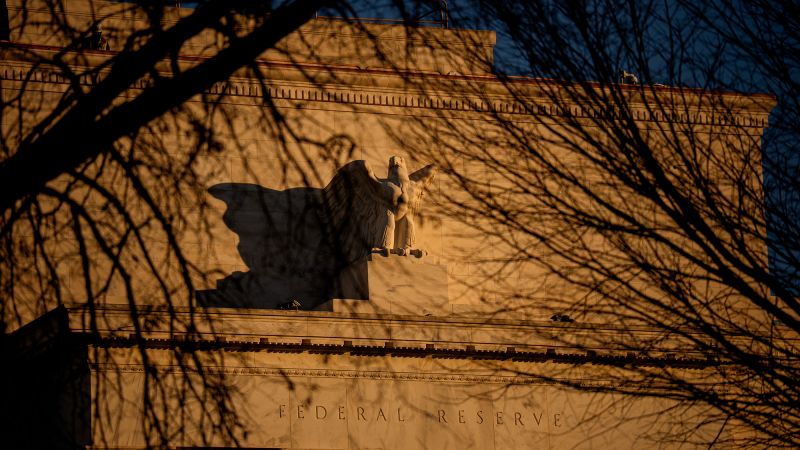
The Federal Reserve is confronting a significant challenge as the global oil crisis escalates. Recent geopolitical tensions, particularly between the United States and Iran, have caused oil prices to soar. The price of West Texas Intermediate (WTI), a key benchmark for U.S. crude, briefly reached $120 per barrel last week. This surge in energy costs threatens to raise prices for consumers and businesses alike, potentially slowing hiring and stalling economic growth.
With the Federal Open Market Committee meeting scheduled for this week, the Fed is tasked with navigating the complexities of rising inflation and a shaky job market. The situation is particularly precarious as Kevin Warsh, nominated by President Donald Trump to lead the central bank, awaits Senate confirmation during this challenging period. The Fed has not faced an oil shock of this magnitude since the 1973 Arab-Israeli War, which contributed to a prolonged economic downturn known as stagflation.
Comparing Historical Oil Crises
The dynamics of the current oil crisis differ markedly from those of previous decades. The United States, now the world’s largest oil producer, relies less on imported crude than it did during past energy crises. Nonetheless, experts indicate that the disruption in global energy markets is more severe this time. According to Nicholas Mulder, a history professor at Cornell University, “The total amount of Gulf oil production that’s currently locked up due to this war is much bigger than it was back then. We’re talking about 20 million barrels versus about 4.5 million in 1973.”
In October 1973, the conflict between Egypt and Syria led to a surprise attack on Israel, escalating tensions that drew in the United States. In retaliation, Arab members of the Organization of Petroleum Exporting Countries (OPEC) cut off oil supplies to Western nations. This action inflicted significant economic pain on the U.S., which was heavily dependent on foreign oil at the time. Under then-Fed Chair Arthur Burns, policymakers hesitated to raise interest rates, believing that the inflationary pressures, including the oil shock, were largely beyond their control.
Ultimately, the Fed’s “stop and go” approach to rate changes allowed inflation to take root, which hindered economic growth. One economist at the time asserted, “The question is whether monetary policy could or should do anything to combat a persisting residual rate of inflation… The answer, I think, is negative.”
The Current Economic Landscape
Today, the U.S. economy is primarily services-based, making it less vulnerable to global oil production cuts. Nevertheless, the ongoing conflict poses unique risks. Josh Freed, senior vice president for the climate and energy program at Third Way, highlighted the specific threats: “We’re in a situation today where facilities are under attack from Iranian drones and missiles. That’s physical damage that could take a while to repair, making it potentially worse than the oil embargo of the 1970s.”
The effects of rising oil prices are already evident in American households. The University of Michigan’s latest consumer survey indicated a 2% decline in consumer sentiment this month, with many respondents citing the conflict as a contributing factor. On the employment front, the Bureau of Labor Statistics reported that employers cut 92,000 jobs in February, raising the unemployment rate to 4.4% from 4.3%. Despite a rise in job openings by 400,000 from December, the number of job seekers continues to exceed available positions.
As the Federal Reserve prepares to address these challenges, the key question remains: Can historical lessons guide policymakers in averting a downturn during this oil crisis? The stakes are high, and the implications for the U.S. economy are profound.

Urgent Tax Savings Alert: Maximize Deductions Before April 15

Trump’s Administration Faces Uncertainty Over Government Shutdowns

Cosmic Defects: The Mystery of the Universe’s Missing Anomalies

Rapid City Parks Department Opens Registration for Bocce Leagues

Samsung Galaxy Watch 9 to Feature Larger 435mAh Battery Soon

Two Dead After Student Boats Capsize Off Okinawa Coast

Healthy Choice Wellness Reports Earnings with Mixed Results

Prince Harry Positions Himself as Royal Family’s Image Reviver

All Points North Lodge Achieves FSPHP-ETA Accreditation

Send Holiday Parcels for £1.99 with New Comparison Service

University of Hawaiʻi Leads $25M AI Project to Monitor Natural Disasters

Maui County Reopens Upgraded Lānaʻi Fifth Street Courts Today!

Interstellar Object 3I/ATLAS Emits Unique Metal Alloy, Says Scientist

Kelly McCreary Discusses Future of Maggie and Winston in Grey’s Anatomy

Daily Codeword Puzzle Launches on October 21, 2025

Congresswoman Under Fire for Misleading Epstein Donation Claims

Trump Vows to Resolve Afghanistan-Pakistan Crisis “Very Quickly”

Researchers Achieve Fastest Genome Sequencing in Under Four Hours
-
 Lifestyle4 months ago
Send Holiday Parcels for £1.99 with New Comparison Service
-
Science5 months ago
University of Hawaiʻi Leads $25M AI Project to Monitor Natural Disasters
-
 Top Stories3 months ago
Maui County Reopens Upgraded Lānaʻi Fifth Street Courts Today!
-
 Science5 months ago
Interstellar Object 3I/ATLAS Emits Unique Metal Alloy, Says Scientist
-
 Entertainment6 months ago
Kelly McCreary Discusses Future of Maggie and Winston in Grey’s Anatomy
-
 Entertainment5 months ago
Daily Codeword Puzzle Launches on October 21, 2025
-
 Lifestyle4 months ago
Congresswoman Under Fire for Misleading Epstein Donation Claims
-
 Top Stories5 months ago
Trump Vows to Resolve Afghanistan-Pakistan Crisis “Very Quickly”
-
 Science6 months ago
Researchers Achieve Fastest Genome Sequencing in Under Four Hours
-

 Business6 months ago
Iconic Sand Dollar Social Club Listed for $3 Million in Folly Beach
-

 Politics6 months ago
Afghan Refugee Detained by ICE After Asylum Hearing in New York
-

 Health6 months ago
Peptilogics Secures $78 Million to Combat Prosthetic Joint Infections