
Health
Hawaii Takes Bold Steps in Alzheimer’s Care with New Laws

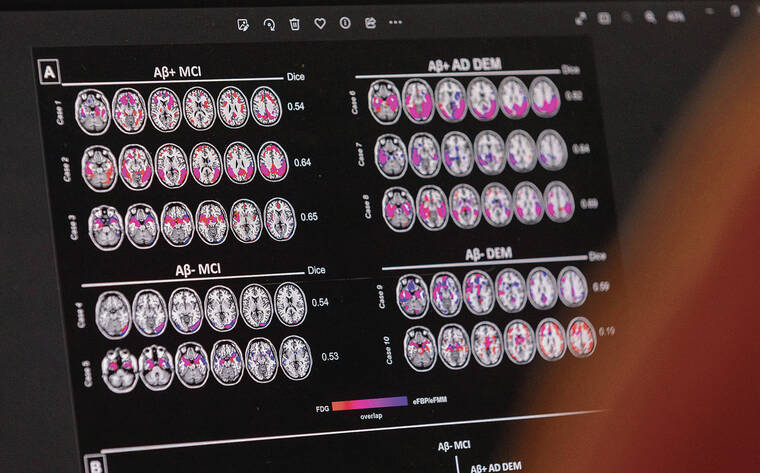
Hawaii has made significant strides in the fight against Alzheimer’s disease with the passage of two crucial bills during the final hours of the 2023 legislative session. House Bill 700, now known as Act 286, mandates that all residents aged 65 and older receive a cognitive test during their annual Medicare wellness visit. This legislation marks the first time that early detection of Alzheimer’s is not just encouraged but legally required.
As this landmark law was being enacted, two important scientific breakthroughs emerged, promising to enhance Alzheimer’s care for families across the islands. The first breakthrough involves a newly FDA-approved blood test capable of detecting amyloid plaques, a hallmark of Alzheimer’s, years before symptoms appear. This development allows for a straightforward blood draw in primary care settings, eliminating the need for costly PET scans or lengthy wait times.
Transforming Alzheimer’s Care
Shortly after the announcement of the blood test, a second breakthrough arrived: an at-home auto-injector for Leqembi (lecanemab), a medication that has been shown to slow cognitive decline. Previously administered only in hospital settings, this treatment can now be given in the comfort of one’s home, significantly reducing the burden of frequent hospital visits for families. Patients can receive their maintenance doses through the assistance of a caregiver, making ongoing treatment more accessible.
These advancements are particularly vital for Hawaii, which has one of the fastest-growing senior populations in the United States, currently at 22%. The geographic isolation of the islands often complicates access to medical care. For families in places like Hilo or Lanai, traveling to Honolulu for treatment can be both exhausting and impractical. The combination of early diagnosis and at-home treatment can provide hope for many, potentially transforming the lives of those affected by Alzheimer’s.
Despite these promising developments, concerns about equitable access remain. If new technologies and treatments are only affordable for a select few, the progress may inadvertently create new forms of inequality. There is an urgent need for insurance companies, particularly Medicare, to cover the new blood tests to ensure everyone has equal access to early diagnosis and treatment.
A Call to Action
Hawaii has a longstanding tradition of ohana, a concept that underscores the importance of family and community support. This cultural strength must now extend into the healthcare system. As the state stands at this pivotal moment in Alzheimer’s care, there is an opportunity to set a national example where compassion, culture, and science align to protect the elderly.
U.S. Senator Brian Schatz has been urged to lend his support to the bipartisan Alzheimer’s Screening and Prevention (ASAP) Act, which aims to provide Medicare coverage for routine blood-based dementia screenings. This legislative measure could facilitate earlier detection and intervention, significantly impacting patient outcomes.
Residents of Hawaii are encouraged to discuss the new blood tests and cognitive screenings with their healthcare providers and to engage with their legislators to advocate for necessary actions. The future of Alzheimer’s care in Hawaii is not solely dependent on scientific advancements or legislative actions—it will also be shaped by conversations happening in homes and communities.
As Hawaii embraces these innovations, there is hope for a future where Alzheimer’s is detected early, treated effectively at home, and supported by a robust community network. If executed well, Hawaii could emerge as a model for the nation, demonstrating how a small chain of islands can redefine care for its elders. Together, families can turn breakthrough science into tangible hope, granting their loved ones the dignity, connection, and time they deserve.
In the words of Girard Perone, submitted on behalf of the Alzheimer’s Association Hawaii, “We must walk through this door together.” The choices made today will resonate for generations to come, shaping the narrative of Alzheimer’s care within the state and beyond.

Urgent Tax Savings Alert: Maximize Deductions Before April 15

Trump’s Administration Faces Uncertainty Over Government Shutdowns

Cosmic Defects: The Mystery of the Universe’s Missing Anomalies

Rapid City Parks Department Opens Registration for Bocce Leagues

Samsung Galaxy Watch 9 to Feature Larger 435mAh Battery Soon

Two Dead After Student Boats Capsize Off Okinawa Coast

Healthy Choice Wellness Reports Earnings with Mixed Results

Prince Harry Positions Himself as Royal Family’s Image Reviver

All Points North Lodge Achieves FSPHP-ETA Accreditation

Send Holiday Parcels for £1.99 with New Comparison Service

University of Hawaiʻi Leads $25M AI Project to Monitor Natural Disasters

Maui County Reopens Upgraded Lānaʻi Fifth Street Courts Today!

Daily Codeword Puzzle Launches on October 21, 2025

Congresswoman Under Fire for Misleading Epstein Donation Claims

Interstellar Object 3I/ATLAS Emits Unique Metal Alloy, Says Scientist

Trump Vows to Resolve Afghanistan-Pakistan Crisis “Very Quickly”

Charles Darwin’s Address Book Reveals Hidden Aspects of His Life

Rediscovering Chrysler: 5 Overlooked Models from the 1980s
-
 Lifestyle8 months ago
Send Holiday Parcels for £1.99 with New Comparison Service
-
Science9 months ago
University of Hawaiʻi Leads $25M AI Project to Monitor Natural Disasters
-
 Top Stories8 months ago
Maui County Reopens Upgraded Lānaʻi Fifth Street Courts Today!
-
 Entertainment10 months ago
Daily Codeword Puzzle Launches on October 21, 2025
-
 Lifestyle9 months ago
Congresswoman Under Fire for Misleading Epstein Donation Claims
-
 Science10 months ago
Interstellar Object 3I/ATLAS Emits Unique Metal Alloy, Says Scientist
-
 Top Stories9 months ago
Trump Vows to Resolve Afghanistan-Pakistan Crisis “Very Quickly”
-
 Science9 months ago
Charles Darwin’s Address Book Reveals Hidden Aspects of His Life
-
 Lifestyle8 months ago
Rediscovering Chrysler: 5 Overlooked Models from the 1980s
-

 Science7 months ago
Understanding Generation Z: Strategies for Engaging the Workforce
-

 Entertainment10 months ago
Kelly McCreary Discusses Future of Maggie and Winston in Grey’s Anatomy
-

 Top Stories8 months ago
aespa Faces Backlash Over G-Dragon Interaction at 2025 MAMAs