
Health
Mastering Sit-to-Stand: A Key to Fitness After 60

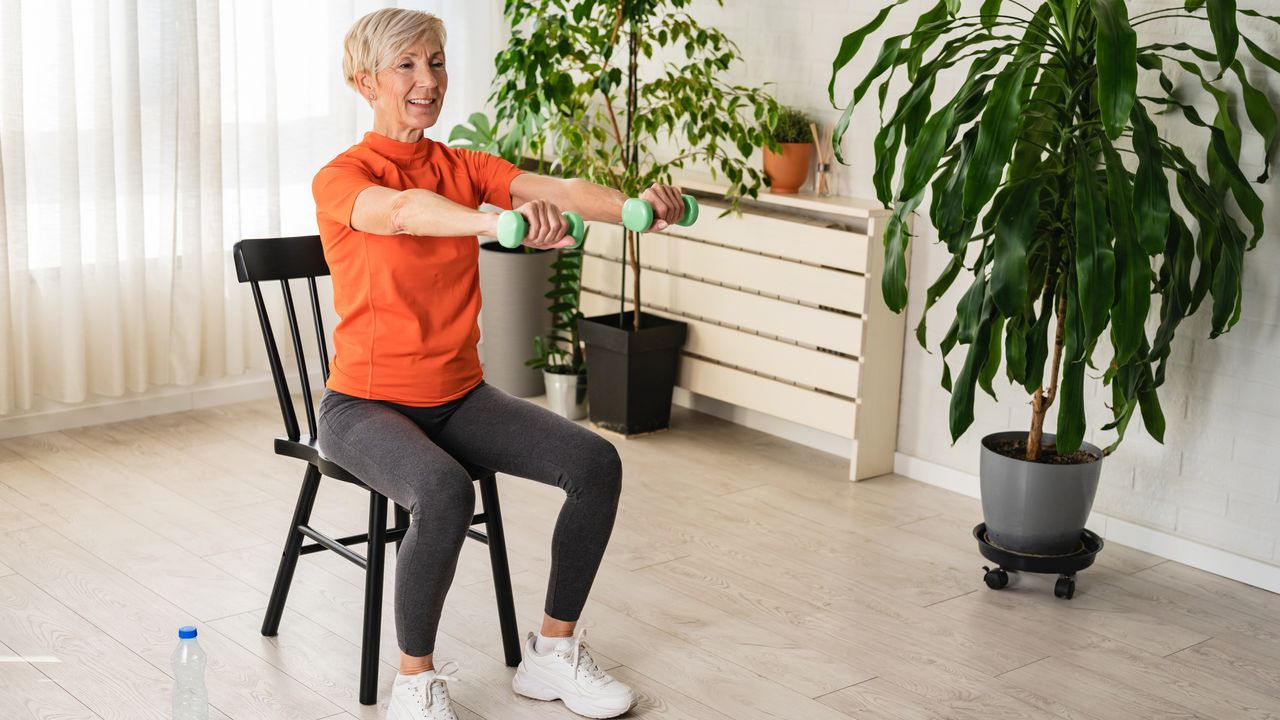
As individuals age, maintaining physical fitness becomes increasingly vital for health and independence. Recent insights reveal that completing a certain number of sit-to-stand exercises can indicate whether a person’s leg strength is considered “above average.” This simple yet effective movement plays a crucial role in assessing overall fitness for seniors.
The significance of leg strength cannot be overstated. It contributes to balance and mobility, reducing the risk of falls and injuries. Engaging in regular physical activity not only combats muscle loss associated with aging but also supports cardiovascular health. The Senior Fitness Test Kit serves as an excellent starting point for older adults to evaluate their fitness level. This test assesses various physical capabilities, including standing up from a chair, walking, lifting, bending, and stretching.
Understanding the Sit-to-Stand Exercise
The sit-to-stand exercise closely resembles a squat, and while it may appear straightforward, it is one of the most vital movements for longevity. During this exercise, individuals work their quadriceps, glutes, hamstrings, and core muscles. Notably, since it engages the largest muscle groups in the body, performing multiple repetitions can elevate the heart rate, providing cardiovascular benefits without requiring extensive equipment or space.
To perform the sit-to-stand exercise effectively, follow these guidelines:
1. **Chair Selection**: Choose a sturdy chair without armrests or wheels, ensuring both feet can rest flat on the floor.
2. **Starting Position**: Sit at the front of the chair with feet hip-width apart and knees bent at a 90-degree angle.
3. **Hand Placement**: Place your hands on your thighs, by your sides, or cross them over your chest for added difficulty.
4. **Engagement**: Lean slightly forward, shift your weight to your feet, and engage your core as you push through your feet to stand up.
5. **Controlled Descent**: Lower yourself back down to the chair slowly, tapping it lightly before standing again. Maintain core engagement throughout.
According to the Senior Fitness Test, specific benchmarks exist for determining leg strength based on the number of sit-to-stand repetitions completed in 30 seconds. Here are the criteria for men and women across different age groups:
Men’s Results:
– Ages 60-64:
– Below average: fewer than 14 reps
– Average: 14-19 reps
– Above average: more than 19 reps
– Ages 65-69:
– Below average: fewer than 12 reps
– Average: 12-18 reps
– Above average: more than 18 reps
– Ages 70-74:
– Below average: fewer than 12 reps
– Average: 12-17 reps
– Above average: more than 17 reps
– Ages 75-79:
– Below average: fewer than 11 reps
– Average: 11-17 reps
– Above average: more than 17 reps
– Ages 80-84:
– Below average: fewer than 10 reps
– Average: 10-15 reps
– Above average: more than 15 reps
– Ages 85-89:
– Below average: fewer than 8 reps
– Average: 8-14 reps
– Above average: more than 14 reps
– Ages 90-94:
– Below average: fewer than 7 reps
– Average: 7-12 reps
– Above average: more than 12 reps
Women’s Results:
– Ages 60-64:
– Below average: fewer than 12 reps
– Average: 12-17 reps
– Above average: more than 17 reps
– Ages 65-69:
– Below average: fewer than 11 reps
– Average: 11-16 reps
– Above average: more than 16 reps
– Ages 70-74:
– Below average: fewer than 10 reps
– Average: 10-15 reps
– Above average: more than 15 reps
– Ages 75-79:
– Below average: fewer than 10 reps
– Average: 10-15 reps
– Above average: more than 15 reps
– Ages 80-84:
– Below average: fewer than 9 reps
– Average: 9-14 reps
– Above average: more than 14 reps
– Ages 85-89:
– Below average: fewer than 8 reps
– Average: 8-13 reps
– Above average: more than 13 reps
– Ages 90-94:
– Below average: fewer than 4 reps
– Average: 4-11 reps
– Above average: more than 11 reps
Improving Your Performance
For those who find themselves below their desired strength level, now is an excellent opportunity to enhance fitness. If recovering from an injury or starting a new fitness regime, it is advisable to consult a professional for personalized guidance.
To increase the number of reps performed comfortably, begin by using the armrests of the chair for support. Over time, gradually reduce this assistance by placing only fingertips on the armrests or crossing your arms over your chest as strength improves.
If the exercise becomes easy, consider intensifying the sit-to-stand by hovering just above the chair rather than fully sitting down between repetitions. Alternatively, incorporating light weights can enhance the challenge and contribute to overall strength development.
Staying active and focusing on activities like the sit-to-stand can lead to significant improvements in fitness and overall well-being. As highlighted by the Senior Fitness Test Kit, these simple exercises not only promote physical health but also empower individuals to maintain their independence as they age.

Urgent Tax Savings Alert: Maximize Deductions Before April 15

Trump’s Administration Faces Uncertainty Over Government Shutdowns

Cosmic Defects: The Mystery of the Universe’s Missing Anomalies

Rapid City Parks Department Opens Registration for Bocce Leagues

Samsung Galaxy Watch 9 to Feature Larger 435mAh Battery Soon

Two Dead After Student Boats Capsize Off Okinawa Coast

Healthy Choice Wellness Reports Earnings with Mixed Results

Prince Harry Positions Himself as Royal Family’s Image Reviver

All Points North Lodge Achieves FSPHP-ETA Accreditation

Send Holiday Parcels for £1.99 with New Comparison Service

University of Hawaiʻi Leads $25M AI Project to Monitor Natural Disasters

Maui County Reopens Upgraded Lānaʻi Fifth Street Courts Today!

Daily Codeword Puzzle Launches on October 21, 2025

Congresswoman Under Fire for Misleading Epstein Donation Claims

Interstellar Object 3I/ATLAS Emits Unique Metal Alloy, Says Scientist

Trump Vows to Resolve Afghanistan-Pakistan Crisis “Very Quickly”

Charles Darwin’s Address Book Reveals Hidden Aspects of His Life

Rediscovering Chrysler: 5 Overlooked Models from the 1980s
-
 Lifestyle8 months ago
Send Holiday Parcels for £1.99 with New Comparison Service
-
Science9 months ago
University of Hawaiʻi Leads $25M AI Project to Monitor Natural Disasters
-
 Top Stories8 months ago
Maui County Reopens Upgraded Lānaʻi Fifth Street Courts Today!
-
 Entertainment10 months ago
Daily Codeword Puzzle Launches on October 21, 2025
-
 Lifestyle9 months ago
Congresswoman Under Fire for Misleading Epstein Donation Claims
-
 Science10 months ago
Interstellar Object 3I/ATLAS Emits Unique Metal Alloy, Says Scientist
-
 Top Stories9 months ago
Trump Vows to Resolve Afghanistan-Pakistan Crisis “Very Quickly”
-
 Science8 months ago
Charles Darwin’s Address Book Reveals Hidden Aspects of His Life
-
 Lifestyle8 months ago
Rediscovering Chrysler: 5 Overlooked Models from the 1980s
-

 Science7 months ago
Understanding Generation Z: Strategies for Engaging the Workforce
-

 Entertainment10 months ago
Kelly McCreary Discusses Future of Maggie and Winston in Grey’s Anatomy
-

 Top Stories8 months ago
aespa Faces Backlash Over G-Dragon Interaction at 2025 MAMAs