
Health
New York Medical Schools Urge State to Invest Billions in Research

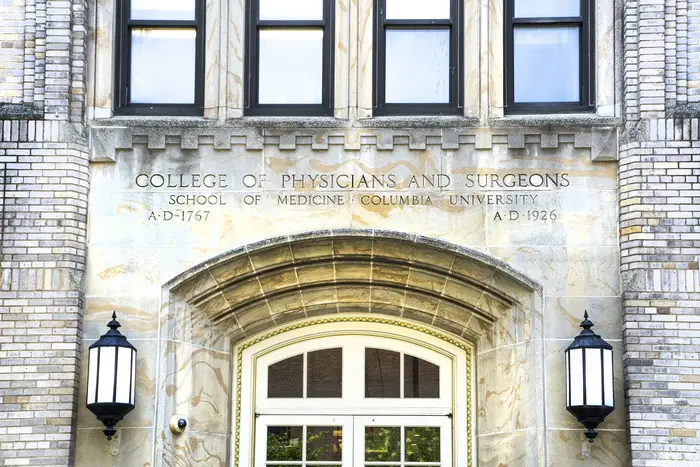
A coalition of medical schools and research institutions in New York is calling on Governor Kathy Hochul to allocate billions in state funding for a new biomedical research initiative. This request comes amid uncertainties surrounding federal science funding, which has been significantly affected by recent policy changes. The proposed Empire Biomedical Research Institute aims to secure jobs and sustain vital research in the state, which proponents argue is critical for the long-term growth of New York’s life sciences sector.
According to Jonathan Teyan, president and CEO of the Associated Medical Schools of New York, the proposal is closely tied to the shifting landscape of funding from Washington. “We can’t separate this [proposal] from all of the changes in policy and funding that have come out of Washington,” he stated. Teyan emphasized that investing in biomedical research could also serve as a catalyst for economic development and improvements in healthcare across New York.
Research funded by federal sources supported over 30,000 jobs in New York last year, contributing more than $8 billion to the state’s economy, as noted in an analysis by United for Medical Research, a coalition advocating for scientific funding. However, the impact of federal funding cuts has been felt widely; more than a thousand research grants in New York have faced freezes or reductions this year. Many institutions are grappling with the fallout, as detailed by the platform Grant Witness, which tracks funding changes from the National Institutes of Health (NIH), National Science Foundation, and the U.S. Environmental Protection Agency.
The Associated Medical Schools of New York has proposed that the new state fund begin with an initial investment of $500 million, with aspirations to reach $6 billion over the next decade. Nevertheless, this initiative is poised to face stiff competition for state funding, especially as the fiscal year 2027 budget session approaches in January. Ana Champeny, vice president for research at the Citizens Budget Commission, a nonpartisan budget watchdog, pointed out the pressing need for prioritization amid anticipated federal cuts to programs like Medicaid and SNAP.
Institutions such as Mount Sinai Health System, Columbia University, and the CUNY School of Medicine have formally backed the call for prioritizing biomedical research. In a letter addressed to Governor Hochul, they warned that without such a fund, New York risks losing its competitive edge to states and countries that are increasingly recognizing the economic and health benefits of investing in biomedical research.
Teyan highlighted that states like Massachusetts, California, and Texas have made significant investments in this area in recent years, setting a standard for New York to follow. In response to these concerns, Kassie White, a spokesperson for the governor, acknowledged New York’s leadership in the life sciences and innovation sectors, citing the establishment of a cell and gene therapy innovation hub on Long Island as an example of the state’s commitment. This hub is supported by a $150 million investment from the state, along with a recent pledge by Regeneron Pharmaceuticals to invest more than $2 billion in a facility in Saratoga Springs.
Despite some improvements in federal funding, researchers in New York continue to face challenges. Funding constraints imposed by the previous administration resulted in the freezing or cutting of numerous research grants, with many projects deemed misaligned with federal priorities. The NIH notably reduced its competitive grant spending by 41% below average by July, leading to widespread layoffs and hiring freezes across various institutions.
While some grant terminations have been reversed through legal challenges, the recovery of federal funding has been uneven. As Bruce Stillman, president and CEO of Cold Spring Harbor Laboratory, explained, his institution has had to scale back operations, including reducing staff in his research lab focusing on cancer genetics. Stillman emphasized the urgent need for both federal and state investment in the life sciences sector to ensure New York remains competitive.
Earlier this year, a proposal to cut NIH funding by $18 billion, nearly 40%, was introduced but has been rejected by Congress thus far. As the landscape of scientific funding continues to evolve, the coalition of medical schools and research institutions in New York remains steadfast in its advocacy for state support to bolster the biomedical research sector.

Norwegian Explorer Amundsen Reaches South Pole First, Dec. 14, 1911

Urgent Discovery: New Pumpkin Toadlet Species Found in Brazil

Analyzing Historical Paintings as Data for Political Insights

BYU Dominates UC Riverside with 100-53 Victory at Home

Trump Vows Strong Retaliation After Attack Claims American Lives

Brokerages Set Price Target for Advantage Energy at C$14.00

Josh O’Connor Addresses Live-Action ‘Ratatouille’ Rumors on SNL

Maintain Your Muzzleloader: Essential Cleaning Tips for Hunters

Spurs Shock Thunder 111-109; Wembanyama Sparks NBA Cup Final Surge

University of Hawaiʻi Leads $25M AI Project to Monitor Natural Disasters

Interstellar Object 3I/ATLAS Emits Unique Metal Alloy, Says Scientist

Researchers Achieve Fastest Genome Sequencing in Under Four Hours

Iconic Sand Dollar Social Club Listed for $3 Million in Folly Beach

Afghan Refugee Detained by ICE After Asylum Hearing in New York

McEwen Inc. Secures Tartan Lake Gold Mine Through Acquisition

Peptilogics Secures $78 Million to Combat Prosthetic Joint Infections

Jump for Good: San Clemente Pier Fundraiser Allows Legal Leaps

Mars Observed: Detailed Imaging Reveals Dust Avalanche Dynamics
-
Science1 month ago
University of Hawaiʻi Leads $25M AI Project to Monitor Natural Disasters
-
 Science2 months ago
Interstellar Object 3I/ATLAS Emits Unique Metal Alloy, Says Scientist
-
 Science2 months ago
Researchers Achieve Fastest Genome Sequencing in Under Four Hours
-
 Business2 months ago
Iconic Sand Dollar Social Club Listed for $3 Million in Folly Beach
-
 Politics2 months ago
Afghan Refugee Detained by ICE After Asylum Hearing in New York
-
 Business2 months ago
McEwen Inc. Secures Tartan Lake Gold Mine Through Acquisition
-
 Health2 months ago
Peptilogics Secures $78 Million to Combat Prosthetic Joint Infections
-
 Lifestyle2 months ago
Jump for Good: San Clemente Pier Fundraiser Allows Legal Leaps
-
 Science2 months ago
Mars Observed: Detailed Imaging Reveals Dust Avalanche Dynamics
-

 Health2 months ago
Researcher Uncovers Zika Virus Pathway to Placenta Using Nanotubes
-

 Entertainment2 months ago
Jennifer Lopez Addresses A-Rod Split in Candid Interview
-

 World2 months ago
US Passport Ranks Drop Out of Top 10 for First Time Ever