
Health
Texas A&M Researchers Use Nanoflowers to Revitalize Aging Cells

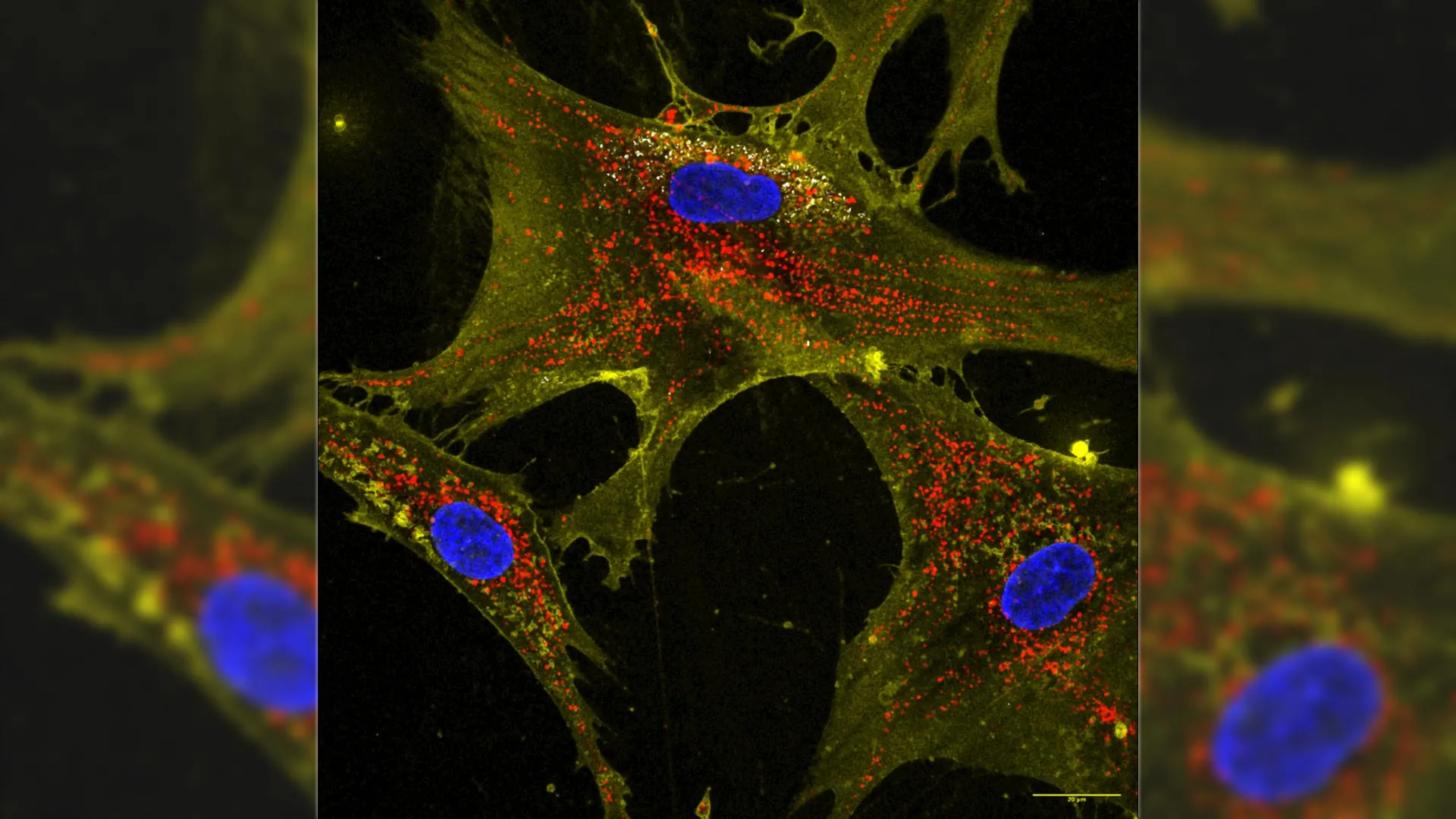
Biomedical researchers at Texas A&M University have developed a groundbreaking method that utilizes microscopic particles known as nanoflowers to enhance the energy production of stem cells. Published on November 27, 2025, this innovative approach enables stem cells to generate approximately double the usual number of mitochondria. These energized stem cells subsequently transfer their surplus mitochondria to weakened cells, potentially reversing energy loss associated with aging and degenerative diseases.
The research, led by Dr. Akhilesh K. Gaharwar and Ph.D. student John Soukar from the Department of Biomedical Engineering, presents a promising advance in regenerative medicine. Mitochondrial decline is linked to aging, heart disease, and various neurodegenerative conditions, including Alzheimer’s disease. By addressing the diminishing number of mitochondria, the team aims to restore energy production in damaged cells, thereby improving their overall health and functionality.
Nanoflowers Enhance Stem Cell Functionality
The technique involves combining stem cells with nanoflowers, which are made from molybdenum disulfide, an inorganic compound capable of forming diverse two-dimensional structures. Upon exposure to these nanoflowers, the stem cells significantly increased their mitochondria production, yielding two to four times more mitochondria than untreated cells. When these enhanced stem cells were placed next to damaged or aging cells, they successfully transferred their excess mitochondria, revitalizing the energy production of neighboring cells.
“We have trained healthy cells to share their spare batteries with weaker ones,” said Dr. Gaharwar. He emphasized that this method does not involve genetic modification or drug administration, representing a significant advancement in cellular therapies. The treated cells demonstrated improved energy levels and heightened resistance to apoptosis, even when subjected to harmful treatments like chemotherapy.
Soukar, the lead author of the study, likened this process to rejuvenating an old electronic device with a new battery pack. “Instead of tossing them out, we are plugging fully charged batteries from healthy cells into diseased ones,” he remarked.
A Sustainable Approach to Mitochondrial Therapy
Traditional methods to boost mitochondrial numbers often require frequent interventions due to their short-lived effects. Drug-based therapies typically involve small molecules that exit cells rapidly, necessitating regular treatments for sustained benefits. In contrast, the larger nanoflowers remain inside the cells, continuously stimulating mitochondrial production. This could allow therapies based on this technology to be administered approximately once a month, significantly enhancing treatment compliance.
“This is an early but exciting step toward recharging aging tissues using their own biological machinery,” Dr. Gaharwar stated. He expressed hope that by safely enhancing this natural power-sharing system, it could eventually aid in mitigating or reversing some cellular aging effects.
The project received funding from prominent institutions, including the National Institutes of Health, the Welch Foundation, the Department of Defense, and the Cancer Prevention and Research Institute of Texas. Additional support was provided by the President’s Excellence Fund at Texas A&M University and the Texas A&M Health Science Center Seedling Grant.
Researchers believe that the flexibility of this technique could allow for applications across various tissues in the body. “You could put the cells anywhere in the patient,” noted Soukar. “For cardiomyopathy, you can treat cardiac cells directly, and for muscular dystrophy, you can inject them right into the muscle.” This versatility opens up numerous possibilities for future treatments.
As the field of regenerative medicine evolves, the application of nanoflowers to enhance stem cell performance could represent a pivotal advancement. With ongoing research and potential clinical trials, this discovery may reshape the landscape of treatments for aging and degenerative diseases.

Urgent Tax Savings Alert: Maximize Deductions Before April 15

Trump’s Administration Faces Uncertainty Over Government Shutdowns

Cosmic Defects: The Mystery of the Universe’s Missing Anomalies

Rapid City Parks Department Opens Registration for Bocce Leagues

Samsung Galaxy Watch 9 to Feature Larger 435mAh Battery Soon

Two Dead After Student Boats Capsize Off Okinawa Coast

Healthy Choice Wellness Reports Earnings with Mixed Results

Prince Harry Positions Himself as Royal Family’s Image Reviver

All Points North Lodge Achieves FSPHP-ETA Accreditation

Send Holiday Parcels for £1.99 with New Comparison Service

University of Hawaiʻi Leads $25M AI Project to Monitor Natural Disasters

Maui County Reopens Upgraded Lānaʻi Fifth Street Courts Today!

Daily Codeword Puzzle Launches on October 21, 2025

Congresswoman Under Fire for Misleading Epstein Donation Claims

Interstellar Object 3I/ATLAS Emits Unique Metal Alloy, Says Scientist

Trump Vows to Resolve Afghanistan-Pakistan Crisis “Very Quickly”

Charles Darwin’s Address Book Reveals Hidden Aspects of His Life

Rediscovering Chrysler: 5 Overlooked Models from the 1980s
-
 Lifestyle8 months ago
Send Holiday Parcels for £1.99 with New Comparison Service
-
Science9 months ago
University of Hawaiʻi Leads $25M AI Project to Monitor Natural Disasters
-
 Top Stories8 months ago
Maui County Reopens Upgraded Lānaʻi Fifth Street Courts Today!
-
 Entertainment10 months ago
Daily Codeword Puzzle Launches on October 21, 2025
-
 Lifestyle9 months ago
Congresswoman Under Fire for Misleading Epstein Donation Claims
-
 Science10 months ago
Interstellar Object 3I/ATLAS Emits Unique Metal Alloy, Says Scientist
-
 Top Stories9 months ago
Trump Vows to Resolve Afghanistan-Pakistan Crisis “Very Quickly”
-
 Science9 months ago
Charles Darwin’s Address Book Reveals Hidden Aspects of His Life
-
 Lifestyle8 months ago
Rediscovering Chrysler: 5 Overlooked Models from the 1980s
-

 Science7 months ago
Understanding Generation Z: Strategies for Engaging the Workforce
-

 Entertainment10 months ago
Kelly McCreary Discusses Future of Maggie and Winston in Grey’s Anatomy
-

 Top Stories8 months ago
aespa Faces Backlash Over G-Dragon Interaction at 2025 MAMAs