
Health
U.S. Government’s Silence on World AIDS Day Sparks Concern

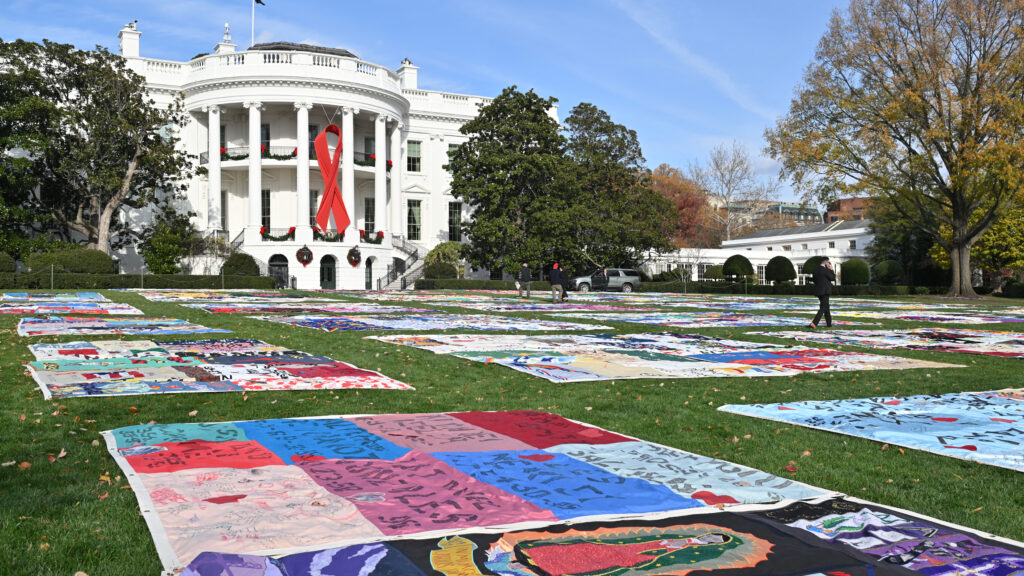
The U.S. government’s recent decision to effectively cease recognition of World AIDS Day has drawn sharp criticism from health advocates and activists. For the first time since the day was established, the State Department has instructed employees and grantees not to use government funds or resources to commemorate this significant annual event, which takes place on December 1. This move has prompted reflections on a troubling period in the history of AIDS activism, wherein federal action was notably lacking.
World AIDS Day was officially recognized by the World Health Organization on December 1, 1988. Since then, it has served as a critical platform for raising awareness about HIV/AIDS, commemorating those lost to the disease, and advocating for global action to combat this ongoing health crisis. The decision to downplay this observance is particularly jarring for those who remember when the U.S. government was criticized for its slow response to the AIDS epidemic in the 1980s. Notably, then-President Ronald Reagan did not publicly acknowledge AIDS until 1985, four years after the disease first emerged in the public consciousness.
According to a report by the New York Times, the State Department’s recent directive emphasizes that “an awareness day is not a strategy.” This assertion has been met with disbelief from many in the public health community, who argue that recognizing such days is integral to broader public health strategies. Peter Staley, a veteran advocate, described the decision as “petty and hostile,” suggesting it reflects a wider effort by the administration to distance itself from initiatives perceived as “woke.”
The implications of this decision are significant, particularly as World AIDS Day has historically been a catalyst for policy announcements and funding commitments. For instance, the U.S. President’s Emergency Plan for AIDS Relief (PEPFAR), launched by President George W. Bush in 2003, has invested over $110 billion in the global HIV/AIDS response. Over the years, the day has provided a backdrop for announcing substantial expansions of this initiative, credited with saving an estimated 26 million lives across more than 50 countries.
As the world continues to grapple with the HIV epidemic, the timing of this announcement could not be more concerning. Recent studies project that reductions in foreign aid, including potential cutbacks to PEPFAR and the U.S. Agency for International Development (USAID), could lead to an additional 10 million HIV infections and 3 million deaths from AIDS over the next five years.
While new treatment options are emerging, such as the recently approved lenacapavir, the scale of these initiatives must match the ongoing crisis. The recent delivery of 1,000 doses of lenacapavir to Zambia and Eswatini represents a positive step but raises questions about the adequacy of future supply. Advocates argue that the target of delivering 2 million doses by 2028 is insufficient given the scale of the epidemic, which saw approximately 1.3 million new infections globally last year.
As the World AIDS Day approaches, the message from activists may need to be revised to reflect the current realities. Perhaps a new slogan could emerge: “Silence (+ Slashed Funding) = Death.”
The ongoing evolution of U.S. policy regarding HIV/AIDS reflects a complex intersection of public health, politics, and advocacy. As we move forward, the significance of World AIDS Day as a tool for awareness and action remains critical in the fight against a disease that continues to affect millions worldwide.

Urgent Tax Savings Alert: Maximize Deductions Before April 15

Trump’s Administration Faces Uncertainty Over Government Shutdowns

Cosmic Defects: The Mystery of the Universe’s Missing Anomalies

Rapid City Parks Department Opens Registration for Bocce Leagues

Samsung Galaxy Watch 9 to Feature Larger 435mAh Battery Soon

Two Dead After Student Boats Capsize Off Okinawa Coast

Healthy Choice Wellness Reports Earnings with Mixed Results

Prince Harry Positions Himself as Royal Family’s Image Reviver

All Points North Lodge Achieves FSPHP-ETA Accreditation

Send Holiday Parcels for £1.99 with New Comparison Service

University of Hawaiʻi Leads $25M AI Project to Monitor Natural Disasters

Maui County Reopens Upgraded Lānaʻi Fifth Street Courts Today!

Daily Codeword Puzzle Launches on October 21, 2025

Congresswoman Under Fire for Misleading Epstein Donation Claims

Interstellar Object 3I/ATLAS Emits Unique Metal Alloy, Says Scientist

Trump Vows to Resolve Afghanistan-Pakistan Crisis “Very Quickly”

Charles Darwin’s Address Book Reveals Hidden Aspects of His Life

Rediscovering Chrysler: 5 Overlooked Models from the 1980s
-
 Lifestyle8 months ago
Send Holiday Parcels for £1.99 with New Comparison Service
-
Science9 months ago
University of Hawaiʻi Leads $25M AI Project to Monitor Natural Disasters
-
 Top Stories8 months ago
Maui County Reopens Upgraded Lānaʻi Fifth Street Courts Today!
-
 Entertainment10 months ago
Daily Codeword Puzzle Launches on October 21, 2025
-
 Lifestyle9 months ago
Congresswoman Under Fire for Misleading Epstein Donation Claims
-
 Science10 months ago
Interstellar Object 3I/ATLAS Emits Unique Metal Alloy, Says Scientist
-
 Top Stories9 months ago
Trump Vows to Resolve Afghanistan-Pakistan Crisis “Very Quickly”
-
 Science9 months ago
Charles Darwin’s Address Book Reveals Hidden Aspects of His Life
-
 Lifestyle8 months ago
Rediscovering Chrysler: 5 Overlooked Models from the 1980s
-

 Science7 months ago
Understanding Generation Z: Strategies for Engaging the Workforce
-

 Entertainment10 months ago
Kelly McCreary Discusses Future of Maggie and Winston in Grey’s Anatomy
-

 Top Stories8 months ago
aespa Faces Backlash Over G-Dragon Interaction at 2025 MAMAs