
Health
Yale Researchers Unveil Imaging Technique Linking Aging and Disease


A research team at Yale University has developed an innovative imaging technique that uncovers the intricate connections between aging, disease, and genetic activity in human cells. This breakthrough utilizes a novel machine learning approach to analyze tissue samples, revealing genetic variants, gene activity, and even estimating an individual’s age. The findings, published in the Proceedings of the National Academy of Sciences in 2025, could transform diagnostic practices and enhance disease risk predictions.
Ran Meng, the study’s lead author and a postdoctoral researcher at Yale’s Department of Molecular Biophysics and Biochemistry, emphasized the significance of their discovery. “Our study shows that ordinary tissue images contain patterns that can reliably predict gene expression and reveal a person’s age—information that was previously hidden to the naked eye,” Meng stated. The enhanced image quality allows for a deeper understanding of genetic features, enabling researchers to identify regions in the images that indicate whether a sample is associated with an older or younger age.
Connecting Genetics and Observable Traits
The research delves into the vital relationship between genotype and phenotype, as explained by co-author Mark Gerstein, who holds multiple professorships at Yale, including in biomedical informatics. The genotype refers to an organism’s genetic composition, while the phenotype encompasses observable traits influenced by both genetics and environmental factors. These traits can range from physical characteristics like height and eye color to more complex aspects like behavior and disease presence.
“One of the new research frontiers is ‘multi-modality’—connecting genotype to all sorts of other types of data that describe phenotype,” Gerstein noted. The study represents significant progress in linking genetic information to observable image features, enhancing our understanding of how genetics manifest in physical form.
Machine Learning Reveals Hidden Patterns
To conduct the study, researchers employed machine learning techniques to analyze tissue images from 838 healthy human donors, encompassing 12 different tissue types and over 10,000 images. This analysis illuminated hidden markers of aging and gene activity within human cells. The appearance of cells is closely related to both genetics and the aging process, and the team built computer models capable of identifying genetic variants associated with tissue characteristics.
One of the machine learning models demonstrated remarkable predictive accuracy in determining gene expression based on tissue images. Specifically, samples from the lung, heart, and testis exhibited strong correlations. Another model was adept at estimating chronological age from tissue samples, with skin, tibial nerve, tibial artery, and testis tissues providing the most reliable age predictions due to their pronounced age-related changes.
The research revealed that the shape, size, and structure of cell nuclei contain substantial biological information. The team identified 906 points in the human genome that correlate strongly with the appearance of nuclei across different tissues. Additionally, they discovered significant connections between nuclear shape and gene activity, further illuminating the complex interplay between genetics and observable cellular features.
This groundbreaking research not only advances the understanding of aging and disease but also holds promise for improving diagnostic practices by enabling the detection of abnormal tissue patterns at earlier stages. The potential applications of this technique could lead to enhanced predictive capabilities in assessing disease risk, paving the way for more effective healthcare strategies in the future.

Urgent Tax Savings Alert: Maximize Deductions Before April 15

Trump’s Administration Faces Uncertainty Over Government Shutdowns

Cosmic Defects: The Mystery of the Universe’s Missing Anomalies

Rapid City Parks Department Opens Registration for Bocce Leagues

Samsung Galaxy Watch 9 to Feature Larger 435mAh Battery Soon

Two Dead After Student Boats Capsize Off Okinawa Coast

Healthy Choice Wellness Reports Earnings with Mixed Results

Prince Harry Positions Himself as Royal Family’s Image Reviver

All Points North Lodge Achieves FSPHP-ETA Accreditation

Send Holiday Parcels for £1.99 with New Comparison Service

University of Hawaiʻi Leads $25M AI Project to Monitor Natural Disasters

Maui County Reopens Upgraded Lānaʻi Fifth Street Courts Today!

Daily Codeword Puzzle Launches on October 21, 2025

Congresswoman Under Fire for Misleading Epstein Donation Claims

Interstellar Object 3I/ATLAS Emits Unique Metal Alloy, Says Scientist

Trump Vows to Resolve Afghanistan-Pakistan Crisis “Very Quickly”

Charles Darwin’s Address Book Reveals Hidden Aspects of His Life

Rediscovering Chrysler: 5 Overlooked Models from the 1980s
-
 Lifestyle8 months ago
Send Holiday Parcels for £1.99 with New Comparison Service
-
Science9 months ago
University of Hawaiʻi Leads $25M AI Project to Monitor Natural Disasters
-
 Top Stories8 months ago
Maui County Reopens Upgraded Lānaʻi Fifth Street Courts Today!
-
 Entertainment10 months ago
Daily Codeword Puzzle Launches on October 21, 2025
-
 Lifestyle9 months ago
Congresswoman Under Fire for Misleading Epstein Donation Claims
-
 Science10 months ago
Interstellar Object 3I/ATLAS Emits Unique Metal Alloy, Says Scientist
-
 Top Stories9 months ago
Trump Vows to Resolve Afghanistan-Pakistan Crisis “Very Quickly”
-
 Science9 months ago
Charles Darwin’s Address Book Reveals Hidden Aspects of His Life
-
 Lifestyle8 months ago
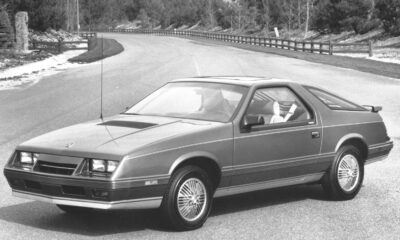
Rediscovering Chrysler: 5 Overlooked Models from the 1980s
-

 Science7 months ago
Understanding Generation Z: Strategies for Engaging the Workforce
-

 Entertainment10 months ago
Kelly McCreary Discusses Future of Maggie and Winston in Grey’s Anatomy
-

 Top Stories8 months ago
aespa Faces Backlash Over G-Dragon Interaction at 2025 MAMAs