
Lifestyle
Mat Burrows Discusses Future Global Trends and Challenges

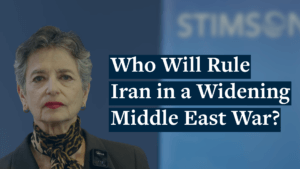
The complexities of international relations among the United States, Russia, and China are under scrutiny in a recent episode of the Trialogue Podcast. Hosted by Peter Slezkine, Director of the U.S.-Russia-China Trialogue project at the Stimson Center, the episode features Mat Burrows, a Counselor in the Executive Office at the Stimson Center and a former principal drafter of the Global Trends Report. The conversation delves into pressing global trends, including demographics, artificial intelligence (AI), energy dynamics, and the shifting transatlantic relationship.
During the discussion, Burrows emphasized that demographic trends are increasingly significant. He noted that by 2030, the United States faces a decline in population unless immigration policies shift. The aging population, particularly in countries like South Korea and Japan, presents a challenge that many Western nations are beginning to confront. Burrows pointed out that the 2008 financial crisis marked a turning point for the U.S., where declining birth rates have started to mirror trends seen in Europe.
Burrows elaborated on the implications of an aging population, highlighting that without an influx of younger immigrants, funding for social programs will become increasingly strained. He remarked, “Immigrants tend to be younger and contribute to the tax base, helping to defray some of the costs associated with an aging society.” With current U.S. policies leading to reduced immigration levels, the sustainability of social services appears uncertain.
As the conversation shifted to technology, particularly AI, Burrows acknowledged its potential to transform economies. He noted that while automation may alleviate some labor shortages, many low-paying jobs in agriculture and services are unlikely to be fully automated. “Americans are not interested in those agriculture jobs,” he stated, highlighting a critical gap in the labor market.
The discussion also touched on the global energy landscape. Burrows criticized American policies that he believes hinder the transition to renewable energy. He pointed to China as a leading force in diversifying its energy sources, stating that the country is making substantial investments in renewables while still utilizing coal and natural gas. “China is checking all the boxes,” he said, emphasizing the need for a balanced approach to energy that includes nuclear and renewable sources.
When examining the future of the transatlantic relationship, Burrows expressed skepticism about its long-term viability. He suggested that the historical closeness between the U.S. and Europe may be shifting. “I don’t think the transatlantic relationship will be the most important relationship geopolitically in the world,” he stated. Burrows believes that Europe will likely need to develop its own defense capabilities more independently as U.S. involvement may decrease.
Burrows further analyzed the potential for a multipolar world, where no single nation dominates. He argued that while China is already a regional hegemon in economic terms, it does not necessarily aspire to replicate the global influence of the U.S. post-World War II. “What I see happening is a multipolar world,” he concluded, noting the complexities of international alliances and the varying interests of nations.
In summary, Burrows’ insights provide a thought-provoking outlook on future global trends. The challenges posed by aging populations, the rise of AI, and evolving energy dynamics will require nations to adapt and innovate. As the geopolitical landscape shifts, understanding these trends will be crucial for policymakers and citizens alike. The full conversation can be accessed on the Trialogue Podcast, hosted by the Stimson Center and produced by University FM.

Urgent Tax Savings Alert: Maximize Deductions Before April 15

Trump’s Administration Faces Uncertainty Over Government Shutdowns

Cosmic Defects: The Mystery of the Universe’s Missing Anomalies

Rapid City Parks Department Opens Registration for Bocce Leagues

Samsung Galaxy Watch 9 to Feature Larger 435mAh Battery Soon

Two Dead After Student Boats Capsize Off Okinawa Coast

Healthy Choice Wellness Reports Earnings with Mixed Results

Prince Harry Positions Himself as Royal Family’s Image Reviver

All Points North Lodge Achieves FSPHP-ETA Accreditation

Send Holiday Parcels for £1.99 with New Comparison Service

University of Hawaiʻi Leads $25M AI Project to Monitor Natural Disasters

Maui County Reopens Upgraded Lānaʻi Fifth Street Courts Today!

Daily Codeword Puzzle Launches on October 21, 2025

Congresswoman Under Fire for Misleading Epstein Donation Claims

Interstellar Object 3I/ATLAS Emits Unique Metal Alloy, Says Scientist

Trump Vows to Resolve Afghanistan-Pakistan Crisis “Very Quickly”

Charles Darwin’s Address Book Reveals Hidden Aspects of His Life

Rediscovering Chrysler: 5 Overlooked Models from the 1980s
-
 Lifestyle8 months ago
Send Holiday Parcels for £1.99 with New Comparison Service
-
Science9 months ago
University of Hawaiʻi Leads $25M AI Project to Monitor Natural Disasters
-
 Top Stories8 months ago
Maui County Reopens Upgraded Lānaʻi Fifth Street Courts Today!
-
 Entertainment10 months ago
Daily Codeword Puzzle Launches on October 21, 2025
-
 Lifestyle9 months ago
Congresswoman Under Fire for Misleading Epstein Donation Claims
-
 Science10 months ago
Interstellar Object 3I/ATLAS Emits Unique Metal Alloy, Says Scientist
-
 Top Stories9 months ago
Trump Vows to Resolve Afghanistan-Pakistan Crisis “Very Quickly”
-
 Science8 months ago
Charles Darwin’s Address Book Reveals Hidden Aspects of His Life
-
 Lifestyle8 months ago
Rediscovering Chrysler: 5 Overlooked Models from the 1980s
-

 Science7 months ago
Understanding Generation Z: Strategies for Engaging the Workforce
-

 Entertainment10 months ago
Kelly McCreary Discusses Future of Maggie and Winston in Grey’s Anatomy
-

 Top Stories8 months ago
aespa Faces Backlash Over G-Dragon Interaction at 2025 MAMAs