
Politics
Chico City Council Approves Police Military Equipment Request

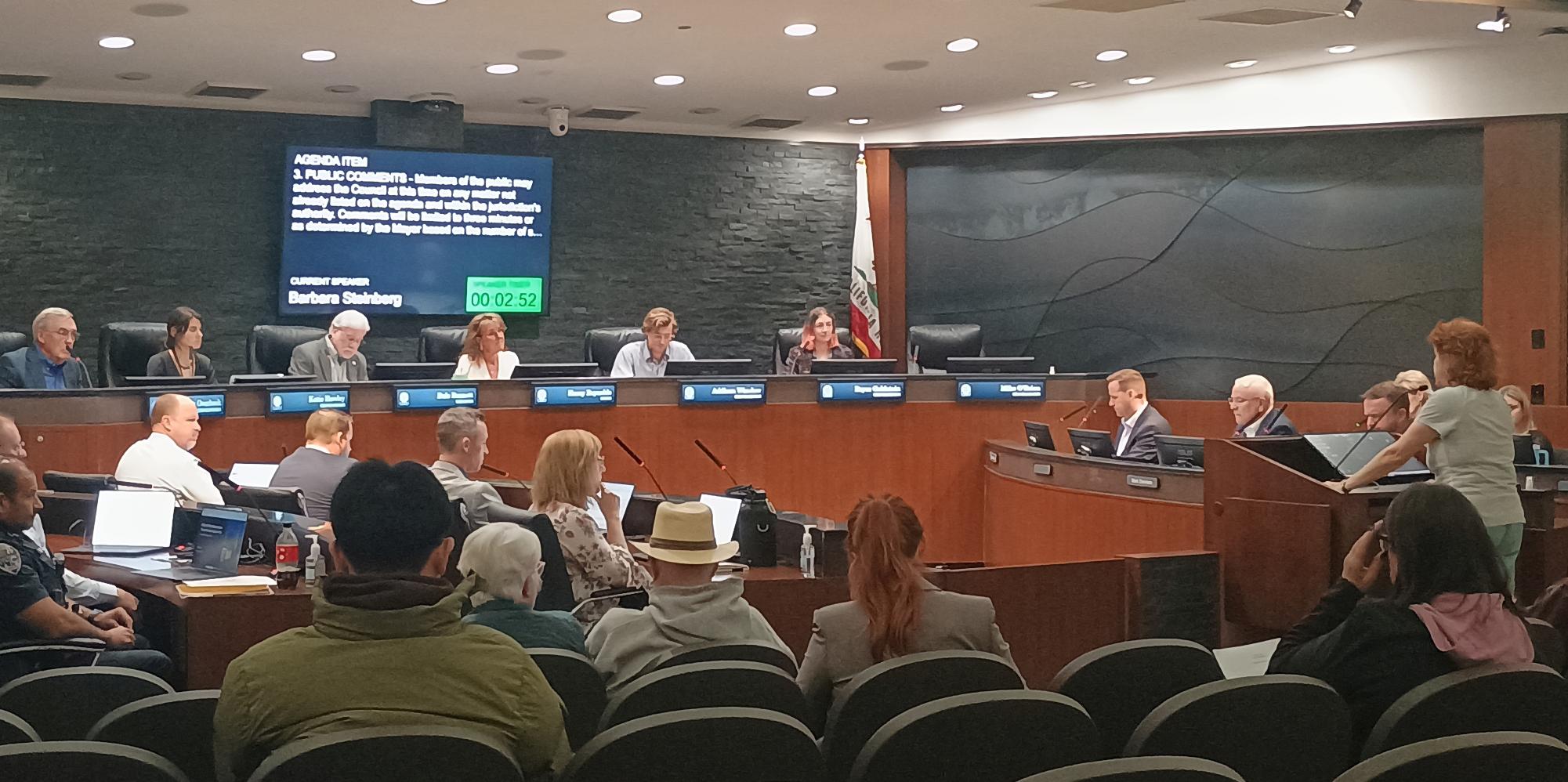
The Chico City Council voted on March 12, 2024, to approve a military equipment request from the Chico Police Department. This decision aligns with the requirements of Assembly Bill 481, which mandates the department to submit an annual report detailing its usage of military equipment and any new requests for such gear.
The term “military equipment” can be misleading, as the items in question are not directly purchased from the military but are largely commercially available and intended for law enforcement use. The latest AB 481 report indicates that the list encompasses drones, command vehicles, and less-than-lethal firearms, such as rubber bullets. Additionally, it includes high-powered rifles, long-range acoustic devices, and various types of breaching tools.
While the council’s approval allows the police department to utilize funds from its allocated budget for these items, it does not guarantee that all approved equipment will be purchased. The final police budget will be determined in June, and council members have expressed concerns about the potential allocation of funds. Vice Mayor Dale Bennet noted the tight budget constraints, stating, “Our decision tonight to support this is not necessarily [about] funding.”
Debate among council members highlighted the police department’s significant budget, which constitutes nearly half of the city council’s yearly financial plan. Councilmember Katie Hawley articulated concerns about the police department’s spending priorities, advocating for more judicious financial management. “During budget season, that’s when I really want to advocate for not giving a crazy amount of money to the police department to spend on whatever toys they want,” she said.
Although the council had the option to amend the request and exclude specific items before voting, two motions to do so failed. Councilmembers Hawley and Bryce Goldstein sought to exclude seven SAR-15 patrol rifles and three command vehicles, respectively. The full request ultimately passed with a 4-3 vote, with Councilmembers Hawley, Goldstein, and Addison Winslow opposing the measure.
In discussions, Van Overbeek challenged Hawley’s assertion that additional high-powered firearms were unnecessary for the department, pointing out that the police currently possess 73 SAR-15 rifles. He argued against limiting the police’s access to equipment that civilians can obtain legally, stating, “So we’re going to deny the police the same weapons that civilians have? That’s completely and utterly nonsensical.”
Councilmember Winslow voiced concerns about the trade-offs between funding for police equipment and the maintenance of city infrastructure. Following the introduction of Measure H, which increased the city’s sales tax from 7.25% to 8.25%, approximately 72% of the additional $24 million in revenue has been allocated to roadway improvements. Winslow remarked, “I don’t think any department should be getting anything close to what would be their wildest dreams for equipment.”
The police department’s request included three types of heavy-duty vehicles, with the most expensive item being an aerial systems vehicle priced at over $500,000. This vehicle is intended to support drone operations, which have proven effective in various situations. Police Chief Billy Aldridge highlighted a successful incident where a drone was used to de-escalate a potentially dangerous situation by communicating with a suspect from the air.
Community members also voiced their opinions during the council meeting. Julian Zener, representing the local organization Concerned Community for Justice, emphasized the advantages of robotic equipment for law enforcement. He stated, “Just because it’s called military equipment doesn’t mean it’s bad,” while raising concerns about the necessity of large incident command vehicles in a relatively small town.
The council’s decision reflects ongoing discussions about the balance between public safety and budgetary constraints. As the police department prepares to implement new equipment, the implications for local governance and community safety remain in focus.

Urgent Tax Savings Alert: Maximize Deductions Before April 15

Trump’s Administration Faces Uncertainty Over Government Shutdowns

Cosmic Defects: The Mystery of the Universe’s Missing Anomalies

Rapid City Parks Department Opens Registration for Bocce Leagues

Samsung Galaxy Watch 9 to Feature Larger 435mAh Battery Soon

Two Dead After Student Boats Capsize Off Okinawa Coast

Healthy Choice Wellness Reports Earnings with Mixed Results

Prince Harry Positions Himself as Royal Family’s Image Reviver

All Points North Lodge Achieves FSPHP-ETA Accreditation

Send Holiday Parcels for £1.99 with New Comparison Service

University of Hawaiʻi Leads $25M AI Project to Monitor Natural Disasters

Maui County Reopens Upgraded Lānaʻi Fifth Street Courts Today!

Interstellar Object 3I/ATLAS Emits Unique Metal Alloy, Says Scientist

Kelly McCreary Discusses Future of Maggie and Winston in Grey’s Anatomy

Daily Codeword Puzzle Launches on October 21, 2025

Congresswoman Under Fire for Misleading Epstein Donation Claims

Trump Vows to Resolve Afghanistan-Pakistan Crisis “Very Quickly”

Researchers Achieve Fastest Genome Sequencing in Under Four Hours
-
 Lifestyle4 months ago
Send Holiday Parcels for £1.99 with New Comparison Service
-
Science5 months ago
University of Hawaiʻi Leads $25M AI Project to Monitor Natural Disasters
-
 Top Stories4 months ago
Maui County Reopens Upgraded Lānaʻi Fifth Street Courts Today!
-
 Science6 months ago
Interstellar Object 3I/ATLAS Emits Unique Metal Alloy, Says Scientist
-
 Entertainment6 months ago
Kelly McCreary Discusses Future of Maggie and Winston in Grey’s Anatomy
-
 Entertainment6 months ago
Daily Codeword Puzzle Launches on October 21, 2025
-
 Lifestyle5 months ago
Congresswoman Under Fire for Misleading Epstein Donation Claims
-
 Top Stories5 months ago
Trump Vows to Resolve Afghanistan-Pakistan Crisis “Very Quickly”
-
 Science6 months ago
Researchers Achieve Fastest Genome Sequencing in Under Four Hours
-

 Business6 months ago
Iconic Sand Dollar Social Club Listed for $3 Million in Folly Beach
-

 Politics6 months ago
Afghan Refugee Detained by ICE After Asylum Hearing in New York
-

 Science4 months ago
Charles Darwin’s Address Book Reveals Hidden Aspects of His Life