
Politics
Iran Faces Long-Term Decline Amid Erosion of Legitimacy

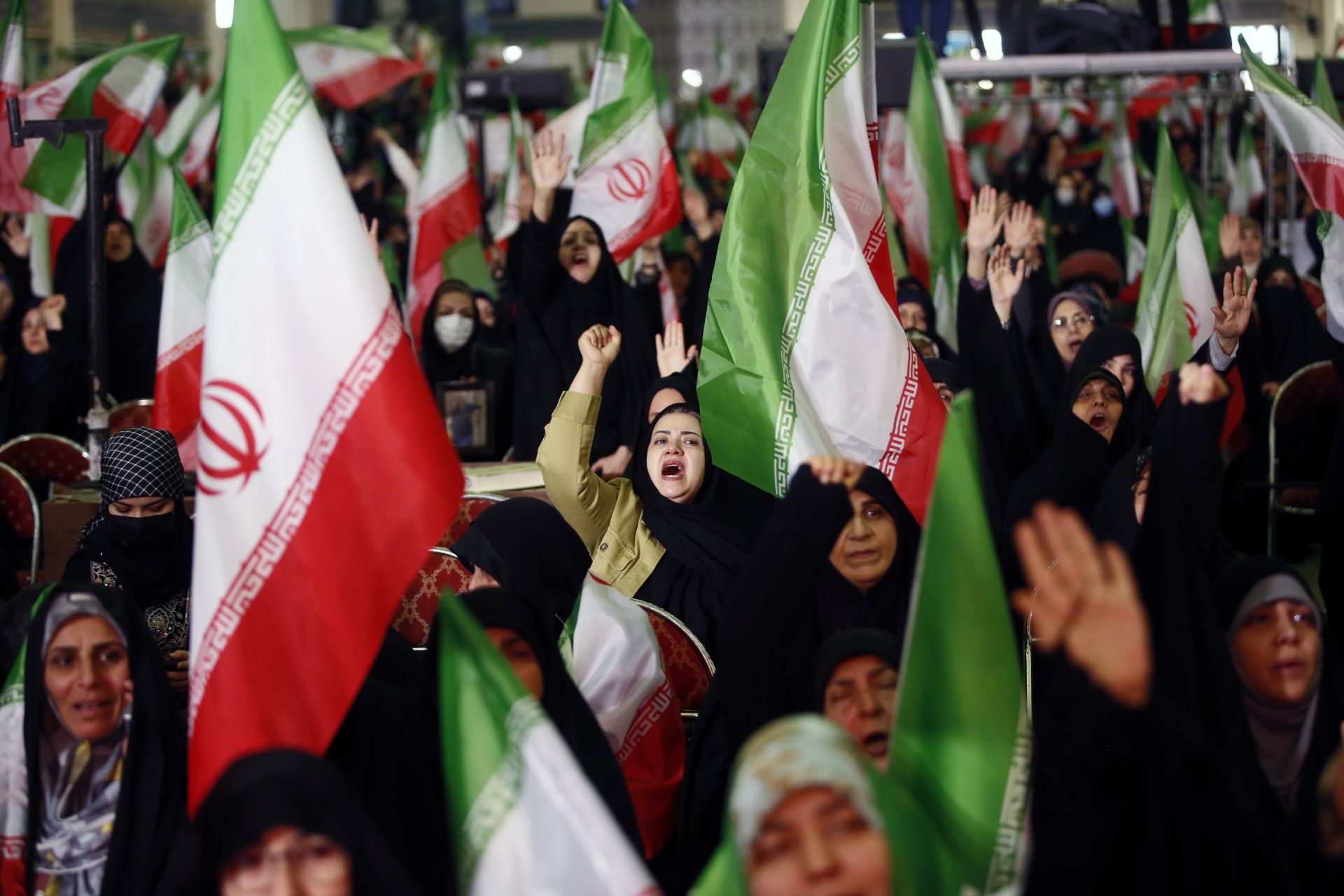
The Islamic Republic of Iran is not on the verge of revolution but is experiencing a prolonged decline in political legitimacy. Despite decades of speculation surrounding the possibility of a revolutionary upheaval akin to the 1979 Iranian Revolution, the country is witnessing a gradual erosion of authority rather than a dramatic collapse.
Observations indicate that while public discontent is palpable, particularly among the younger population, there is no sustained mass uprising or unified leadership challenging the longstanding regime. In major cities, acts of defiance, such as women appearing in public without headscarves, have become commonplace, suggesting a deep-seated frustration with the ruling ideology. However, these expressions of dissent have yet to coalesce into a unified movement capable of challenging the government.
Political Erosion and Authoritarian Aging
The situation in Iran reflects a form of authoritarian aging, characterized by a regime that clings to power while losing its moral and political credibility. Although the state’s coercive capabilities remain intact, its symbolic authority is waning. This has led to a political landscape where governance relies increasingly on routine and repression rather than inspiration and mobilization.
The dynamics were particularly evident following the violent crackdown on protests in January 2026, where security forces employed lethal measures against demonstrators. This display of force did not restore the regime’s legitimacy but rather highlighted its fragility. Historically, regimes secure in their authority do not resort to mass violence as a means of control, indicating a deep-seated insecurity within the Iranian government.
As a result, the gap between the regime’s harsh tactics and the populace’s quiet defiance grows. Many Iranians, particularly the youth, are less inclined to seek state power and more focused on minimizing the state’s influence over their lives. This shift is evident in the increasing trend of emigration and noncompliance as forms of political expression.
Generational Disconnect and Institutional Rigidity
A significant factor in Iran’s current trajectory is the disconnect between the ruling elite and the younger generation, who have no firsthand experience of the revolution or the Iran-Iraq War. Instead, their political consciousness is shaped by the state’s repressive actions, leading to widespread moral alienation rather than revolutionary fervor.
Within the ruling structures, a generational shift has occurred, with many officials emerging from ideologically motivated institutions like Imam Sadeq University. This has altered governance incentives, prioritizing political loyalty over technocratic expertise. Consequently, strategic planning has become reactive, contributing to the state’s chronic underperformance.
Despite the regime’s continued operation, its effectiveness is increasingly questioned. The gap between the government’s self-proclaimed stability and the reality of societal dissatisfaction is widening, leading to a sense of ongoing decline rather than imminent collapse.
The continued decline of legitimacy is not merely a symbolic issue; it has tangible impacts on governance and public perception. Economic mismanagement, compounded by sanctions and corruption scandals, has created a persistent sense of incompetence within the government. Environmental crises, such as water shortages and pollution, further underline the perception of a state that is reactive instead of proactive.
In this context, external pressures, such as intensified sanctions or diplomatic isolation, are unlikely to produce the swift collapse many observers anticipate. Instead, such pressures often solidify the regime’s resolve and heighten nationalist rhetoric, reinforcing its grip on power.
The Iranian political system, while appearing stable, is marked by underlying brittleness. The absence of a shared vision for a post-regime order among the populace exacerbates the situation. The ruling elite, insulated from public sentiment, continues to disqualify potential reformist candidates, further narrowing the political landscape.
Ultimately, the question is not when Iran will experience a revolution but how long a regime can persist when its citizens have largely moved beyond its ideological framework. The transformation in Iran’s political landscape is subtle and slow, marked by ongoing unrest and repression rather than clear-cut change.
As the country continues to navigate its complex socio-political landscape, the evolving relationship between the state and its citizens will likely shape its future. The slow decline of the Islamic Republic may lead to a transformative moment, but it will likely emerge from cumulative pressures rather than a single, defining revolutionary event.

Urgent Tax Savings Alert: Maximize Deductions Before April 15

Trump’s Administration Faces Uncertainty Over Government Shutdowns

Cosmic Defects: The Mystery of the Universe’s Missing Anomalies

Rapid City Parks Department Opens Registration for Bocce Leagues

Samsung Galaxy Watch 9 to Feature Larger 435mAh Battery Soon

Two Dead After Student Boats Capsize Off Okinawa Coast

Healthy Choice Wellness Reports Earnings with Mixed Results

Prince Harry Positions Himself as Royal Family’s Image Reviver

All Points North Lodge Achieves FSPHP-ETA Accreditation

Send Holiday Parcels for £1.99 with New Comparison Service

University of Hawaiʻi Leads $25M AI Project to Monitor Natural Disasters

Maui County Reopens Upgraded Lānaʻi Fifth Street Courts Today!

Interstellar Object 3I/ATLAS Emits Unique Metal Alloy, Says Scientist

Kelly McCreary Discusses Future of Maggie and Winston in Grey’s Anatomy

Daily Codeword Puzzle Launches on October 21, 2025

Congresswoman Under Fire for Misleading Epstein Donation Claims

Trump Vows to Resolve Afghanistan-Pakistan Crisis “Very Quickly”

Researchers Achieve Fastest Genome Sequencing in Under Four Hours
-
 Lifestyle4 months ago
Send Holiday Parcels for £1.99 with New Comparison Service
-
Science5 months ago
University of Hawaiʻi Leads $25M AI Project to Monitor Natural Disasters
-
 Top Stories4 months ago
Maui County Reopens Upgraded Lānaʻi Fifth Street Courts Today!
-
 Science6 months ago
Interstellar Object 3I/ATLAS Emits Unique Metal Alloy, Says Scientist
-
 Entertainment6 months ago
Kelly McCreary Discusses Future of Maggie and Winston in Grey’s Anatomy
-
 Entertainment6 months ago
Daily Codeword Puzzle Launches on October 21, 2025
-
 Lifestyle5 months ago
Congresswoman Under Fire for Misleading Epstein Donation Claims
-
 Top Stories5 months ago
Trump Vows to Resolve Afghanistan-Pakistan Crisis “Very Quickly”
-
 Science6 months ago
Researchers Achieve Fastest Genome Sequencing in Under Four Hours
-

 Business6 months ago
Iconic Sand Dollar Social Club Listed for $3 Million in Folly Beach
-

 Science4 months ago
Charles Darwin’s Address Book Reveals Hidden Aspects of His Life
-

 Politics6 months ago
Afghan Refugee Detained by ICE After Asylum Hearing in New York