
Politics
Japanese Prime Minister Takaichi Wins Majority in Key Election

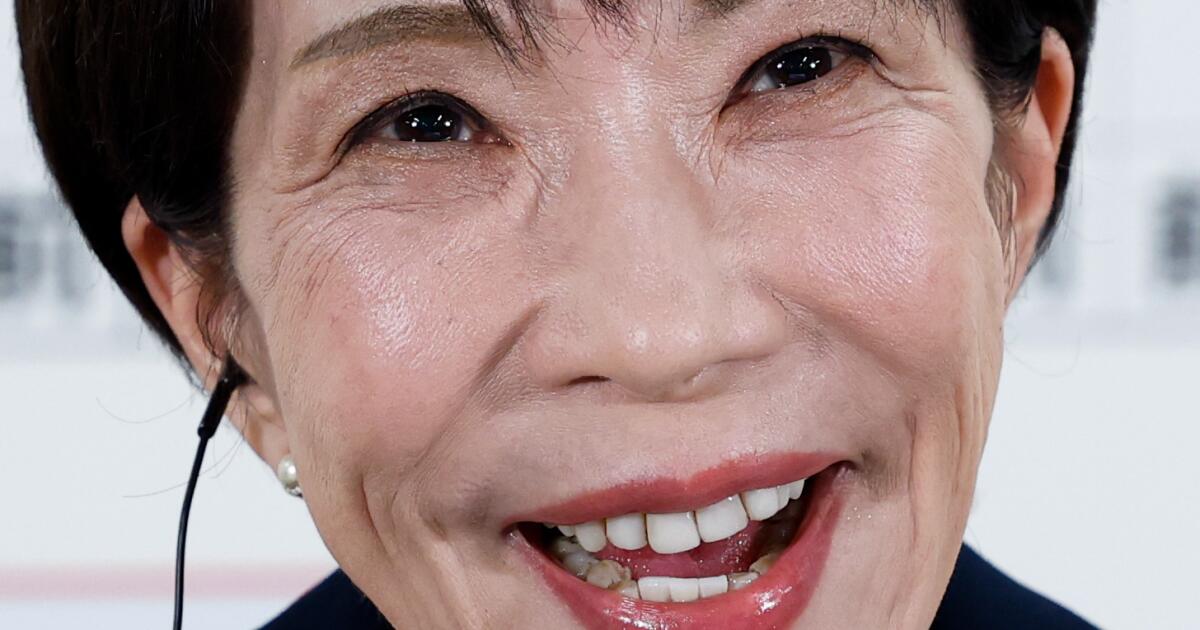
The governing party of Prime Minister Sanae Takaichi achieved a decisive majority in a crucial parliamentary election held on March 10, 2024. Preliminary results indicate that Takaichi’s Liberal Democratic Party (LDP) has secured 271 seats in the 465-member lower house of Japan’s parliament, surpassing the 261-seat majority needed. Takaichi, who has been in office for just four months, expressed readiness to implement her policy agenda during a televised interview with the public broadcaster NHK.
The LDP’s victory marks a significant leap from its previous standing, allowing Takaichi to advance a right-leaning agenda focused on enhancing Japan’s economy and military capabilities. This comes at a time of rising tensions with China and in the context of strengthening ties with the United States. In a celebratory moment at the LDP headquarters, Takaichi placed red ribbons above the names of winning candidates as party executives applauded her leadership.
Despite lacking a majority in the upper house, Takaichi’s substantial gains in the lower house position her to pursue her goals, including a shift towards more assertive security and immigration policies. In her remarks, she emphasized her commitment to progress while seeking to build consensus with opposition parties, stating, “I will be flexible.”
Political Landscape and Challenges
Although popular, Takaichi faces challenges, with the LDP having struggled with funding issues and religious scandals in recent years. The prime minister called for this early election, hoping to capitalize on her high approval ratings. Her leadership style, characterized by a blend of playfulness and toughness, has particularly resonated with younger voters who previously felt disengaged from politics.
The opposition landscape remains fragmented despite the emergence of a new centrist alliance, composed of the LDP’s former coalition partner, the Buddhist-backed Komeito, and the liberal-leaning Constitutional Democratic Party of Japan. Current projections suggest that this alliance may lose half of its combined pre-election total of 167 seats. Takaichi believes that her party, alongside its new ally, the Japan Innovation Party (JIP), will further solidify its majority.
Takaichi’s agenda aims for a notable shift to the right in Japan’s policies, particularly regarding security and immigration. JIP leader Hirofumi Yoshimura underscored his party’s role as an “accelerator” for such changes, as Japan witnesses a rise in far-right populist sentiments, exemplified by the nationalist party Sanseito.
Policy Goals and Public Sentiment
Among Takaichi’s primary objectives is the revision of security and defense policies, including plans to boost Japan’s military capabilities by lifting a ban on weapons exports. She has also advocated for tougher immigration measures and enhanced anti-espionage policies, which may resonate with far-right constituents, although experts caution these could infringe on civil rights.
Takaichi has expressed intentions to increase defense spending, aligning with previous pressures from former U.S. President Donald Trump for Japan to bolster its military budget. With no elections scheduled until 2028, Takaichi now has the opportunity to pursue her policy goals more freely.
While she aims to generate support for potentially divisive policies, Takaichi has refrained from detailing how to finance increased military expenditure or address diplomatic tensions with China. In her campaign, she emphasized the need for proactive government spending to facilitate “crisis management investment and growth,” particularly in economic security and technology.
Political analysts have raised concerns over the implications of Takaichi’s election victory. Masato Kamikubo, a politics professor at Ritsumeikan University, remarked, “Sunday’s election underscores a problematic trend in Japanese politics in which political survival takes priority over substantive policy outcomes.”
The election coincided with significant snowfall across Japan, including in Tokyo, which had been blamed for road closures and numerous fatalities in recent weeks. Voter sentiment appeared optimistic, with individuals like Kazuki Ishihara, 54, expressing hope for stability and progress under Takaichi’s leadership. “I have some hope that she could do something,” Ishihara said, reflecting a desire for change in a political landscape that has seen prolonged LDP dominance.
As Takaichi embarks on her agenda, her government’s approach will be closely monitored both domestically and internationally, particularly regarding its implications for Japan’s role on the global stage.

Urgent Tax Savings Alert: Maximize Deductions Before April 15

Trump’s Administration Faces Uncertainty Over Government Shutdowns

Cosmic Defects: The Mystery of the Universe’s Missing Anomalies

Rapid City Parks Department Opens Registration for Bocce Leagues

Samsung Galaxy Watch 9 to Feature Larger 435mAh Battery Soon

Two Dead After Student Boats Capsize Off Okinawa Coast

Healthy Choice Wellness Reports Earnings with Mixed Results

Prince Harry Positions Himself as Royal Family’s Image Reviver

All Points North Lodge Achieves FSPHP-ETA Accreditation

Send Holiday Parcels for £1.99 with New Comparison Service

University of Hawaiʻi Leads $25M AI Project to Monitor Natural Disasters

Maui County Reopens Upgraded Lānaʻi Fifth Street Courts Today!

Interstellar Object 3I/ATLAS Emits Unique Metal Alloy, Says Scientist

Kelly McCreary Discusses Future of Maggie and Winston in Grey’s Anatomy

Daily Codeword Puzzle Launches on October 21, 2025

Congresswoman Under Fire for Misleading Epstein Donation Claims

Trump Vows to Resolve Afghanistan-Pakistan Crisis “Very Quickly”

Researchers Achieve Fastest Genome Sequencing in Under Four Hours
-
 Lifestyle4 months ago
Send Holiday Parcels for £1.99 with New Comparison Service
-
Science5 months ago
University of Hawaiʻi Leads $25M AI Project to Monitor Natural Disasters
-
 Top Stories4 months ago
Maui County Reopens Upgraded Lānaʻi Fifth Street Courts Today!
-
 Science6 months ago
Interstellar Object 3I/ATLAS Emits Unique Metal Alloy, Says Scientist
-
 Entertainment6 months ago
Kelly McCreary Discusses Future of Maggie and Winston in Grey’s Anatomy
-
 Entertainment6 months ago
Daily Codeword Puzzle Launches on October 21, 2025
-
 Lifestyle5 months ago
Congresswoman Under Fire for Misleading Epstein Donation Claims
-
 Top Stories6 months ago
Trump Vows to Resolve Afghanistan-Pakistan Crisis “Very Quickly”
-
 Science6 months ago
Researchers Achieve Fastest Genome Sequencing in Under Four Hours
-

 Business6 months ago
Iconic Sand Dollar Social Club Listed for $3 Million in Folly Beach
-

 Science5 months ago
Charles Darwin’s Address Book Reveals Hidden Aspects of His Life
-

 Politics6 months ago
Afghan Refugee Detained by ICE After Asylum Hearing in New York