
Politics
Lawmakers Demand Action to Halt Trump’s Military Plans in Venezuela

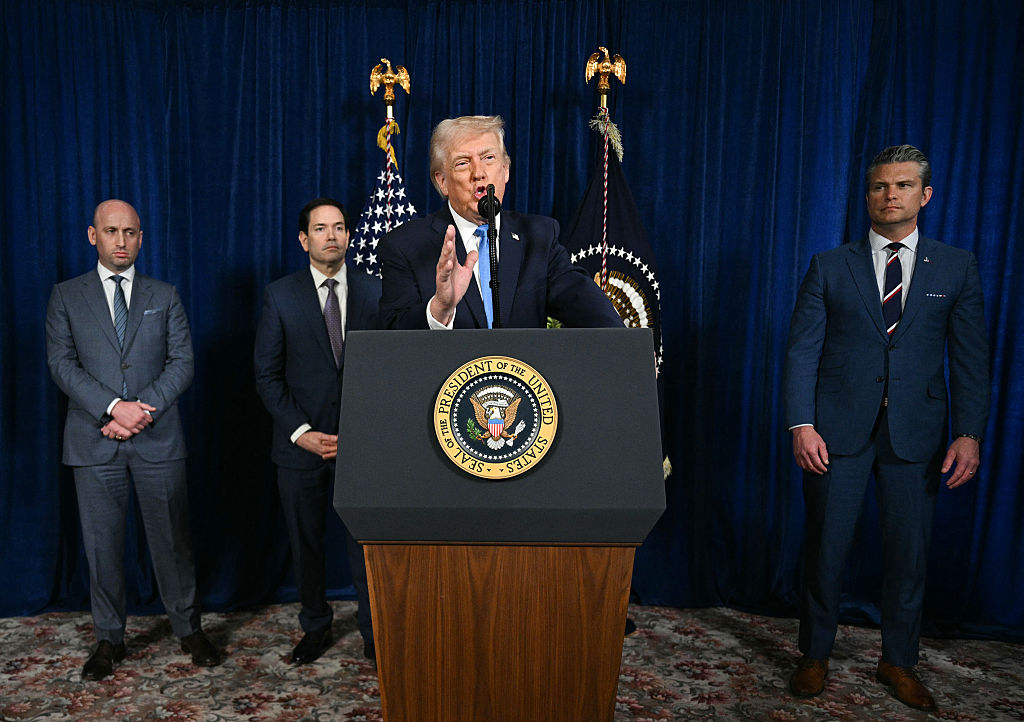
Members of the U.S. Congress have called for immediate legislative action to prevent President Donald Trump from escalating military operations in Venezuela. Following Trump’s recent threats of a “second wave” of military action, lawmakers expressed their concerns about the administration’s ongoing interventions in the South American country, including bombings in international waters.
On January 3, 2026, Rep. Greg Casar (D-Texas), chair of the Congressional Progressive Caucus (CPC), emphasized the need for Congress to vote on a War Powers Resolution. He stated, “Congress should vote immediately on a War Powers Resolution to stop” Trump’s military actions. Casar criticized the president’s approach, labeling it as reckless and illegal. He remarked, “Trump has no right to take us to war with Venezuela. This is reckless and illegal.”
Another prominent voice within the CPC, Rep. Rashida Tlaib (D-Mich.), condemned the administration’s actions as indicative of a “rogue state.” Tlaib highlighted the illegality of the bombings and the capture of Venezuelan President Nicolás Maduro, asserting that these actions violate both international law and the U.S. Constitution. In a social media post, she stated, “The American people do not want another regime change war abroad.”
Calls for Congressional Intervention
The push for urgent legislative action gained traction not only among progressives but also from establishment Democrats. Sen. Adam Schiff (D-California) voiced concerns about the potential chaos brought upon by unauthorized military actions. He remarked, “Without congressional approval or the buy-in of the public, Trump risks plunging a hemisphere into chaos and has broken his promise to end wars instead of starting them.” Schiff urged Congress to reassert its power regarding military engagement.
In a similar vein, Sen. Tim Kaine (D-Va.) announced plans to introduce a bipartisan War Powers Resolution aimed at blocking further military actions in Venezuela. He raised critical questions about the scope of Trump’s military intentions, asking, “Where will this go next?” Kaine underscored the necessity for Congress to reclaim its constitutional duty in matters of war. “It is long past time for Congress to reassert its critical constitutional role in matters of war, peace, diplomacy, and trade,” he stated.
The context of these demands comes as Trump indicated a willingness to continue intervening in Venezuela’s internal affairs, suggesting that the U.S. would “run” the country. During a press conference, he expressed that the administration is “designating various people” to manage the Venezuelan government, hinting at a potential troop deployment.
Republican Response and Legislative Dynamics
The response from the Republican-controlled Congress remains mixed. While some Republicans have supported Trump’s actions, including House Speaker Mike Johnson (R-La.) and Senate Majority Leader John Thune (R-SD), who described the military operation as “decisive” and justified, concerns about constitutional processes were voiced by others.
Before the recent military actions, Congress had rejected previous War Powers Resolutions aimed at curtailing Trump’s authority to engage in military actions without legislative approval. Sen. Mike Lee (R-Utah), who had previously raised constitutional issues regarding the administration’s actions, appeared to retract his concerns following discussions with Secretary of State Marco Rubio.
Democratic Rep. Andy Kim (D-NJ) highlighted the contradictions in the administration’s stance, stating, “Rubio and Defense Secretary Pete Hegseth looked every senator in the eye a few weeks ago and said this wasn’t about regime change.” Kim expressed distrust in the assurances provided by the administration, indicating a significant divide between the executive and legislative branches.
The developments surrounding Venezuela reflect broader tensions regarding U.S. military policy and the constitutional limits of executive power. As lawmakers prepare for potential votes on War Powers Resolutions, the political landscape remains fraught with uncertainty. The response from Congress, particularly from Republican members, will be crucial in determining the future of U.S. involvement in Venezuela.

Urgent Tax Savings Alert: Maximize Deductions Before April 15

Trump’s Administration Faces Uncertainty Over Government Shutdowns

Cosmic Defects: The Mystery of the Universe’s Missing Anomalies

Rapid City Parks Department Opens Registration for Bocce Leagues

Samsung Galaxy Watch 9 to Feature Larger 435mAh Battery Soon

Two Dead After Student Boats Capsize Off Okinawa Coast

Healthy Choice Wellness Reports Earnings with Mixed Results

Prince Harry Positions Himself as Royal Family’s Image Reviver

All Points North Lodge Achieves FSPHP-ETA Accreditation

Send Holiday Parcels for £1.99 with New Comparison Service

University of Hawaiʻi Leads $25M AI Project to Monitor Natural Disasters

Maui County Reopens Upgraded Lānaʻi Fifth Street Courts Today!

Daily Codeword Puzzle Launches on October 21, 2025

Congresswoman Under Fire for Misleading Epstein Donation Claims

Interstellar Object 3I/ATLAS Emits Unique Metal Alloy, Says Scientist

Trump Vows to Resolve Afghanistan-Pakistan Crisis “Very Quickly”

Charles Darwin’s Address Book Reveals Hidden Aspects of His Life

Rediscovering Chrysler: 5 Overlooked Models from the 1980s
-
 Lifestyle8 months ago
Send Holiday Parcels for £1.99 with New Comparison Service
-
Science9 months ago
University of Hawaiʻi Leads $25M AI Project to Monitor Natural Disasters
-
 Top Stories8 months ago
Maui County Reopens Upgraded Lānaʻi Fifth Street Courts Today!
-
 Entertainment10 months ago
Daily Codeword Puzzle Launches on October 21, 2025
-
 Lifestyle9 months ago
Congresswoman Under Fire for Misleading Epstein Donation Claims
-
 Science10 months ago
Interstellar Object 3I/ATLAS Emits Unique Metal Alloy, Says Scientist
-
 Top Stories9 months ago
Trump Vows to Resolve Afghanistan-Pakistan Crisis “Very Quickly”
-
 Science9 months ago
Charles Darwin’s Address Book Reveals Hidden Aspects of His Life
-
 Lifestyle8 months ago
Rediscovering Chrysler: 5 Overlooked Models from the 1980s
-

 Science7 months ago
Understanding Generation Z: Strategies for Engaging the Workforce
-

 Entertainment10 months ago
Kelly McCreary Discusses Future of Maggie and Winston in Grey’s Anatomy
-

 Top Stories8 months ago
aespa Faces Backlash Over G-Dragon Interaction at 2025 MAMAs