
Politics
Minnesota Calls for Nationwide General Strike on January 23

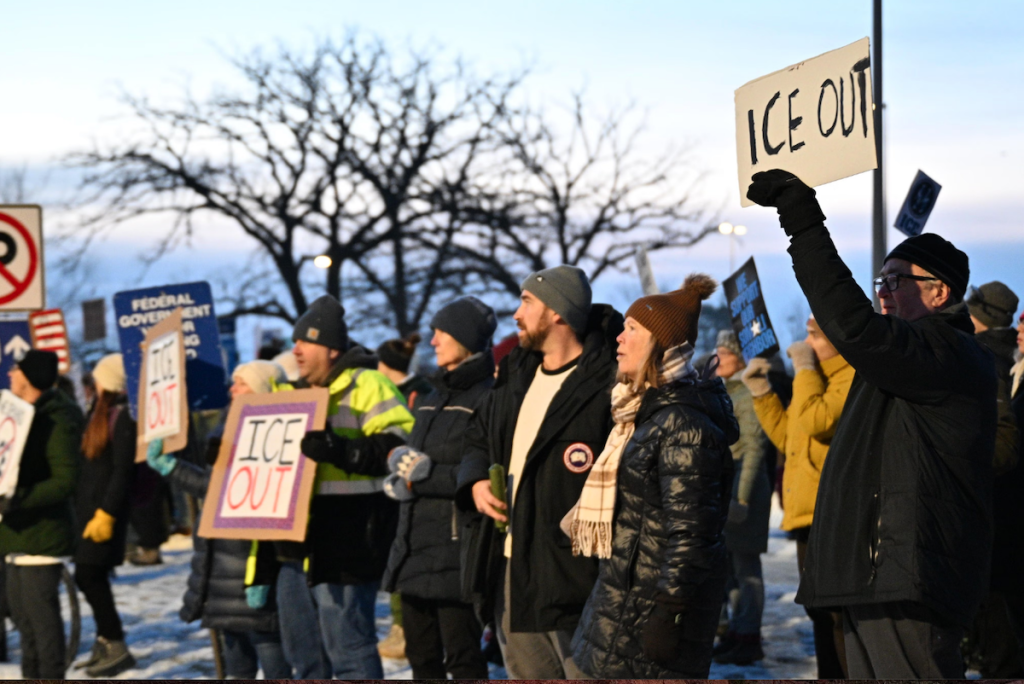
Labor and community leaders in Minnesota have called for a general strike on January 23, 2024, urging individuals across the state to refrain from work, shopping, and attending school. This initiative responds to the recent murder of Rene Nicole Good at the hands of an ICE agent, alongside ongoing concerns about harassment and violence inflicted by federal agents on local communities.
At a press conference on January 13, Auxiliary Minister JaNaé Bates Imari emphasized the necessity of this action, stating, “There are lies being spewed about our neighbors… This is not rumor. We’re seeing it with our own eyes every single day.” Imari criticized the actions of ICE agents, accusing them of operating with impunity and instilling fear in the community. The protest, labeled “A Day of Truth and Freedom,” seeks to bring attention to the escalating violence and intimidation tactics employed by federal authorities.
Following the tragic event that led to Good’s death, federal officials, including Secretary of Homeland Security Kristi Noem and Vice President JD Vance, made dubious claims of domestic terrorism against Good. This rhetoric has intensified the scrutiny on ICE’s actions, which have included increased deployments in Minnesota in response to growing public dissent.
Labor Organizations Unite for Action
The call for a general strike has garnered support from several labor unions, including the St. Paul Federation of Educators, SEIU Local 26, and Minnesota’s Amalgamated Transit Union Local 1005. Community organizations and faith groups, such as Unidos and Jewish Community Action, have also joined the movement, indicating a broad coalition aiming to resist federal overreach and protect civil rights.
Despite the organizers refraining from labeling the action a strike—likely to sidestep potential legal ramifications—the nature of the event aligns closely with traditional strike actions. By withholding labor, participants aim to disrupt business and highlight the socio-political climate in which federal agents operate. The organizers believe this could be a pivotal moment for labor rights and civil liberties in Minnesota and beyond.
Escalating Tensions with Federal Authorities
The escalating tension between state residents and ICE reflects a broader pattern of militarization of federal agencies. Under the administration of former President Donald Trump, ICE received a substantial budget increase, amounting to an additional $75 billion over four years. This funding surge has led to a rapid increase in personnel, with the agency reportedly doubling its workforce in a single year.
Critics argue that this expansion has fostered a culture of intimidation, with agents often employing aggressive tactics during detentions. The reliance on recruitment campaigns that resonate with far-right ideologies has raised alarms about the agency’s operational conduct. Observers have noted that ICE agents are increasingly perceived as a militarized force, acting with what some describe as “absolute immunity.”
As the public outcry against ICE’s actions continues to grow, many see the January 23 strike as a necessary response. It represents a shift in strategy for labor and community organizations who are now considering more direct forms of resistance. With general strikes being rare in the United States, this event could signal a new chapter in labor activism.
In recent weeks, protests against federal military actions abroad have also been linked to local struggles against state repression. Demonstrators have drawn parallels between imperialism and domestic policies, underscoring the interconnectedness of these issues. The call for solidarity in Minnesota could resonate across the country, encouraging union members everywhere to advocate for similar actions.
As January 23 approaches, union locals and community organizations are mobilizing support for the strike. The objective is clear: to demand a halt to ICE’s operations and to push back against perceived state violence. The urgency of this moment reflects a growing recognition among workers and activists that coordinated action may be the most effective way to challenge systemic injustices in their communities.

Urgent Tax Savings Alert: Maximize Deductions Before April 15

Trump’s Administration Faces Uncertainty Over Government Shutdowns

Cosmic Defects: The Mystery of the Universe’s Missing Anomalies

Rapid City Parks Department Opens Registration for Bocce Leagues

Samsung Galaxy Watch 9 to Feature Larger 435mAh Battery Soon

Two Dead After Student Boats Capsize Off Okinawa Coast

Healthy Choice Wellness Reports Earnings with Mixed Results

Prince Harry Positions Himself as Royal Family’s Image Reviver

All Points North Lodge Achieves FSPHP-ETA Accreditation

Send Holiday Parcels for £1.99 with New Comparison Service

University of Hawaiʻi Leads $25M AI Project to Monitor Natural Disasters

Maui County Reopens Upgraded Lānaʻi Fifth Street Courts Today!

Interstellar Object 3I/ATLAS Emits Unique Metal Alloy, Says Scientist

Kelly McCreary Discusses Future of Maggie and Winston in Grey’s Anatomy

Daily Codeword Puzzle Launches on October 21, 2025

Congresswoman Under Fire for Misleading Epstein Donation Claims

Trump Vows to Resolve Afghanistan-Pakistan Crisis “Very Quickly”

Researchers Achieve Fastest Genome Sequencing in Under Four Hours
-
 Lifestyle4 months ago
Send Holiday Parcels for £1.99 with New Comparison Service
-
Science5 months ago
University of Hawaiʻi Leads $25M AI Project to Monitor Natural Disasters
-
 Top Stories4 months ago
Maui County Reopens Upgraded Lānaʻi Fifth Street Courts Today!
-
 Science6 months ago
Interstellar Object 3I/ATLAS Emits Unique Metal Alloy, Says Scientist
-
 Entertainment6 months ago
Kelly McCreary Discusses Future of Maggie and Winston in Grey’s Anatomy
-
 Entertainment6 months ago
Daily Codeword Puzzle Launches on October 21, 2025
-
 Lifestyle5 months ago
Congresswoman Under Fire for Misleading Epstein Donation Claims
-
 Top Stories6 months ago
Trump Vows to Resolve Afghanistan-Pakistan Crisis “Very Quickly”
-
 Science6 months ago
Researchers Achieve Fastest Genome Sequencing in Under Four Hours
-

 Business6 months ago
Iconic Sand Dollar Social Club Listed for $3 Million in Folly Beach
-

 Science5 months ago
Charles Darwin’s Address Book Reveals Hidden Aspects of His Life
-

 Politics6 months ago
Afghan Refugee Detained by ICE After Asylum Hearing in New York